


 Shkruar nga Pamfleti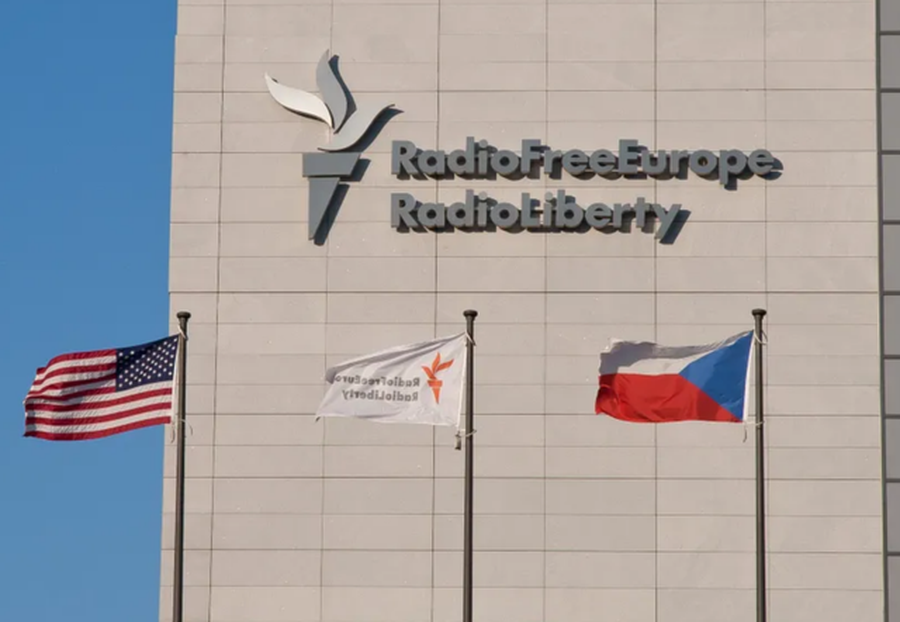
EU member states said on Monday they would try to save Radio Free Europe/Radio Liberty, the US-funded news outlet created to reach people under communism during the Cold War, warning they could struggle to replace funding cut off by Donald Trump.
Czech Foreign Minister Jan Lipavsky asked EU ministers at a meeting in Brussels to explore ways to allow the Prague-based service to continue providing news coverage in countries where free media is banned or in its infancy.
EU foreign policy chief Kaja Kallas called Radio Free Europe "a beacon of democracy" and said it was sad that the US had decided to cut its funding. She said ministers had agreed to look at what the EU could do to help, but it would not be easy.
"Can we step in with our own funds to ... fill the gap that the US is leaving? The answer to that question is ... not automatically, because we have many organizations coming to us with the same request," she told reporters.
"But there has really been a push from foreign ministers to discuss this and find a way, so that is the task on our part, to see what we can do," she continued.
Hit by President Trump over a move to cut federal bureaucracy, the Agency for Global Media over the weekend cut grants to Radio Free Europe, which broadcasts in Iran, Russia, Belarus and war-torn Ukraine, among other countries.
Radio Free Europe journalists continued to work on Monday as new articles appeared on its website.
Radio Free Europe/Radio Liberty President and CEO Stephen Capus said in a statement over the weekend that canceling the Radio Free Europe/Radio Liberty grant agreement "would be a massive gift to America's enemies."
Polish Foreign Minister Radoslaw Sikorski said on Monday "we will see what can be done" to help both Radio Free Europe and Voice of America, where more than 1,300 employees were suspended on Saturday.
Diplomatic sources told REL that Poland and the three Baltic states - Latvia, Estonia and Lithuania - expressed support for his idea, although "this does not imply a lack of wider support".
Polish Foreign Minister Radek Sikorski recalled that Radio Free Europe and Voice of America, during the communist era, were the only source of reliable information for many people in Eastern Europe.
"These institutions continue to do similar work for autocracies today," Sikorski said in a statement to REL.
The European Union reacted earlier through Audia spokesperson Paula Pinho, who said that Radio Free Europe and Voice of America are "beacons of truth, democracy and hope for millions of people around the world."
“In an era of unmoderated content and fake news,” Pinho said, journalism and press freedom, which these media represent, “are critical to democracy.”
"There is a risk that our common adversaries will benefit from this decision," the spokeswoman said.
The European Parliament's liberal Renew Europe political group expressed concern about what it called the "potential erosion" of media freedom in Europe and neighboring regions.
"Radio Free Europe has historically been instrumental in providing unbiased news and information, especially in countries where press freedom is under threat. The sudden cessation of US funding jeopardizes the organization's ability to operate effectively, leaving a void that could be exploited by authoritarian regimes seeking to suppress free speech and control narratives," the group Renew Europe said in a statement.
He also called on the EU to take immediate action to support Radio Free Europe and similar organizations, saying that “support could include direct funding, facilitating partnerships, or integrating these entities into existing EU frameworks dedicated to promoting media pluralism and freedom.”




Lini një Përgjigje