


 Shkruar nga Pamfleti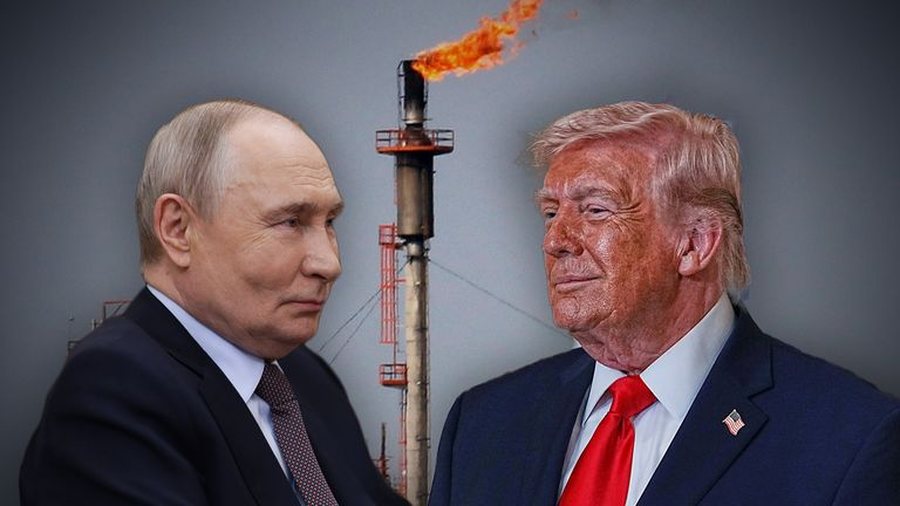
An extra billion euros a week for Putin's coffers...
In the week leading up to the U.S. and Israeli attack on Iran on Saturday, February 28, Russian Finance Minister Anton Siluanov said something that could have led to his dismissal. Or worse. Siluanov explained that the government needed to change something because Moscow’s budget was short of resources. Oil and gas revenues in January, equivalent to $5.1 billion, were half of what they were in the same month in 2025; February promised to end similarly, and Russia risked exhausting the resources of its sovereign wealth fund in little more than a year, which was supposed to cover unmet spending needs. The sustainability of the war in Ukraine was increasingly in doubt.
An extra billion euros a week for Putin's coffers
It’s been a little over two weeks, but history has changed since then. First, Donald Trump launched the third Gulf War and then, with two executive orders, he gradually lifted sanctions on Russian oil purchases. For Moscow’s budget, this sequence of actions means that revenues in the last two weeks are now roughly $2.4 billion higher than they would have been otherwise, equivalent to an extra €1 billion a week.
Excess reserves become valuable
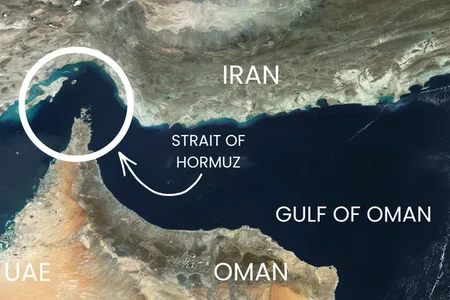
How much Russia will be able to profit from the Gulf War and the closure of the Strait of Hormuz depends, of course, on the duration of the conflict. But some aspects are already clear. When the fighting in the Persian Gulf began two weeks ago, approximately 150 million barrels of Russian oil were stranded at sea in dozens of unlicensed tankers in the shadow fleet. These were essentially surplus stocks, unsold and stored at sea. At Russian oil prices at the time (about $39 a barrel), they could have been sold for just under $6 billion. However, the usual buyers, some Indian and Russian refiners, were reluctant: the oversupply and the resulting price drop made it profitable for them to buy the legal barrels, without the risk of American retaliation.
Indian and Chinese purchases
The situation changed with the Gulf War and the closure of Hormuz. The (relative) shortage of physical crude on the market and the rise in prices immediately made Russian supplies, which had been stuck in tankers at sea for weeks, more attractive. The Indians and Chinese have resumed massive purchases, and Donald Trump’s executive orders have simply formalized and legalized what was already happening. On March 6, the US president had temporarily lifted the ban on India (which was in fact already buying 30 million barrels of Russian oil); starting today, the suspension is extended for a month for all countries for Russian oil that was listed as “in transit” on Thursday.
How much does closing the Strait of Hormuz weigh?
According to Sergey Vakulenko, a senior fellow at the Carnegie Eurasia Center and a former senior executive at GazpromNeft (Gazprom’s oil arm), none of this changes much in substance. “It’s just Trump’s way of calming market tensions and keeping prices down,” he says. But the White House executive orders actually confirm purchases of Russian crude that the Chinese and Indians had already resumed. For the Russian budget, too, none of this changes much in the near future, because that crude had already been sold to middlemen.
The gap with the value of Brent is narrowing
What is changing for the Kremlin, and significantly, is the war itself and the closure of the Strait of Hormuz. The sudden disruption of supplies from the Gulf has a double benefit for Russian oil: not only is the price of the raw material itself rising, but Russian crude is in greater demand, and so its price is approaching that of Brent. The Moscow variety used to sell for $25 a barrel, cheaper than Brent and therefore below $35 at times, but now that gap has narrowed to $13.
New sources on the war in Ukraine
Herein lies the beneficial effect for the Kremlin’s coffers and for Vladimir Putin’s ability to continue his aggression against Ukraine. Moscow’s budget is not financed by the amount of crude oil sold, but by a tax (proportional to the current price) on the amount extracted. Every $10 per barrel price increase brings an additional $2.8 billion to the Russian system and $1.6 billion to the public budget each month. Given the average price increases of the past two weeks, Putin now has roughly $2.4 billion more to spend on his war: useful for the Kremlin, though, for the moment, not decisive.
$60 billion more in one year
If this situation were to continue for a year, it would mean an additional $60 billion. This could change the course of the war in Ukraine. Therefore, the duration of the closure of Hormuz will become the decisive factor: the longer it lasts, the more resources Russia will have to destroy the country it has attacked./ Adapted from "Pamphlet" by "Corriere della Sera"




Lini një Përgjigje