


 Shkruar nga Ivan Krastev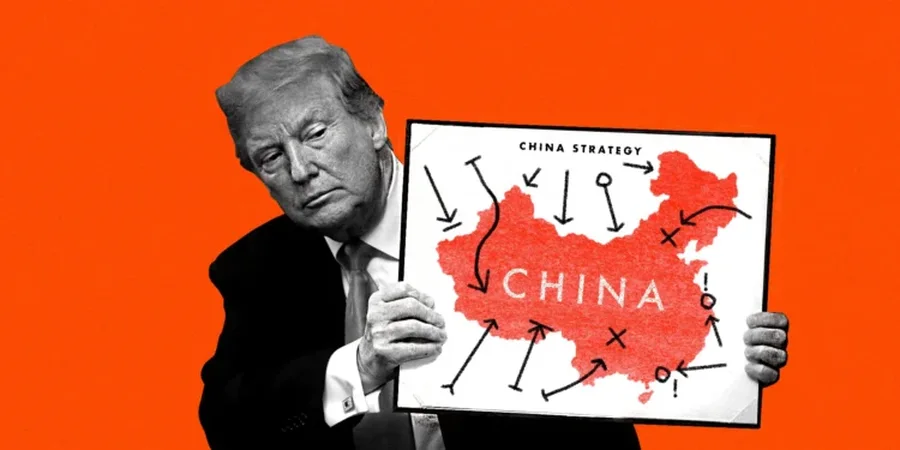
The arrival of Donald Trump signaled the end of hypocrisy and moralizing, and the beginning of a new form of brutality and sincerity in American foreign policy. No embellishment; no carefully measured statements.
“Without the Cold War, what is the point of being American?” quips John Updike’s Harry “Rabbit” Angstrom, mocking his country’s missionary zeal and sense of self-righteousness. “Rabbit,” a white, middle-class American whom Updike used to track changes in American culture and politics, would likely have voted for Donald Trump in the last election.
Americans and non-Americans alike are tired of decades of double standards and liberal hypocrisy emanating from Washington. That’s why Joe Biden’s attempt to revive the Cold War clash between democracies and autocracies, following Putin’s invasion of Ukraine, failed so spectacularly. Washington’s decision to aggressively sanction Russia initially led (democratic) India to drastically increase its purchases of Russian oil, while (democratic) South Africa came close to aligning itself with Moscow in what Putin called an “anti-imperialist war.”
The arrival of Donald Trump signaled the end of hypocrisy and moralizing, and the beginning of a new form of brutality and sincerity in American foreign policy. No embellishment; no carefully measured statements.
In the absence of restrictions, there was no longer any need for decorative diplomacy. As sports commentator Howard Cosell often said, it was time to “tell it like it is.” Before Trump, when America attacked an oil-rich country, Washington claimed it was about democracy or security, even though people suspected it was about black gold. Today, the American president is the first to insist that the attack on Venezuela was for oil; there is no longer any pretext for democracy.
But the end of hypocrisy will not necessarily make America more respectable.
A global opinion poll commissioned by the European Council on Foreign Relations (conducted before the US “special operation” in Venezuela and before the mass protests in Iran) shows that in the first year of Trump’s second term, a growing number of people believe that China’s already powerful influence will grow — and that this is good news for their country and for the world. In other words, Trump may have shocked the globe, but the world is falling in love with China.
Why this is happening is no mystery. Many of Beijing’s new admirers own Chinese electric cars, have installed Chinese solar panels on their roofs, use DeepSeek, and watch their children play with Chinese-made toys. Aside from threatening military exercises around Taiwan and in the South China Sea, China is conspicuously pacifist, conducting no offensive military operations beyond what it considers its borders.
Machiavelli observed that it is better for any ruler to be feared than loved, if you cannot be both. If that is true, then people should become more sympathetic to Trump’s America. Why, then, is Trump’s constant display of American power not producing results?
The reason may be that when you are powerful, people only notice when your power falters. The world was not impressed when Trump launched the tariff offensive; what impressed it was the fact that China responded successfully. America demonstrated shocking military power in Venezuela, but that was to be expected; what people have noticed is Russia’s military failure in Ukraine.
People also notice who envies whom. And it is no secret that Trump envies China; and to his annoyance, that envy is not reciprocated. The American president fantasizes about the extent of Chinese industrial power, so much so that he is now practicing Chinese-style state capitalism. It is as if Trump has lost faith in his country’s political and economic system. As the saying goes, imitation is the highest form of flattery, and now it is Washington that is imitating Beijing.
Power breeds obedience and conformity, but not loyalty. The powerful should not expect solidarity when their power declines. Trump has convinced many American voters that “America First” means “America Only.” But if you are prepared to defend only what you own, you should not be surprised that only 16 percent of Europeans consider America an ally, and 20 percent now see it as a rival or adversary. The strength of ideological alliances lies in the promise of support when you appear weak. When the American president sees little fundamental difference between democracy and autocracy, it is hard to blame people for not fearing China and not aligning themselves with America.
America won the Cold War because it insisted not only on being powerful but also on being different. It made people imagine that a US victory was also their victory. Many members of the Venezuelan opposition probably held onto this illusion until they realized that Trump’s interest in their country was primarily to secure the theft of Venezuelan oil. Many Iranian protesters probably still hold onto this illusion.
As Updike's "Rabbit" Angstrom might ask: without America standing for freedom, or at least claiming to do so, what is the point of being pro-American? / Financial Times



Lini një Përgjigje