


 Shkruar nga Pamfleti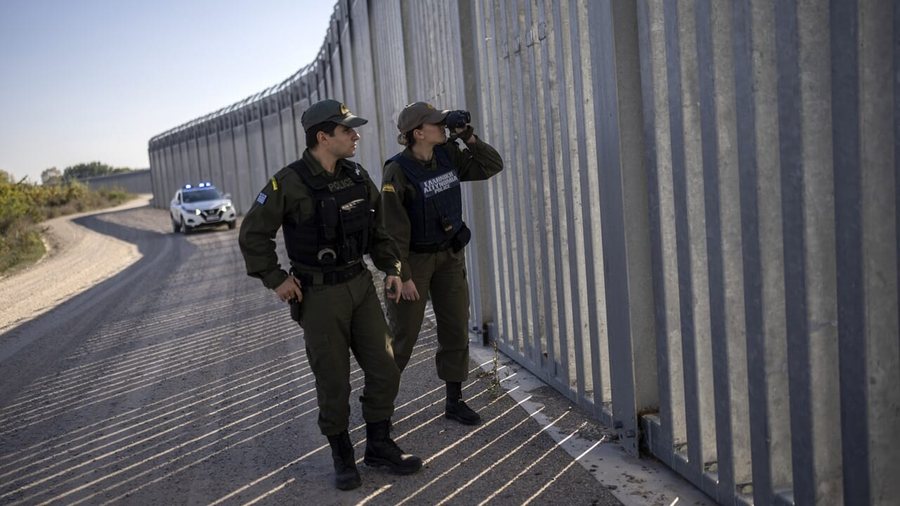
Turkey will build a wall on its border with Greece to prevent irregular migrants from entering the European Union. Greece has always been one of the main destinations for migratory flows, many of which come from the Anatolian peninsula. Turkey has hosted millions of Syrian refugees for years, many of whom have tried to flee to Europe in the past.
But after the fall of Bashar al-Assad and the seizure of power by the Hay'at Tahrir al-Sham (HTS) rebels, led by Mohammed al-Jolani, EU member states want to send home the refugees welcomed in recent years and are studying strategies to achieve this goal.
The announcement about the construction of the wall on the border with Greece was made by the governor of the northwestern Turkish province of Edirne.
"There are plans to build a first stretch of 8.5 kilometers this year," said Yunus Sezer, governor of the province that borders Greece and Bulgaria. The politician specified that other parts of the wall would be built later, always along the border between the two nations, which is about 200 kilometers long and almost entirely formed by the Merits River, or Evros in Greek.
Sezer also said that the local government built 325 kilometers of roads along the border last September and that this year, with the support of the Interior and Defense Ministries, work has continued on the construction of electro-optical towers and other infrastructure to monitor and prevent irregular crossings. Now, as part of the border “strengthening” project, the governor will build walls and fences in areas where only patrol roads exist.
The problem of migrants trying to reach Europe from Turkey has been particularly acute in the last decade. In 2016, an agreement was signed between the European Union and Turkey for the country governed by Recep Tayyip Erdoğan to block and host on its territory Syrian refugees fleeing the civil war, whose number is currently estimated at 2.9 million people.
To prevent new incursions into the Anatolian peninsula, Ankara has built walls stretching for a thousand kilometers along its borders with Iran and Syria in recent years. To curb the phenomenon, Athens has also tightened border controls along its land and sea border with Turkey, also resorting to the construction of walls and fences.
Returning Syrian refugees home
Today (Wednesday 5 March), in Brussels, the EU Home Affairs Council discussed the issue of migration and one of the items on the agenda was the treatment of Syrian refugees present on European soil. Some governments believe that there is no longer a need to protect them and that they should be returned to their country of origin.
Several countries, including Italy, have rushed to block all new asylum applications from Syrians since the fall of the Assad regime, but very few have returned to their homeland, which remains unstable and dangerous. For this reason, the 27 ministers will examine the concept of "monitoring visits", i.e. the possibility for Syrian refugees to travel temporarily to their country to assess whether they feel safe, without automatically losing their right to a visa in the host country.
If they still consider Syria a dangerous place, they should be able to return to the country that welcomes them. Home Affairs Commissioner Magnus Brunner said Brussels aims to support member states in facilitating "less costly return routes, as well as better prepared and more dignified returns." /Adapted from Pamphlet/






Lini një Përgjigje