


 Shkruar nga Sergej Maidukov
Declining Western support, falling morale, and a deep demographic decline are pushing Ukraine toward a critical point. The government's only chance is a complete reorganization of its political and military system.
Ever since Donald Trump declared that he could “end the war in Ukraine within 24 hours,” much of the world has been waiting to see if he would be able to force Moscow and Kiev to enter into a deal. Millions of clicks, views, and news feeds have been consumed by this anticipation.
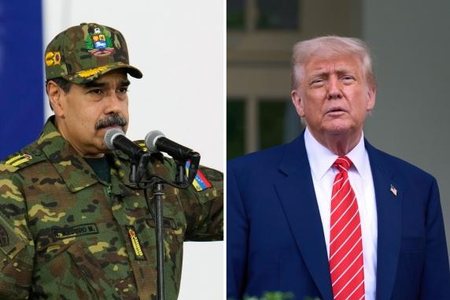
Trump has fueled this idea by insisting that Ukrainian President Volodymyr Zelenskyy was running out of options and would ultimately have to accept his offer. In reality, the opposite is happening. It is Trump who has no leverage. He can threaten Nicolas Maduro with possible military action in Venezuela, but he has no real influence over Vladimir Putin. Any sanctions package tough enough to hurt Russia would also hit the Western economy, and no Western leader is willing to cut off the branch he is sitting on.
Armed intervention is even more unlikely. From the first days of the full-scale invasion, NATO decided to support Ukraine with weapons and training, but to avoid any steps that could lead to a direct NATO-Russia conflict. This line has not changed.
As a result, Ukraine has been left in a situation where, with or without sufficient support from its allies, it is effectively fighting alone against Russia. Any talk of peace or a ceasefire has become a diplomatic sham, a method by Putin to buy time and regroup. The Kremlin's strategy is based on wearing down not only the Ukrainian military, but also the patience and political unity of its allies.
The US has now circulated a watered-down version of its peace plan, after consultations with Kiev and several European governments. However, the Kremlin continues to demand major territorial concessions and the withdrawal of Ukrainian troops. Without this, Russia refuses to stop the offensive. Ukraine, for its part, declares that it will not give up territory.
As any hopes for diplomatic progress faded, the US virtually cut off arms supplies to Ukraine. Officials blamed the federal government shutdown, but the real reason was not a lack of logistical capacity at the Pentagon. However, US military aid has been cut to a minimum, largely limited to supplies approved during the Biden administration. At his confirmation hearing, the new Secretary of Defence, Austin Dahmer, declared: “ I am not aware of any pause in aid to Ukraine .” This sounded more like a denial of reality than a serious assessment. Every Ukrainian soldier feels the lack of American weapons. Every resident of Kiev feels the lack of air defence systems.
Europe has not filled the gap. The EU's defense industry has produced more promises than real funds. Several billion euros have been committed on paper, but very little has been delivered.
This forces Ukraine to expand its military production and fight with whatever it can get its hands on, except for those stolen by corrupt figures like Tymur Mindich, currently under investigation. For now, Ukraine can slow down the enemy at great cost, but that is not enough to win.
The army is undersupplied. The government has failed to maintain motivation or revive mobilization; in fact, it has created the opposite effect. Men are fighting for their fourth year, while families cannot wait indefinitely. Divorce rates are rising, fatigue is deepening, and morale is plummeting. Prosecutors have opened over 255,000 cases of absenteeism and more than 56,000 desertion cases since 2022. In the first 10 months of 2025 alone, some 162,500 cases of absenteeism and 21,600 desertions were registered. Other reports show that over 21,000 soldiers left the army in October – the highest monthly figure to date. Meanwhile, social inequality is deepening.
The demographic picture is also alarming. Ukraine's population has fallen from over 50 million to around 31 million in Kiev-controlled territory by early 2025. Births are outstripping deaths, and the fertility rate has fallen to around one child per woman.
In this context, Ukraine faces three strategic options:
1. Accept Putin's conditions.
This would mean capitulation, territorial loss, and political blowback, but it would guarantee the survival of the Ukrainian state – albeit in a weak long-term position.
2. Undertake a radical reform of political and military leadership.
Reconstruction of mobilization, restructuring of the command system, and total regeneration of the war effort. Ukraine cannot fight a long war with institutions designed for peace.
3. Continue the status quo.
To launch precise strikes on Russia's energy infrastructure and hope for the consumption of the Kremlin's economy or the death of Putin. This is an illusion. If these attacks do not break a smaller Ukraine, they will not break a state many times larger.
From the statements of Zelenskyy and some European partners, it seems that Ukraine has effectively committed to the third option. The question is how long this strategy can last. Even without mentioning the low morale and fatigue of four years of war, the financial picture is clouded by a large budget deficit and a public debt expected to exceed 100% of GDP. The EU has not provided the necessary funds, frozen Russian assets in Belgium have not been released, and economic growth on the continent is weak. Any significant increase in aid requires political courage at a time when voters are still sensitive to recent inflation. Likewise, the EU cannot force the US to make long-term commitments, especially in the current political climate in Washington.
If Ukraine is to survive as a state, it will sooner or later have to pursue the second option – a profound transformation of its political and military leadership. When that moment comes, Moscow’s terms will be tougher than they are today. The Russian ultimatum is likely to be expanded from four regions to eight, accompanied by conditions of tighter control, demilitarization, and new concessions.
Radical change must begin now, before strategic options narrow further and before Ukraine's ability to resist collapses with them. / Adapted from "Pamphlet" by "Al Jazeera"




Lini një Përgjigje