


 Shkruar nga Marco Imarisio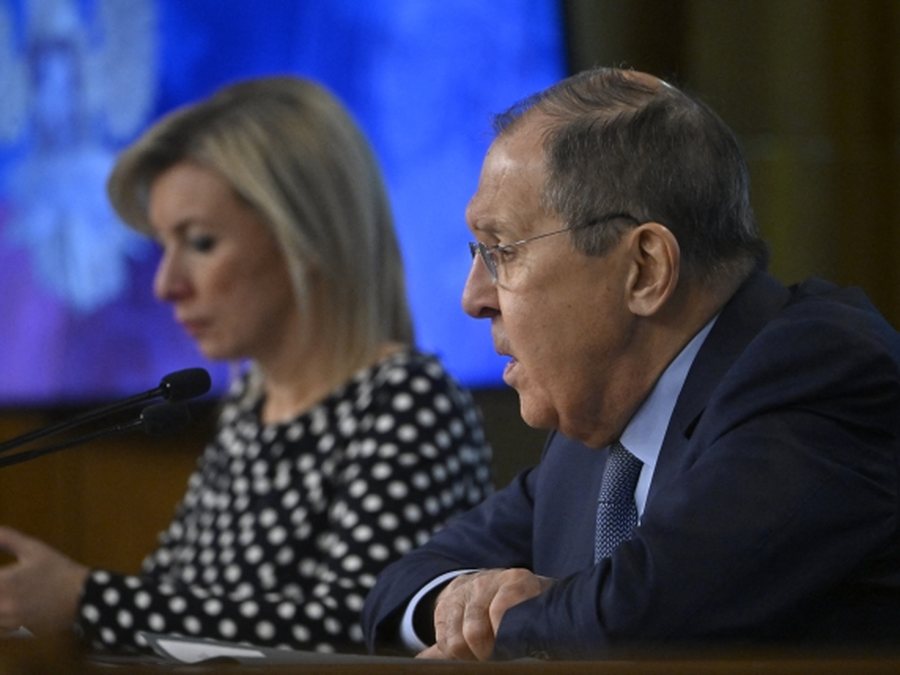
Viewership of propaganda shows drops sharply; more and more Russians turn to alternative sources of information
We need to get used to this reality. These are difficult times for Russian propaganda, at least domestically. Russians are watching less and less talk shows with pronounced one-sidedness and are increasingly choosing entertainment programs. According to an analysis by the polling company Mediascope, based on data on the audience of Russian television for 2025, about half of the programs that are considered propaganda in the West are no longer among the 100 most watched broadcasts in the country.
Take Vladimir Soloviev, one of the most popular figures in this segment, for example. His daily show, with various guests, airs on the Rossiya channel five days a week, but now only the Sunday editions manage to enter the second half of the ranking of the 100 most watched programs. In 2025, he appeared among the 20 most watched programs of the day only seven times.
Its viewership has fallen from 2% of the audience at the beginning of 2025 to 1.6% currently, in a potential market of around 120 million viewers. In 2022, when the war in Ukraine began, the figures were significantly higher, almost double.
According to the author, it is not just a matter of audience, but a political problem. Threats to bomb Paris, Rome or Berlin, or to use nuclear weapons against all of Europe, are no longer believed by the majority of the public.
Soloviev has a tense relationship with Italy, due to his confiscated villas. His attacks on Prime Minister Giorgia Meloni come at one of his weakest moments in terms of popularity. The harsh rhetoric has not been limited to Italy: a few days ago, he had also directed attacks at French President Emmanuel Macron, including personal insinuations. When the repertoire remains the same, the only way to attract attention is to raise the tone.
It is no coincidence that the only propagandist who continues to have a relatively stable audience is Dmitry Kiselev, with his weekly show Vesti nedeli. He too has suffered a decline, from 5.4% in January 2025 to 4.8% in January 2026, but he retains a special status thanks to his direct ties to President Vladimir Putin. He is perceived not simply as a propagandist voice, but as an interpreter of the official line.
Precisely because of this decline in influence in the country, Soloviev's statements and Giorgia Meloni's reaction have not received much attention in Russia. There were no comments from state institutions. Only Foreign Ministry spokeswoman Maria Zakharova gave a brief reaction, describing his words as "personal opinions."
Even the newspaper Moskovskij Komsomolets, known for its harsh stances, showed unusual caution, noting that Soloviev is known for his provocative statements and that they have provoked a reaction from the Italian authorities. Essentially, one of his functions has always been to present the president as a more moderate figure.
As for Italy, any special treatment seems to have ended. In November 2024, Foreign Minister Sergey Lavrov called Italy an “enemy.” Since then, official statements have become increasingly harsh. In July 2025, the name of the President of the Republic Sergio Mattarella was included in a section of the Russian Foreign Ministry website entitled “Examples of hate speech against Russia.” In October, Italy, Germany, and Japan were accused of “justifying fascism.” In November, Zakharova stated that Italy could face serious consequences if it continued to support Ukraine. On January 20 of this year, Lavrov himself said that relations with Italy were at their lowest point.
If one of the president's closest associates sets this line, then it is expected that propagandists will follow and amplify it. However, their influence on the Russian public is weakening. More and more citizens do not take these figures seriously, even mocking them and looking for other sources of information beyond state television.
In this context, the intensification of the efforts of the Russian secret services and government against independent media and the use of VPNs, which enable access to foreign and independent websites, takes on a clearer meaning. According to the author, a similar situation was also seen in the last years of the Brezhnev era, before the changes that followed later./ Adapted from "Pamphlet", from "Corriere della Sera"






Lini një Përgjigje