


 Shkruar nga Pamfleti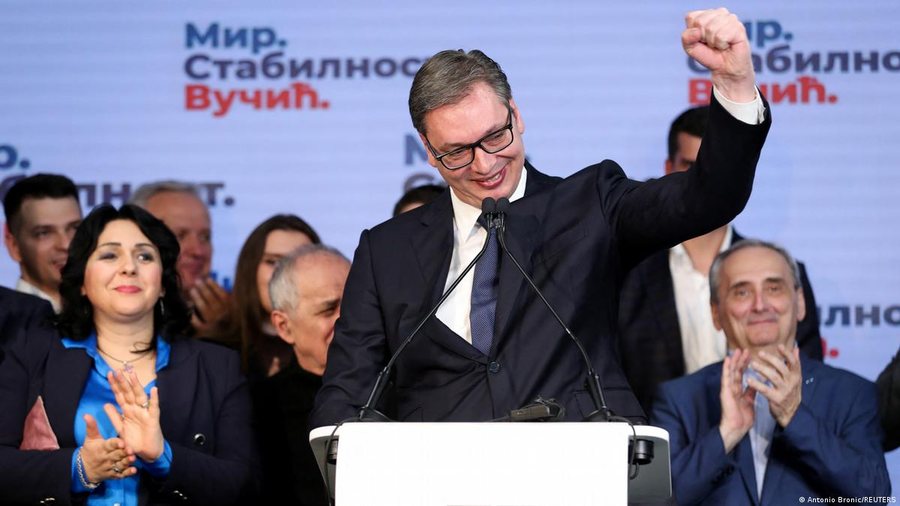
If the Serbian opposition secured at least a third of the parliamentary seats, it would be able to block constitutional changes, maintain a modest measure of control over the government and inspire more opposition to Vucic.
Serbian voters will head to the polls tomorrow, almost six months after mass school shootings rocked the country and sparked protests against pro-Russian President Aleksandar Vucic.
Opposition parties formed an ad-hoc coalition, 'Serbia Against Violence', seeking to capitalize on voter discontent and challenge Vučić's populist Serbian Progressive Party (SNS).
But the latest opinion polls show Vučić's SNS leading with around 40 percent, with the opposition unlikely to secure a parliamentary majority. Instead, Serbia Against Violence is narrowing its focus to local elections also taking place on Sunday, hoping to upset the SNS majority in Belgrade's city hall.
Polls for that race show the two camps head to head, with the SNS and their coalition partner on 42 percent and the opposition on 40 percent.
"The double elections present an opportunity to show that the image of Vucic as invincible would be shaken,", said Djordje Miketic, a green deputy and one of the harshest critics of the Serbian president.
Vucic himself has said that he would step down if his party fails to secure a majority in parliament. Such an achievement would be a remarkable success for Serbia Against Violence, given that the SNS government controls much of the media and has deeper resources than its opponents.
The opposition came together this year after two deadly shootings in May by teenagers shocked the nation. Public anger quickly turned against Vucic in weekly protests calling for his ouster.
In his seven years as president, Vucic, who cut his political teeth as propaganda minister for Yugoslav leader Slobodan Milosevic, has struggled to strike a balance between continuing on the path to EU integration and maintaining strong economic and political ties with Russia. .
Since Vladimir Putin's full-scale invasion of Ukraine last year, Serbia has become a hub for Russian immigrants and businesses trying to maintain a foothold in Europe, as Vucic has resisted EU pressure for rapprochement. with western sanctions.
The Serbian president's ambivalence towards Russia has angered many voters who want a clearer pro-European orientation, especially in the country's capital. If the opposition secured at least a third of the parliamentary seats, it would be able to block constitutional changes, maintain a modest measure of control over the government and inspire more opposition to Vucic.
The capital's administration is influential in Serbia's political and economic landscape, given that nearly half of the country's gross domestic product is generated in Belgrade. Some of the biggest development projects beloved of the president are also located in the capital, including a water project and the hosting of Expo 2027, a major world fair.
"An opposition victory in Belgrade and a weaker SNS in parliament would restore much-needed political pluralism in Serbia, but would not undermine Vucic's grip in power in a meaningful way in the coming years", said Milos Damnjanovic, an analyst at the BIRN consultancy in Belgrade.
Complicating the Serbian opposition's efforts are historical sympathies with Russia and a deep-seated distrust of the West following the NATO-led bombings in 1999, when Milosevic was in power in Belgrade. Another blow came when Kosovo became an independent nation supported by the US and most EU countries.
The opposition alliance, which is an eclectic mix of social democratic, liberal, green and centrist parties, is not sure how long its relationship will last beyond Sunday's election. Therefore, Sunday's elections seem like the last opportunity to separate Serbia from Russian influence./Adapt "Pamphlet" from the "Financial Times"




Lini një Përgjigje