


 Shkruar nga Pamfleti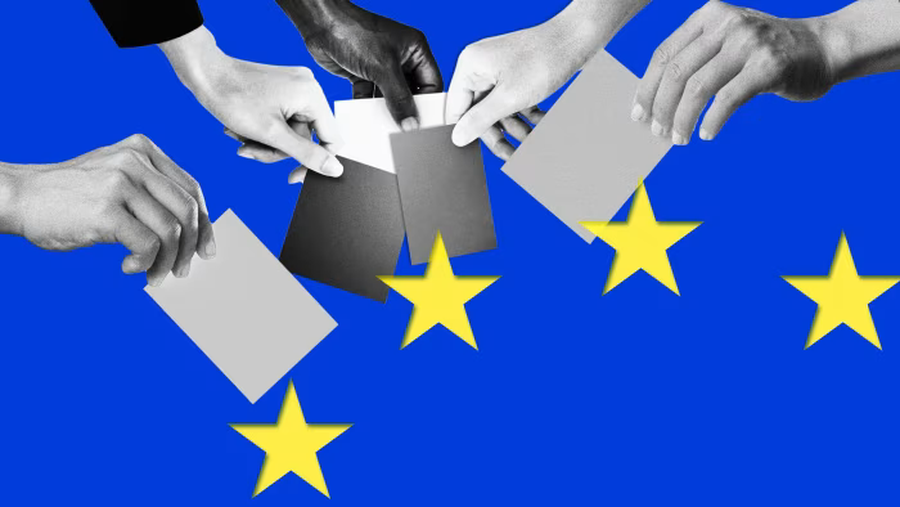
Is the rise of the right a structural trend or an emotional reaction to Europe's changing fortunes? Will it cause an anti-extremist mobilization, as has happened in Germany? And will European Commission President Ursula von der Leyen's strategy of dividing and fraternizing with parties to the right of her political family, the Christian Democrats, work? Or will Europe fall asleep in a much darker scenario?
Next week's European Parliament elections will not be a festive affair for the political mainstream. Parties to the right of the Christian Democrats in the European People's Party will gain more seats and influence than ever before. They are likely to be the clear winners in several EU member states, including France, Italy, Hungary, Austria and the Netherlands. The Greens and Liberals are expected to lose seats. As a consequence, the next European Parliament will be more polarized and fragmented than ever.
National political leaders tend to see European elections as wars fought with false rounds in which many are injured but no one is killed. But the long-term consequences of this shift to the right are currently unclear. Is the rise of the right a structural trend or an emotional reaction to Europe's changing fortunes? Will it cause an anti-extremist mobilization, as has happened in Germany? And will European Commission President Ursula von der Leyen's strategy of dividing and fraternizing with parties to the right of her political family, the Christian Democrats, work? Or will Europe fall asleep in a much darker scenario?
Much of Europe's far right today has been shaped by the failure of Brexit. They are haunted by the fear of winning and being forced to fulfill their radical promises. They remain Eurosceptic or European pessimists, but they are not openly anti-European. And despite recent discussions between Marine Le Pen, leader of France's National Rally, and right-wing Italian Prime Minister Giorgia Meloni, they do not present a unified bloc. The recent expulsion of the Alternative for Germany (AfD) from the Identity and Democracy group in the European Parliament, caused by Le Pen, is the latest sign of how difficult it would be to accommodate all of the continent's radical right under one roof.
The migration emergency initially fueled popular support for the far right. But since the heady days of the 2015-16 crisis, much has changed. The main parties have now become very cautious about migration policy, arguing instead for the strengthening of external borders. And in power, the far right is beginning to realize that Europe needs immigrants if it hopes to maintain its economic competitiveness.
A recent survey conducted by the European Council on Foreign Relations showed that the main effect of the entry of the far right into government in Italy has not been to reduce the number of illegal immigrants, but to reduce public anxiety about migration. The far right may not be as good at stopping immigration, but it seems they are more effective than liberals at helping voters digest the changing demographic reality of European societies.
Demographic anxiety is the dominant sentiment on the right, but it's not the same as simple xenophobia — rather, it's about fearing the economic and political consequences of an aging and shrinking population.
Therefore, the central paradox of this election is that migration is not the divisive issue it was five or ten years ago. Rather than migration policies, it may be the European Green Deal that is most affected by the growing power of the far right. The future of the EU will be structured by the clash between the two "extinction" rebellions. One is the revolt of climate activists, who are terrified that if we don't change our behavior fundamentally, we will destroy life on earth. The other rebellion is that of the "Great Replacement" right, which fears that urgent failure to do something about migration and fertility will spell the end of the European way of life. They differ in almost everything except a shared sense of urgency.
What makes it difficult to predict the consequences of next week's poll is that the shape and character of the new European majority will be decided in two rounds. Europeans will vote in June; Americans elect their president in November. The outcome of the US election will be felt especially in Europe.
A Donald Trump victory will undoubtedly embolden the European right. But Trump is unpopular in Europe, and the ability of the far right there to influence him is minimal. This will be the case especially when Washington's policies on trade, China or NATO conflict with Europe's strategic interests. The far right will be forced to choose between its ideological alliance with Trump and the risk of being seen at home as useful idiots of an American president. Internationalism is never easy, but the internationalism of nationalists is a particularly difficult trick to pull off./ Adapted "Pamphlet" from "Financial Times"






Lini një Përgjigje