


 Shkruar nga Pamfleti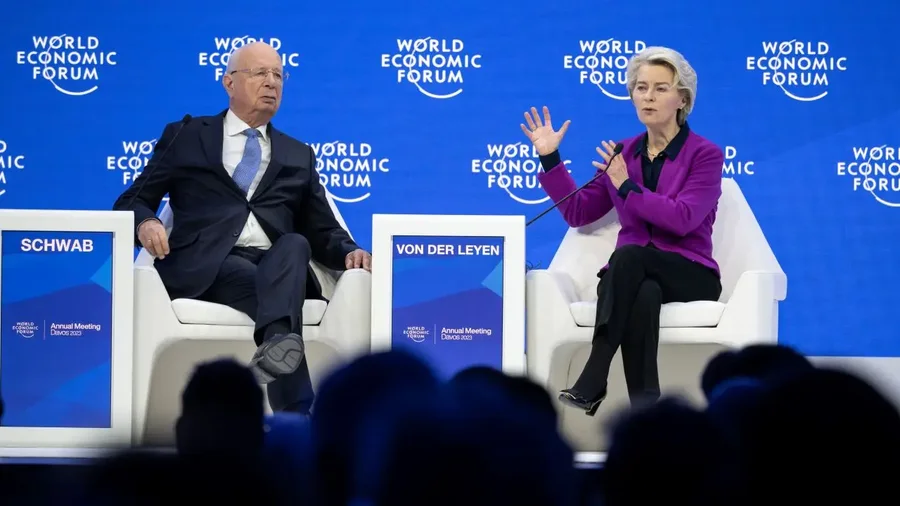
World leaders are gathering in Davos this week to plan the planet's most pressing problems. Two major wars, the shipping crisis, cyber attacks on state institutions and even more alarming evidence of the climate emergency mean there is no shortage of talking points. But turning ideas into action when governments owe an unprecedented $88.1 trillion in debt, nearly equivalent to the world's annual economic output, will be difficult.
Public debt exploded during the pandemic, and new borrowing this year is likely to break records in some major economies, leaving governments less able to respond to shocks such as financial shocks, pandemics or wars.
Even in the absence of a new crisis, rising debt service costs will limit efforts to address climate change and care for an aging population. Public services in many countries are already strained after successive budget cuts.
More worryingly, as debt burdens increase, governments may find themselves unable to borrow more to service existing obligations and adequately fund basic services.
"A government unable to service its debt will be forced to implement sudden and painful spending cuts or tax increases. And such a government may lack the fiscal space to respond to future negative shocks, preventing fiscal support when it is most needed," said Michael Saunders, a former member of the Bank of England's monetary policy committee. .
Saunders, now a senior economic adviser at consultancy Oxford Economics, doesn't think rich economies are approaching what is roughly equivalent to a personal credit limit and points to investors' sustained appetite for government debt. But this does not mean that the limit will not be tested "10, 20, 30 years from now".
Limit testing
The United Kingdom, the world's sixth-largest economy, offers a cautionary tale of how bad things can go when investors reject a government's plan to borrow.
In September 2022, the pound and UK government bonds, or T-bills, sold off sharply, partly in response to former prime minister Liz Truss' plans to issue more debt to pay for tax cuts. Mortgage rates and other borrowing costs rose as investors demanded much higher premiums for owning UK debt. The Bank of England was eventually forced to step in and pledge to buy bonds to "whatever scale is necessary".
"If the dysfunction in this market were to continue or worsen, there would be a material risk to the financial stability of the United Kingdom ," Dave Ramsden, a senior official at the central bank, said at the time. "This would lead to a reduction in the flow of credit to the real economy."
While central banks can provide temporary emergency support, they cannot finance government deficits instead of bond investors.
Just look at crisis-hit Argentina, where for years the central bank printed pesos to help the government with its spending, to help the country pay interest on its debt and avoid default.
This tactic caused the value of the currency to fall and prices to rise. Annual inflation topped 211% last month, the highest level in three decades.
A year of election risk
Government budgets will face fresh scrutiny this year from investors on high alert for politicians tempted to make promises in a bid to win over voters. Half of the world's population goes to the polls. This part of the election means little incentive for belt-tightening among existing administrations, while also raising the prospect that incoming leaders will seek to make their mark with new tax and spending plans.
Already, the debt is shaping up to be a key issue in this year's US elections, which will culminate in the presidential election in November. Record levels of public borrowing have become a major point of contention between Republicans and Democrats, exacerbating impasses over the national budget that periodically threaten to starve federal agencies of funds and keep them from operating.
Rising debt and political leverage have already taken their toll on America's credit rating, which typically affects borrowing costs for government, businesses and households.
Fitch cut its rating on US sovereign debt to AA+ from the top AAA last August, citing political polarization as a factor in its decision. Meanwhile, in November, Moody's warned it may also drop the United States' last perfect rating from the big three rating agencies.
"One of the main elements that underpins a country's credibility on its ability to repay (the debt) is political consensus ," said Raghuram Rajan, a former governor of the Reserve Bank of India.
"It is not inconceivable that if democracy takes a nosedive in the United States, if there is a sense that there is going to be a political disaster, the value of US sovereign bonds will fall. And this would increase the government's borrowing costs" , he added.
Even if worst-case scenarios are avoided, rising debt servicing costs following a recent sharp rise in official interest rates are siphoning ever-larger sums of money away from vital public services and making it harder to deal with of the climate crisis.
Britain's main opposition Labor Party has scaled back some of its big green spending plans due to concerns about increasing the country's debt burden, according to UK media reports. In the current financial year, which ends on April 5, the UK government is expected to spend more on debt interest (£94 billion, or $120 billion) than on education or defence, according to the Office for Budget Responsibility, a fiscal supervisor.
In the United States, interest costs on a common measure rose to $659 billion in fiscal year 2023, which ended Sept. 30, according to the Treasury Department. That's up 39% from last year and nearly double what it was in fiscal year 2020.
In 2023, the government spent more on servicing its debt than on housing, transportation and higher education each, according to the Committee for a Responsible Federal Budget, a nonprofit organization.
The increasing indebtedness of advanced economies that these large interest payments illustrate partly coincides with slowing economic growth and an increase in the number of elderly relative to working-age people. Against this background, it is unclear how the world will dig itself out of its debt hole.
"What can save us relatively painlessly is if we have big productivity improvements without job losses ," Rajan, now a professor of finance at the University of Chicago Booth School of Business, told CNN, suggesting that artificial intelligence can hold the key. Indeed, many experts think that an AI-powered productivity boom could transform the fortunes of the global economy.
Let's hope that over the next few days in Switzerland they show us how.








Lini një Përgjigje