


 Shkruar nga Pamfleti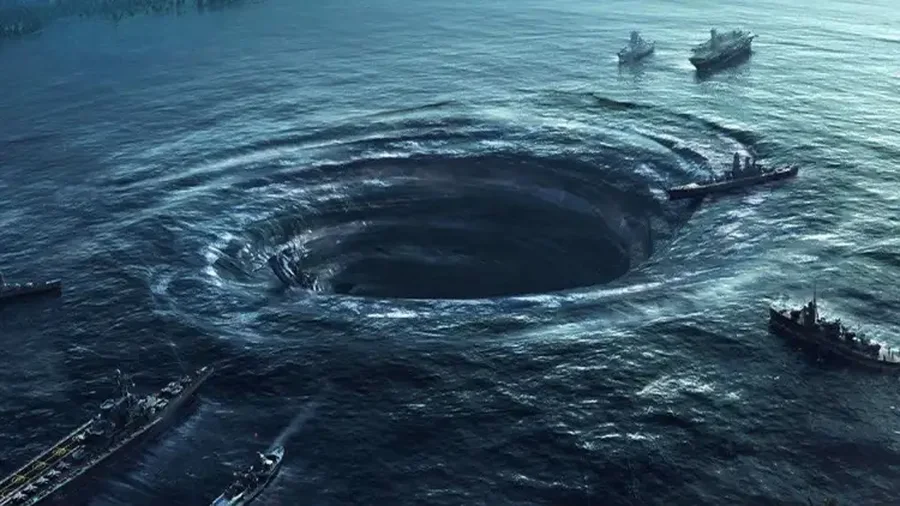
One of the Atlantic Ocean's most well-known geological mysteries may finally have a scientific explanation. Researchers from the Carnegie Institution for Science and Yale University say they have discovered why Bermuda continues to float above the water's surface, even though its volcanic activity has ceased for more than 30 million years.
According to the study, under the island lies a massive rock structure, created by ancient volcanic magma, which acts as a "floating platform" and keeps the entire region elevated.
For years, geologists have faced a paradox: volcanic islands usually gradually sink as they lose their source of heat from the Earth's interior. Bermuda, however, has remained an unusual exception.
The team of researchers identified a layer of rock about 19 kilometers thick beneath the oceanic crust. According to them, the material is lighter than the surrounding rocks, which creates a "floating" effect that prevents the island from sinking.
Scientists believe that this structure was formed about 30–35 million years ago, when magma from the Earth's mantle rose to the surface, spread beneath the oceanic crust, and then cooled and solidified.
To reach these conclusions, the researchers analyzed more than two decades of seismic data collected from a monitoring station in Bermuda. By studying how seismic waves propagate through different rock layers, they created a map of the subsurface structure down to over 40 kilometers deep.
The study may also have an impact on the interpretation of the phenomenon known as the "Bermuda Triangle". According to researchers, the area presents natural gravitational and magnetic anomalies. In some parts, gravity is slightly weaker due to the composition of underground rocks, while the presence of minerals rich in iron and titanium can affect magnetic signals and the functioning of compasses or navigation devices.
However, experts emphasize that these phenomena are natural and do not pose an unusual risk.
"Bermuda is an extremely interesting place to study because many of its features do not fit classical geological models. This shows that there may be processes in the Earth's mantle that we do not yet fully understand," said researcher William Frazer.







Lini një Përgjigje