


 Shkruar nga Pamfleti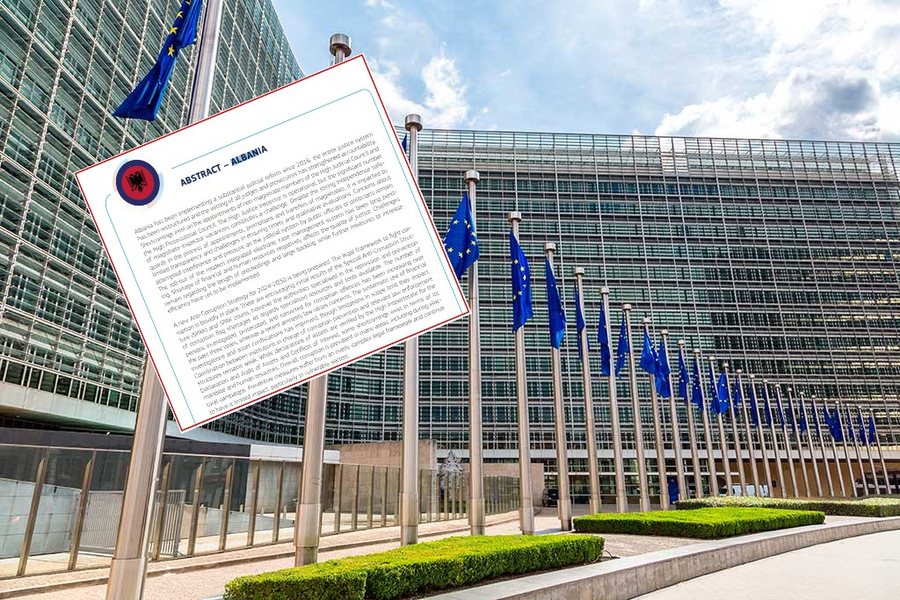
According to the EC, pressures and interventions in the justice system remain a major concern. According to the report, the reform is progressing and SPAK is fighting corruption, but it is very little...
The Albanian government continues to receive strong blows from the international community.
The European Commission has published today the fifth annual report on the rule of law. This year's report includes, for the first time, four chapters on developments in Albania, Montenegro, North Macedonia and Serbia. According to the EC, the inclusion of these enlargement countries in the Rule of Law Report will support their reform efforts, help the authorities make further progress in the accession process and prepare for further work on the rule of law.
As for Albania, it seems that the criticisms are endless. According to the EC, pressures and interventions in the justice system remain a major concern. According to the report, the reform is progressing and SPAK is fighting corruption, but it is very little.
A strong blow is given to the government for the appointment of Alfred Peza as head of RTSH, as it is said that Public Television has become politicized. The non-implementation of the Constitutional Court's decisions regarding Olta Xhaçka is also a cause for concern. The amnesty law, which favored some officials, was also seen as disturbing.
Summary of findings for Albania
Albania has implemented a fundamental justice reform since 2016, where the entire system has been restructured and the vetting of all judges and prosecutors has strengthened accountability.
There are deficiencies in the appointments of non-magistrate members of the High Judicial Council and the High Prosecution Council. The High Inspector of Justice is functional, but the considerable number of magistrate-inspector vacancies is a challenge. Despite strong independence safeguards in the process of appointments, promotions and transfers of judges, it is affected by limited transparency and the challenge of ensuring timely quality evaluations.
Attempts to intervene and put pressure on the judicial system by public officials or politicians remain a concern.
The lack of financial and human resources negatively affects the quality of justice. Challenges remain regarding the duration of procedures, while further measures need to be increased.
A new Anti-Corruption Strategy for the period 2024-2030 is being prepared. The legal framework to fight corruption is widely established. There are encouraging initial results of the Special Anti-Corruption Structure (SPAK) and the courts, however the authorities are hindered by the lack of resources and necessary tools.
The number of people investigated, prosecuted and convicted for corruption offenses has increased in the last three years, while a recent amnesty law raises concerns.
Financial investigations and asset seizures have improved, although limitations in scope hamper their impact.
Coordination between institutions responsible for corruption prevention and law enforcement remains weak. While asset declarations are verified by the High Inspectorate for the Declaration and Audit of Assets and Conflict of Interest, there are some shortcomings in terms of terms, mandate and human resources.
In general, corruption is widespread in many areas, even during election campaigns. Preventive measures suffer from an overly complex legal framework and continue to have limited impact, especially in vulnerable sectors.
Concerns have been raised about the independence of the audio-visual regulatory authority.
Limited regulation of media ownership transparency and high concentration negatively affect media independence. Fair distribution of state advertisements and other state resources is not ensured.
There are concerns about the independence of the public broadcaster. While the changes in the law on the right to information bring positive changes, there are shortcomings in implementation. The framework to protect journalists is in place, but verbal and physical attacks, smear campaigns and strategic lawsuits against public participation are cause for concern.
The changes in the Law on Investigative Commissions have been criticized for limiting the supervisory role of the Parliament and are under review by the Constitutional Court. Deep political polarization had a negative impact on the effectiveness, transparency and objectivity of parliamentary work.
The Constitutional Court is effective in maintaining institutional checks and balances, even though the Parliament has failed to respect some of its decisions. The legal framework for the Ombudsman and the Anti-Discrimination Commissioner is in operation, but there are obstacles to their effective work.
The environment for civil society organizations is challenging, including registration requirements and limited public funding./Pamphlet





Lini një Përgjigje