


 Shkruar nga Ben Blushi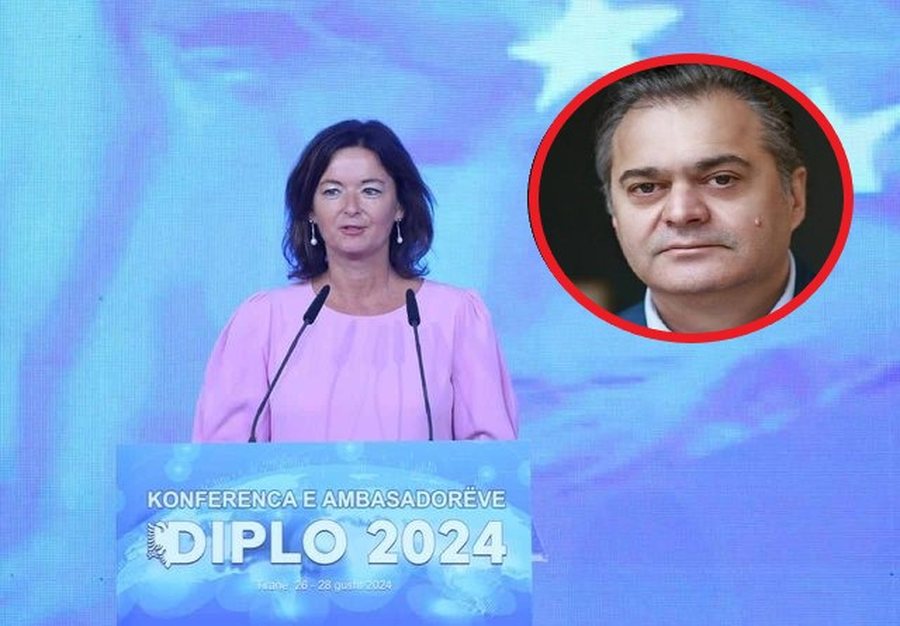
That's not the problem though, and I don't want to deal with it. No one can choose the time they live. The problem is not Tanja, but Europe, which has remained in the hands of Tanja. The Europe we know after the 1990s is divided into three times.
When I hear the Slovenian politician Tanja Fajon coming to Tirana and saying that Albania can be in the EU there from 2030, I think that even this date is impossible precisely because Europe is full of politicians without any weight like Tanja Fajon, who speak without I know what they say.
Not just to catch him off guard, because this is a very easy thing in this case, if I had the chance I would ask him why he thinks that Albania can be part of the EU in 2030 and not in 2028? Or why not in 2035?
What does Tanja Fajon expect us to do by 2030 that we cannot do in 2028 or 2027?
Tanja Fajon naturally has no answer and there is no way.
Just like her, in the EU today there are hundreds of weightless politicians who make a career by participating in seminars where no decisions are made and where no one is held accountable for what they say.
Someone who knows these types of politicians well told me one day that for them, no action is action. Tanja Fajon is typical of a generation of politicians for whom lack of action is action.
That's not the problem though, and I don't want to deal with it. No one can choose the time they live.
The problem is not Tanja, but Europe, which has remained in the hands of Tanja.
The Europe we know after the 1990s is divided into three times.
At first, after the fall of the Berlin Wall, Europe made right decisions, even very right ones, one of which was the membership of Slovenia, Tanja Fajon's country, in the European Union on May 1, 2004. 20 years ago.
In the second time, which was dominated by Angela Merkel, Europe took decisions, despite many of them being wrong, such as inflating the Greek crisis, to strengthen Germany and weaken everyone else, which took Britain out of Madhe, which rightly could not stand the German domination of Europe.
And in the third time, the time we live in, the problem is even bigger. Europe no longer makes any decisions. If the politicians who are leading today were in power in 2004, probably even Tanja Fajon herself would not have voted for Slovenia, her country, to become a member of the European Union.
This does not mean that Tanja and Tanjat do not love Slovenia or Albania. This means that procrastination, i.e. not making any decisions, is the most prominent feature of Europeans today.
The Europeans do not make any decisions today, neither for Ukraine, nor for immigration, nor for Israel, nor for Hamas, nor for expansion, and how can we ask them to make a decision for Albania.
Sapo mbaron një çështje hapet një tjetër dhe kur çështja e dytë fillon të zgjidhet, vijnë zgjedhjet dhe nëse nuk ke zgjidhur siç duhet çështjen e parë, atëherë e dyta ti humb zgjedhjet, kështu që tipari më i madh i mbijetesës politike ne Evropë, është hapja e të gjitha çështjeve dhe mosmbyllja e asnjërës.
Prandaj emigrantët dynden por nuk integrohen në Evropë, prandaj nuk ka fund lufta në Ukrainë, prandaj ekonomia është gjithnjë në rënie, prandaj Kosova dhe Serbia nuk gjejnë dot paqe, prandaj nuk ka zgjerim dhe ndoshta nuk do ketë për shumë kohë.
Nëse dikur Evropa kishte strategji, disa nga të cilat dështuan dhe prandaj u kthyen në taktika, tani nuk ka asnjërën por ka vetëm teknika.
Këto mund të quhen teknika elektorale që do të thotë se duke mos bërë asgjë fiton më kollaj.
Më saktë, aftësia për të sajuar kriza, votohet më shumë se aftësia për t’i zgjidhur ato. Kështu që çdo krizë ndiqet nga një tjetër pastaj dhe nga një tjetër dhe të jetosh në krizë është kthyer në normalitet.
Sepse jetoi në kohën kur strategjitë e mëdha u harruan dhe fuqinë e morën taktikat e vogla, Angela Merkel humbi trashëgiminë e saj politike, Boris Johnson humbi partinë, kurse Macron po i mbyll të dyja mandatet pa çuar asnjë punë deri në fund.
Emanuel Macron është mbreti i kësaj teknike pa thelb që ndryshe kuptohet si : bëj sikur bën shumë dhe mos bëj asgjë. Pirueta e vazhdueshme e Macronit mes të majtës dhe të djathtës në Evropë tani quhet liberalizëm konstruktiv.
Kjo është moda e fundit në Evropë që i ngjan një ecje mbi taka, përpara rrëzimit.
Për fat të keq ne jetojmë në këtë kohë dhe prandaj Tanja Fajon ikën krenare nga Tirana duke besuar se jo vetëm ka bërë një punë, por edhe sepse beson se ne e besojmë se na ka dhënë pak besim.
Tani që kujtoj se Sllovenia u bë antare e BE, 20 vjet më parë në vitin 2004, besoj se vlejnë disa krahasime.
Kushdo që e njeh sadopak këtë vend të mrekullueshëm malor nga i cili dalin herë pas here bastkebollistë të mëdhenj të NBA, zonja të para amerikane apo filozofë marksistë si Sllavoj Zizek nuk më bind dot se diferenca e Sllovenisë me Shqipërinë është gati 30 vjeçare.
Sllovenia pa dyshim është një vend i qeverisur më mirë se Shqipëria në 100 vitet e fundit dhe pa dyshim edhe në 30 vitet e fundit, por fati i saj i madh ishte që nuk u përfshi në konfliktet e brendshme të Jugosllavisë. Ndryshe nga ç’ndodhi në Kroaci, lufta mes Serbisë dhe Sllovenisë zgjati vetëm 10 ditë në vitin 1991 dhe pothuajse nuk mund të quhet një luftë, sepse nuk u vranë më shumë se 20 ushtarë.
Pra nëse kthehemi në vitin 2004, vendimi shumë i drejtë i BE për anëtarësimin e Sllovenisë nuk ishte i shtyrë vetëm nga cilësia e ekonomisë dhe demokracisë, e shtetit të së drejtës, por nga dalja në paqe nga ferri i Jugosllavisë.Kroacia, vendi binjak me Slloveninë, u dogj në këtë ferr dhe mezi doli që andej, për t’u anëtarësuar në BE gati dhjetë vjet më vonë në 2013.
Ne Evropë ndoshta nuk ka asnjë vend që i ngjan Shqipërisë më shumë se Sllovenia.
They have 2.1 million inhabitants, we have 2.4 million. They are a country with a small outlet in the Adriatic, we have the largest outlet after Italy. They have many forests and mountains as we do. They have as much snow as we do, but we have far fewer skiers. They don't have a border with Serbia, neither do we. They are in NATO and we are. They had 6 million tourists last year, we believe we had 7 million. Of course, they have a gross domestic product almost 4 times larger than us, but considering that they have been members of the EU for 20 years, this difference is not as big as it seems.
So what more should we do to be part of the EU like Slovenia? What have we not done since 2004 when Slovenia became a member of the EU and therefore Tanja Fajon thinks she has the right to set the day when we will join?
I think that there is no country that has done more in 30 years than what was asked of it by Europe. Albania is the most obedient country on this continent and maybe even on the planet. Albania unfortunately has a colonial subjugation that sometimes goes as far as humiliation.
They asked us not to claim a single lost square meter in the Balkans, we did. They have asked us to discourage the union of Kosovo with Albania, and we do it every day without restraint. They invaded us without giving us any reparations, we accepted it. They asked us to be hostile to Russia, we did it. They asked us to reject Chinese investments, we did it obstinately, although they themselves did not do it, and I wonder why they do it. We have been asked to send soldiers to Afghanistan, where we have no reason to be, and we have. They asked us to close the market for the birth, we did. We have been asked to reduce the prices of our agricultural products, and we have done so. They have taken most of our natural resources or destroyed them, putting them out of business, we have accepted it. They have limited our fishing quotas in the Adriatic, we have accepted it. They asked us to build a special court which they run themselves, we did it. The judges and prosecutors have asked us to name them, and we have accepted.
They monitor our elections and tell us how we should do them, and we have accepted. They have asked us for manpower, and we give it to them every day. We have been asked by miners, farmers, nurses, waiters, students who pay as much as chicken to their poor schools, we have done it and we do it. They asked us to change the laws and not to adopt laws that could favor our market and we did.
So what do we still have to do to be treated like Slovenians?
Why is it that even when we are so obedient, we are still asked to be even more obedient? What do we still have to do to be treated like Slovenians, Bulgarians and Romanians?
I don't know. But the point is that even Tanja herself does not know.
Now she's gone and I can't ask her and in fact I don't even want to ask her because her frivolity insults me and forces me to write things that 30 years ago I didn't even think about.




Lini një Përgjigje