


 Shkruar nga Pamfleti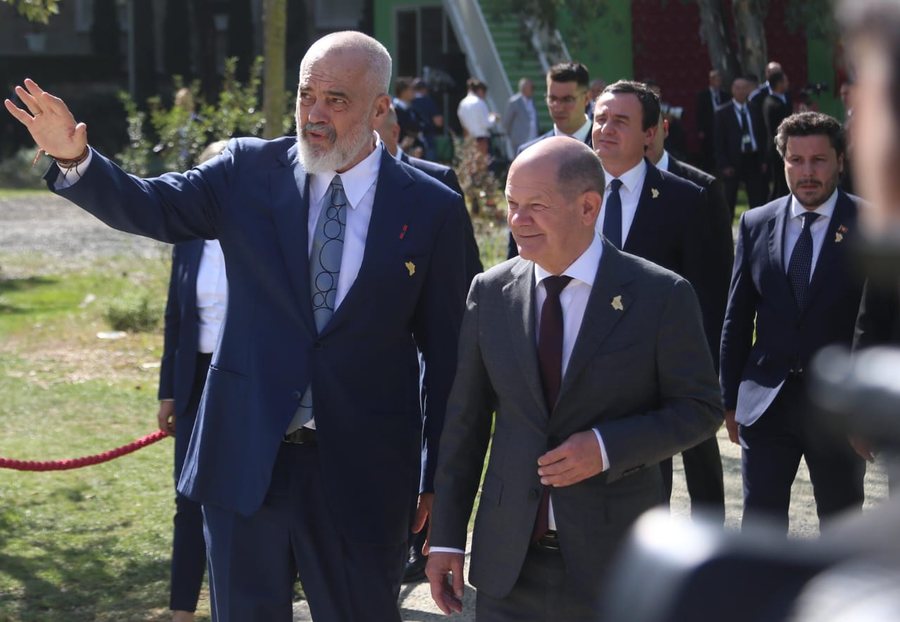
What could bring Albania's entry into the Eurozone in such a traumatic way?
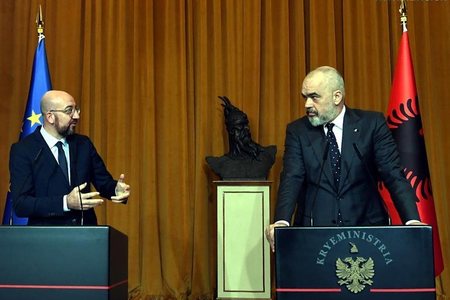
For several days it has been circulating in the high political and diplomatic salons that there is an explosive version that is expected to be discussed today at the Berlin Summit in Tirana.
And this has been discussed for a long time, and as important sources at high levels of the Albanian state inform, an agreement has been reached.
It is about the rapid introduction of the euro as the national currency in Albania and the death of the national currency lek. Some even talk about January 2024, or many 2025.
This discussion is not an idea that can be discussed and discussed with interest groups and institutions, but a decision that Edi Rama has taken himself, who has been negotiating it for years. Even, as it is learned, he has used it cunningly, as a plan B if he is refused the huge fiscal amnesty.
And now it is official that the fiscal amnesty is dead and for this reason the Albanian government has also withdrawn.
As it is learned, the long negotiations with the European Commission have been with a backup plan from the Albanian government. That is, if you don't allow us to make a full fiscal amnesty, then you should allow us to put some amount of money that Albanians have outside the banks in the countries where we live into the system. A mechanism already proven in Milo Djukanovic's Montenegro and then in Kosovo administered by the UN after 1999.
How is this system?
In Montenegro, and then in Kosovo, it was decided by political order to replace the Yugoslav currency dinar with the German mark, which brought a direct entry into the system of the currency that was outside the banks, like an injection syringe.
But the brand is one thing, the euro is another. After both in Montenegro and in Kosovo, in 2002, when the mark was replaced by the euro, it brought significant impacts to the people, as the prices immediately increased by replacing a mark that had the smallest value, with a euro.
Today we have several EU countries that have joined the euro after years and years.
Croatia and Bulgaria, for example, entered the eurozone on January 1, 2023, after a long time when they prepared the economy, especially the deposits and the payment network with the national currency, to enter the European currency without trauma.
What could bring Albania's entry into the Eurozone in such a traumatic way?
It can mean that whoever of the actors outside the system has euros, i.e. entrepreneurs, parts of the black economy, etc., they can put them in the system. But the immediate conversion may lead to an increase in consumer prices, which will undoubtedly harm small businesses, but especially that part of small depositors who have accumulated a large amount of money in banks. Whom conversion alone will impoverish badly.
Financial experts have always said that this process needs some time, i.e. transition time, when measures must be taken to protect all those who have had the lek as a basis for exchanging financial relations in the country. Which are of course the majority of medium and small businesses. As large businesses, starting from exporters, importers or contractors; all operate in euros. These all win, as well as those who bring the accumulated currency into the pockets that the system allows. In fact, the fiscal ministry could bring about a legalization of 70 percent of the money outside the system, with this method it is calculated to 60%, where about 10% is the monopoly of the banks and institutions that have taken over the commission of this money.
What about the loss of citizens, where every price of bread increases by 20%?
For example, if a loaf of bread today costs 100 allek, with euros it costs 1 euro, but if the average salary or pension today is 50 thousand new or 500 thousand old allek, with euros it is not 500 euros. So, basically, every citizen is harmed, who generally receives their money from the second-level banks, who earn millions from this commission alone, and for this profit, Rama has requested that the money be merged outside the system. This seems to be a bombshell development of the Tirana Summit, which, if taken like this, will cause a great trauma to one part of the population, but to another, the oligarchs and banks, there will be staggering profits. .
With a word; as it has been until today.
But where is the opposition, who knows that this will happen?
Most of this opposition is more interested in the legalization of money than in the problems of people, and this is a fact that has come out openly either from public tenders or from permits and various agreements. After all, politics is not represented by those who support the citizens, but simply by the big entrepreneurs, who today are called oligarchs! / Pamphlet



Lini një Përgjigje