


 Shkruar nga Gjergj Zefi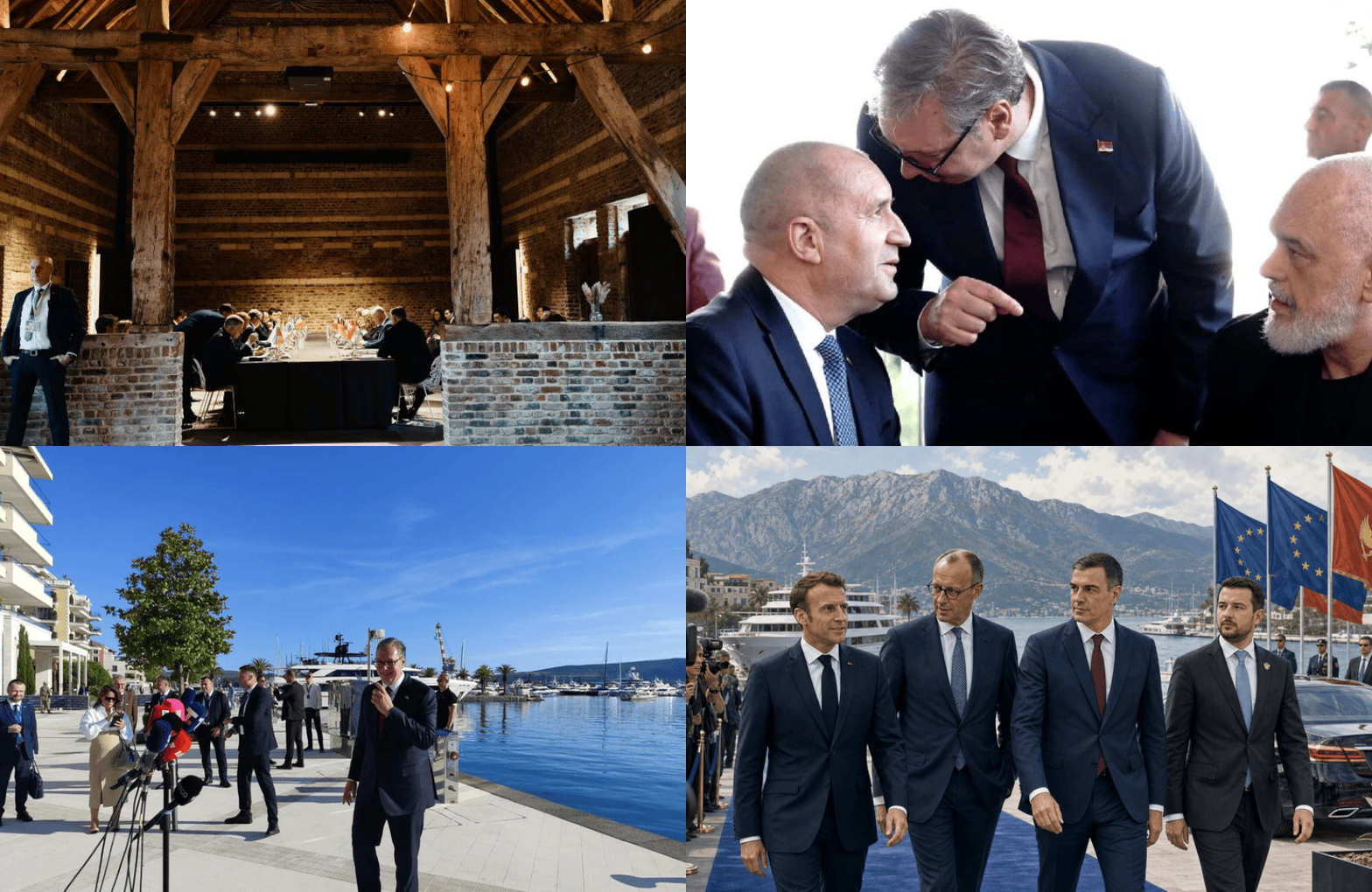
While Brussels talks about enlargement, behind the closed doors of the summit, new boundaries of political influence in the Balkans are being established and new lines of conflict between the West, Russia and regional actors are being tested...
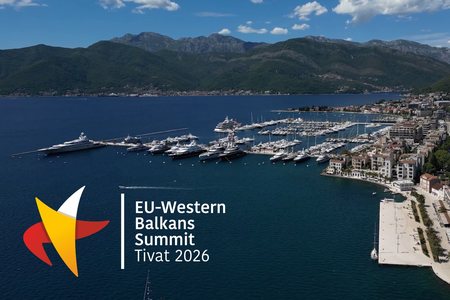
At first glance, the Tivat summit may seem like another routine meeting between leaders of the European Union and the Western Balkan countries, filled with declarations about integration, regional cooperation and the European perspective. But the reality is much more complex. Tivat is not simply a diplomatic destination chosen because of its position on the Adriatic. It has become the stage where one of the most important geopolitical battles is being played out for the future of the Balkans and for the very credibility of the European Union in the region.
After more than two decades of promises, delays and disappointments, Brussels seems to have concluded that the political vacuum created by its hesitations has gradually been filled by other actors. Russia, China, Turkey and in certain cases even the Gulf states have built mechanisms of influence that extend from the economy to security, from the media to politics. The war in Ukraine fundamentally changed Europe's strategic perception and made it clear to decision-making centers in Paris, Berlin and Brussels that the Balkans can no longer be treated as a distant periphery waiting endlessly in the corridors of enlargement.
Precisely for this reason, the Tivat summit should not be read as an ordinary conference, but as a political signal. The issue of European integration is not the only one on the table. On the table is control of the strategic space of the Western Balkans. For the first time in many years, the European Union is trying to regain political initiative in a region where its influence had begun to be questioned. This also explains the presence of the most important figures of European politics and the intensity of the discussions that are taking place away from official statements.
Serbia is in the spotlight. Not by chance. Belgrade continues to remain the main node of the Balkan equation. On the one hand, it is the largest candidate country for membership in the European Union. On the other, it maintains strong political, economic and emotional ties with Moscow. This ambivalence has been tolerable for years, but in the new European security climate it is becoming increasingly difficult to accept. The message coming from Tivat is that the era of balancing between East and West is coming to an end. The European Union requires clearer choices and more decisive positioning.
It is no coincidence that in parallel with the summit, discussions have increased on informal diplomatic documents, the so-called 'non-papers', which speak of a tougher approach to factors that challenge the institutional stability of Bosnia and Herzegovina and the integration processes in the region. In diplomatic language, non-papers are not binding documents, but they often serve as test tubes for policies that may materialize later. The fact that the name of Republika Srpska and its leadership is being mentioned more and more often in European circles shows that Brussels' patience with separatist tendencies has entered a new phase.
Beyond Bosnia and Serbia, the Tivat summit is also a message for the entire region. It signals that the European Union is trying to build a new political and security architecture in the Balkans, at a time when the continent is facing unprecedented challenges. From the war in Ukraine to global competition with China, from energy crises to hybrid threats, the Balkans are no longer seen simply as an enlargement project, but as part of European internal security. This is perhaps the biggest strategic shift that is quietly taking place.
In this context, Albania and Montenegro are gaining new political weight. Both countries are being perceived as reliable partners and as relative success stories compared to the impasses that continue to characterize other parts of the region. For Tirana, this is a moment that must be seized with diplomatic intelligence, because the new pace of enlargement could create opportunities that until yesterday seemed distant.
However, the most important question remains whether the European Union is ready to back up with concrete decisions what is presented today as a political vision. The Balkans have heard many promises over the past twenty years. What is missing are not declarations, but actions. Whether Tivat will be remembered as a historic moment will not depend on press releases or photos of leaders on the Adriatic. It will depend on whether a real phase of integration will begin after this summit, with deadlines, investments and tangible decisions.
Because the truth behind the Tivat summit is much bigger than a discussion about enlargement. It is about who will shape the political future of the Balkans in the coming decade. The European Union is trying to show that it still has that capacity. But to convince the region, this time it will need more than diplomacy. It will need determination. And that is where the success or failure of what is happening today in Tivat will be measured. / Pamphlet


Lini një Përgjigje