


 Shkruar nga Irena Beqiraj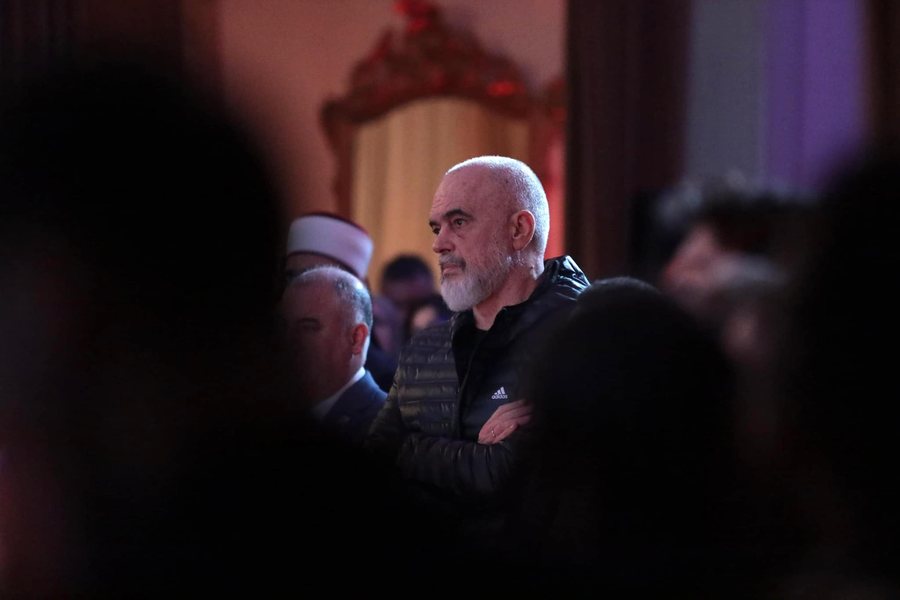
Unfortunately for him, since 1945 history has shown that the removal from power of personalist autocrats like Rama tends to be much uglier than the removal of dictators like Hoxha...
It is true that leaders are shaped by their background and experiences, just as it is equally true that culture and history shape the nation's attitude towards them. But the recent stances of the Global Leader of Tirana towards SPAK, sometimes threatening and sometimes savior, openly show a very important essential element for the survival of personalist autocracies, an element that often falls outside the lenses through which we are accustomed to analyzing Rama's leadership.
The point that we often overlook in our analyses is that personalist autocratic regimes, in comparison to autocracies led by the party or the military, have an inevitable need to create balances to ensure their longevity, from which the leader's power and weakness also stem.
For the past 12 years, Rama has been unmatched in power by anyone else in this country, and achieving this result has come at the cost of a distorted economy, the creation of a dysfunctional bureaucracy, the drafting of unhealthy clientelistic policies, control over the media, and the maximum weakening of the opposition. The centralization of power in Rama's hands could not be achieved without weakening institutions. But on the other hand, weak institutions have made governance difficult, simultaneously weakening his rule. Rama has undermined the rules, and has not been able to replace them with anything else. Therefore, he has always had to, like a circus artist, ensure the balance on the thin thread of power by holding the "stick" of the popular leader in his hand.
I believe we have all noticed how he uses critical language against Europe to irritate the base, but not so much as to engage in a conflict with it; how he uses corruption to reward friends, to buy support abroad and within the country, but not so much that the economy collapses; how he manipulates the news, but not so much that people turn off the TV; how he buys the media but without ultimately destroying them, since he does not need a media completely distrusted by the public; how he suppresses political opponents, but not so much as to cause reactions; how he appears as a continuous supporter and reformer of justice, but ensures through Anti-Corruption Commissions that the institutions of justice are not strengthened, since they become a risk of turning against him.
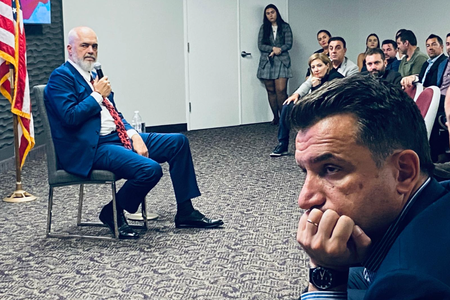
Rama, like all autocrats, has faced two main threats while holding power. He could be overthrown by the unity of the elite or he could be overthrown by a mass revolt. In mitigating these threats, Rama has created the perception of a "popular leader". It is precisely the creation of the perception of mass popularity that has made it less likely that people will take to the streets and the elites will unite to overthrow him. Because the moment the leader is perceived as popular, any attempt to overthrow him is less likely to be successful. Therefore, since his second mandate, we have seen Rama appear singing tallava and dancing like Arusha Silva. More than in the Assembly and government meetings, we have seen him talking "knee to knee" and "eye to eye" with the people. We have seen him distance himself from bad news, letting his subordinates "absorb" the public's anger and fight among themselves.
But unfortunately, history has shown that there are always some events that cause the decline in popularity of personalist autocrats and the inability to maintain balance.
Even the first arrest of a high-ranking official who is in office and at the same time the second most important figure in the Socialist Party is one of those events that makes the elections quite dangerous for Rama's government.
Today, there is not a single spiritual leader in his inner circle, or one who has linked his political future with him, who does not understand the dangers of his loss. This understanding exacerbates internal conflicts at this critical moment, further weakening his power.
Also, unfortunately, since 1945, history has shown that the removal from power of personalist autocrats like Rama tends to be much uglier than the removal of dictators like Hoxha. About 80% of personalist autocrats have ended up either dead in prison or in exile.
With his eyes wide open, spewing out foul language and anger, the "Global Leader of Tirana" is showing that he is at his worst and is revealing the weakness hidden behind his strength.
From February 10th onwards, it is clear to every friend and foe that he is bound to shamefully leave power, whenever that happens. Just as it is obvious that his departure will leave behind a ruined state and a ruin called the Socialist Party.
But I hope we don't lose the lesson that there is no other end for every strong and simultaneously weak leader.


Lini një Përgjigje