


 Shkruar nga Gjergj Zefi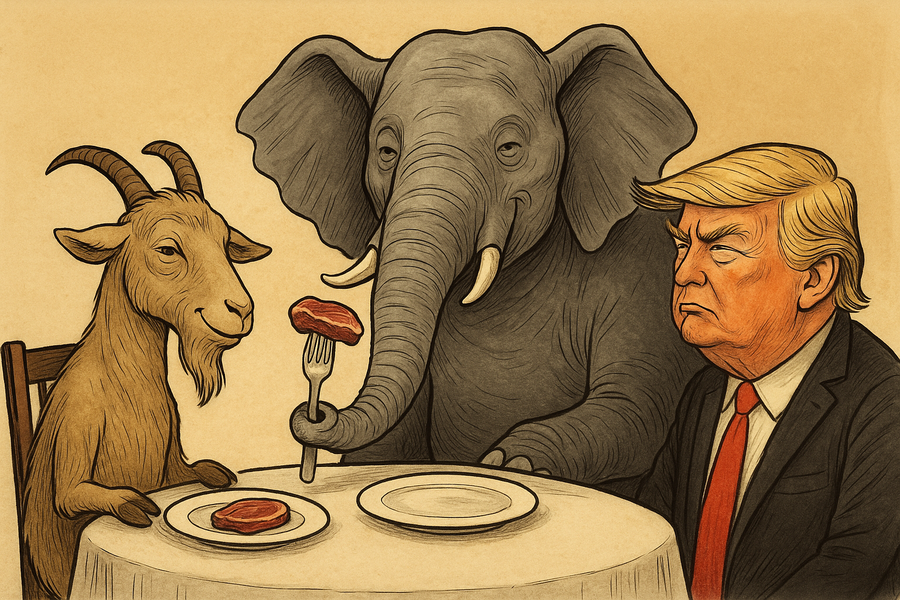
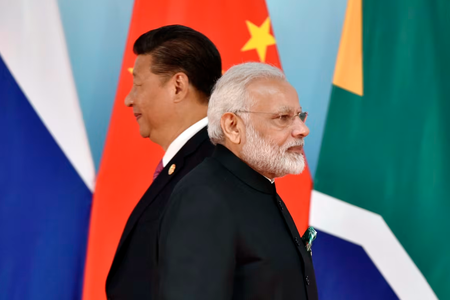
India and China reunite at the Tianjin summit, overturning the old logic of global alliances, a clear message for the Balkans, which should no longer stand in line...
The events in Tianjin are not just an Asian story, but a new page in the global book of power, which will be read aloud in the Balkans as well.
India and China, two of the pillars of the new multipolar order, are moving from collision to diplomatic embrace, paradoxically aided by Trump, the man who, with his arrogance, is breaking not only old alliances, but also the illusions of Western dominance.
This clash of titans is neither distant nor meaningless to us. It is the signal of a new reality that is knocking on our doors, while the Balkans still sit in the courtyard of a shattered Europe and an increasingly divided West.
In this context, the popular metaphor "goat's lunch," usually used to describe an unlikely alliance or a naive attempt to sit at the table of the great, takes on new meaning.
In Tianjin, it seems that the "goat's lunch" was not only not refused, but was enjoyed by the Elephant, the symbol of India. Simply put: what was once seen as foolishness; getting closer to China and bypassing the West, is today becoming a reasoned and well-thought-out strategic choice.
If India, with all its demographic, military, and economic weight, is feeling the need to change its strategic orbit, what should small countries like Albania think?
To date, Tirana has devotedly followed the Euro-Atlantic path, often with a greater devotion than the alliance’s centers themselves. But what happens across the Ocean, such as the silent US-India divorce or the new China-India rapprochement, has direct consequences for the security, economy and diplomatic weight of our region. Above all, it reveals an uncomfortable truth: that in a world order that is shifting eastwards and towards the global south, the Balkans risk remaining as a fringe of the Western periphery, undecided, unintegrated and undervalued.
In this new reality, Tirana, Pristina, Skopje, and even Belgrade must build foreign policies that are not merely declarative, but strategic.
The Balkans must learn to negotiate, not just wait. To choose when to be silent and when to speak. And above all, to understand that new opportunities do not come only from Brussels or Washington. Big markets, powerful investments and geopolitical influence are on the move, and whoever does not move, is left behind.
India embracing China is not a betrayal of the West, but an act of strategic sovereignty. The Balkans, instead of fearing this transformation, should learn from it. Otherwise, it will be just a spectator in a world that no longer expects anyone./ Pamphlet




Lini një Përgjigje