


 Shkruar nga Gjergj Zefi
When Leaders Fear Justice: From Zelensky in Ukraine, to Rama in Albania, and the global model of institutional sabotage...
In every corner of the world where justice begins to truly function, politicians begin to panic. From Kiev to Tirana, from Jerusalem to Warsaw, to authoritarian Ankara and Budapest, the same pattern is being observed: when justice approaches power, power turns against justice.
Ukrainian President Volodymyr Zelenskyy, hailed in the West as a hero of resistance to Russian aggression, shocked his staunchest supporters when he decided to sign a law stripping the independence of his country's anti-corruption agencies.
From 22 July 2025, NABU and SAPO were placed under the control of the Prosecutor General, paving the way for political interference in investigations that also affected the president’s own inner circle. It was a move that sparked mass revolt in Ukraine, the largest protests since the outbreak of the war, and strong criticism from the EU, the G7 and international organizations that are financing the country’s reconstruction.
In Albania, the parallels are frightening. Edi Rama, in his fourth term and with absolute control over power, has undertaken a systematic campaign against SPAK, the only institution that still enjoys a shred of civic trust. With contemptuous, mocking or threatening tones, the prime minister spares no opportunity to delegitimize the work of prosecutors who dare to investigate ministers, collaborators or contracts of his government.
Meanwhile, continued political interference and efforts to burden the institution with "ordered" cases have begun to show symptoms of being caught even where hopes for a new justice system were once seen.
This is not an isolated phenomenon. Israeli Prime Minister Benjamin Netanyahu, in order to escape prosecution for corruption, launched a campaign to weaken the Supreme Court and change the system for appointing judges.
In Hungary, Viktor Orban has built a judicial system subservient to power since 2011. In Turkey, after the failed coup in 2016, Erdogan dismissed thousands of judges and prosecutors and turned justice into a political tool.
Even in Poland, the Law and Justice Party (PiS) gave itself control over the judicial system, violating EU standards.
Essentially, all these cases reveal the same formula: the closer justice gets to the center of power, the more power tries to control, intimidate, or annihilate it. No matter the ideology, the flag, or the official rhetoric, all potential authoritarians become “reformers” only as long as justice does not touch their power.
And this is where the biggest challenge for countries in transition comes to the fore: how to build strong institutions when you have leaders who see them as a threat? In Ukraine, citizen protests and harsh international reaction forced Zelensky to make a sharp U-turn and propose a new law that restores the independence of anti-corruption agencies.
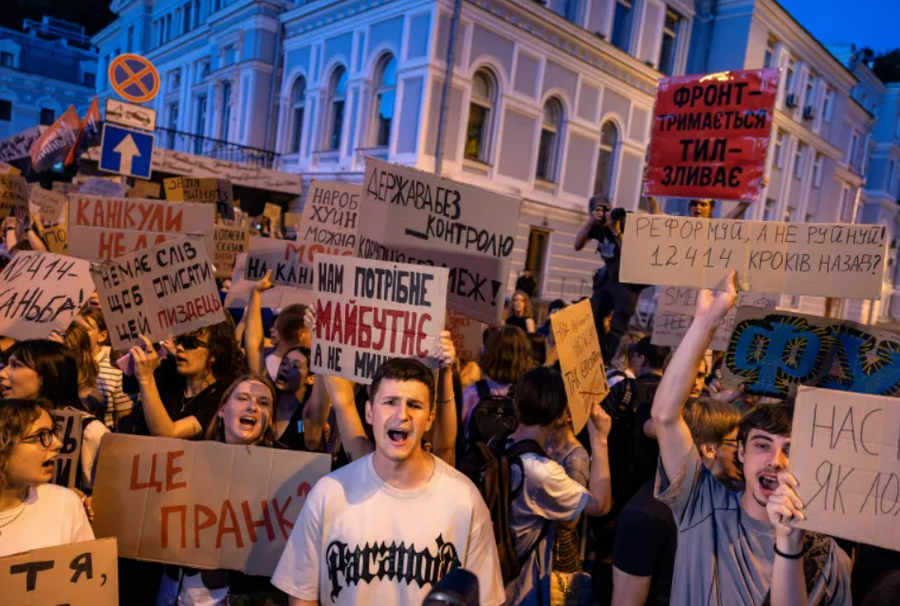
In Albania, unfortunately, there is neither protest nor clear reaction from strategic partners, a silence that goes beyond concern.
If SPAK collapses, it will not only be an institutional failure, but a symbolic end to a hope that began with judicial reform. And if Zelensky, in the face of an existential struggle, was forced to retreat in the face of civic protest and international pressure, what justification does Tirana have for remaining silent?
This is the time to separate the statesmen from the institutional usurpers. Because justice is not a threat to democracy but a fear for the corrupt. And whenever a leader is afraid of justice, it is time for the people to stop being afraid of him./ Pamphlet








Lini një Përgjigje