


 Shkruar nga Gjergj Zefi
Those who love America pay less, and those who don't pay more...Tariffs of up to 50% are more than economics, they are punishment for those who turn their backs on Trump's America. Albania... simply pays, without saying a word...
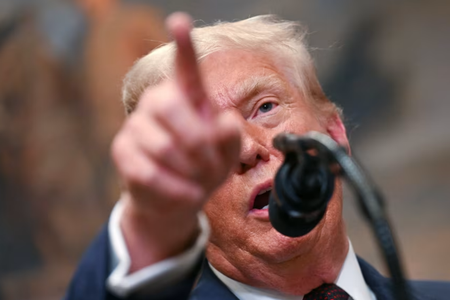
With the entry into force of new US tariffs, President Donald Trump has de facto declared the beginning of a new phase of global protectionism, led by Washington.
The date August 7, 2025 marks not only the restoration of the "reciprocity doctrine" that Trump promoted in his first term, but also its radicalization, with direct economic, diplomatic, and strategic impact.
66 countries will be affected by the dramatic increase in tariffs on exports to the US, with rates ranging from 10% to 50%.
The EU, Japan and South Korea reached compromise tariffs of around 15%, but countries like India will face 50% tariffs as a "diplomatic punishment" for cooperating with Russia.
For Albania, the new tariffs on imports to the US reach 40%, imposing a burden that could curb the few exports that exist.
Clearly, this is not just economic policy. Every tariff is a clear diplomatic lever. India was targeted not only as an economic rival, but as a country that refused to stop importing Russian oil. Vietnam, Chile, and Brazil were given lower tariffs or partial exemptions, on the condition of increasing investment on American soil.
Trump's approach is not naive, but well-calculated: by raising customs barriers, he strengthens the US's role as an "economic magnet" that forces foreign companies to relocate production within its borders.
This doctrine does not hide any moralistic nuance: every punished country on the list either has strategic disagreements with the US, or fails to meet the conditions of "commercial respect", as Trump calls it.
Diplomatically, this move could cause a domino effect: the EU is signaling retaliatory measures; China is studying alternative trade routes; and India, despite its strong ties with the US, has left open the option of renegotiating economic alliances in Asia.
The danger for Albania and the Balkans
Although no one is including Albania in tariff negotiations, the escalation of the protectionist climate could hit the region on several levels:
· Increasing costs of exports to the US in sectors such as tailoring or agriculture
· Slowing of US investment if the international climate remains turbulent
· Increasing pressure on small countries to choose their side in the "trade war"
Albania urgently needs an economic-diplomatic strategy coordinated with the EU and the US, to avoid the position of silent victim in the restructuring of global trade.
This wave of tariffs is not the last. It is the first part of a new cycle in which the great powers are seeing trade not as cooperation, but as an instrument of pressure. The little ones who are not prepared will pay the bill./ Pamphlet



Lini një Përgjigje