


 Shkruar nga Gjergj Zefi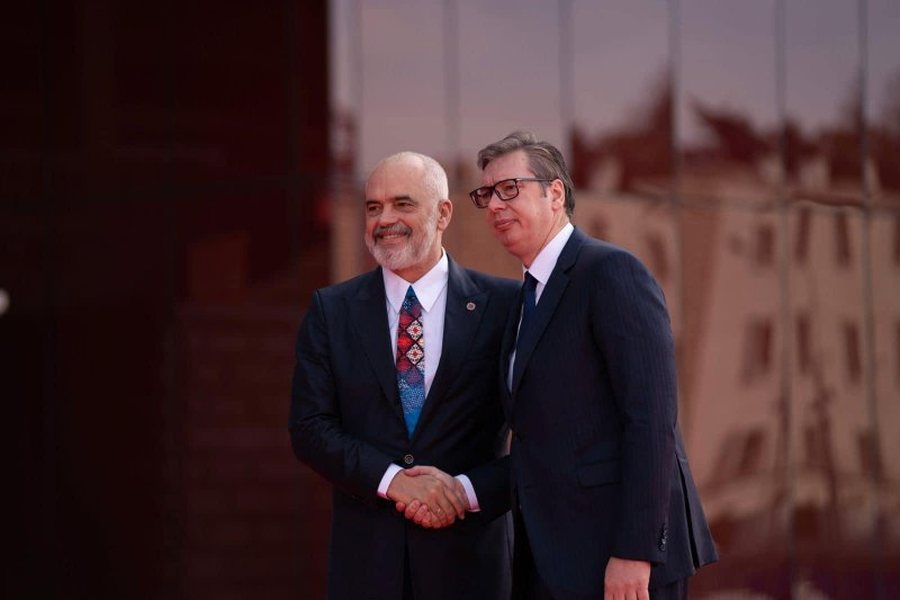
In Serbia, an institutional crisis erupts with a head-on clash between Vučić and the judiciary, while in Albania Rama cultivates the same climate of impunity through the gradual capture of institutions...
Aleksandar Vučić’s confrontation with the Serbian Organized Crime Prosecutor’s Office has exposed a crisis deeper than any political rotation: that of a captured state. When a country’s president publicly accuses the judiciary of “foreign infiltration” and threatens to prosecute the chief prosecutor himself, it is a rare act of autocratic self-exposing. This grotesque scene in Belgrade, with the leader attacking the judiciary while civic protests demand an end to corruption and an investigation into the Novi Sad tragedy, coincides with a critical moment for the Western Balkans itself, where democracy risks remaining just rhetoric in international discourse.
But Vučić is not a Balkan exception. He is the most brutal reflection of a governance model that has also come to life in Tirana, with Edi Rama as the most sophisticated version of the same system: personalized governance, weakening of the real opposition, subjugation of local government, and instrumentalized justice.
If in Serbia, justice is challenging Vučić's authority, in Albania the opposite is happening: justice has become a weapon of political silence, where all the major government corruption files are kept in a drawer, while only small cases are publicly exposed to maintain the facade of "reform", or cases when the Prime Minister himself seeks to lynch them. Just like in Belgrade, in Tirana, the external rhetoric is perfect: integration, justice reform, standards, but the institutional reality is dictated by the center of political power.
The parallel is frighteningly clear. In Serbia, a significant number of former government officials were recently arrested, but Vučić did not see them as a success of justice; on the contrary, he attacked prosecutors as tools of the West. In Albania, there have been no symbolic arrests for issues such as incinerators, sterilization, sold ports, concessions, or theft with emergency tenders. The Special Prosecution Office (SPAK) has never faced Rama's accusations, because it doesn't have to, it's in control. Silence is the sign of capture. In Serbia, there is open clash; in Albania, insidious symbiosis.
In both cases, protest is the most visible sign of popular sentiment. In Serbia, the biggest anti-corruption protests in two decades erupted after the Novi Sad tragedy. In Albania, protests have been rarer and weaker, stifled by a fragmented opposition and aggressive media propaganda. This does not mean that discontent does not exist, but it does show that social control in Albania is more sophisticated, while in Serbia it is more brutal.
But the conclusion is the same: the rule of law does not exist when the leader is above the law, and this is the typology that unites Vučić and Rama. Both have built the system of the “iron fist with a smile”: one demonizing the West for every investigation, the other embracing it to block any domestic criticism. But the result is the same: impunity, fearful justice and unchecked power.
As the protests in Serbia put Vučić in a difficult position, it is legitimate to ask: when will Tirana's turn come? Or will Albanians remain spectators of a stylishly subverted democracy, where every government scandal is hidden behind a painting, a propaganda video or the next summit with European leaders?
In the end, one thing is clear: modern autocracies no longer need brutal dictators. A leader who speaks beautifully, controls the media, and puts justice in his pocket is enough. And this is why today, Vučić is under great pressure, while Rama is still not. But as happens in history, this advantage is always temporary. / Pamphlet




Lini një Përgjigje