


 Shkruar nga Pamfleti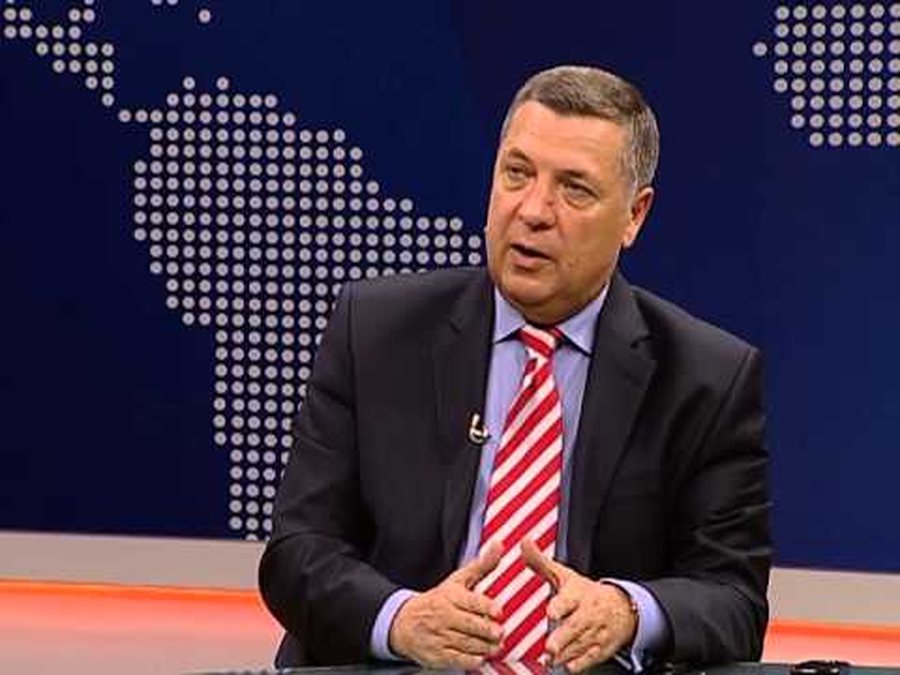
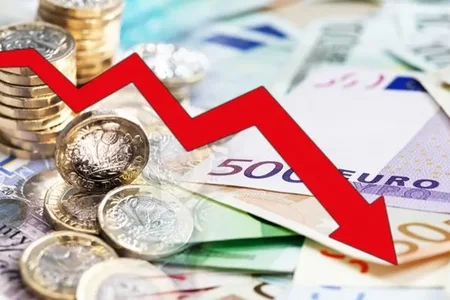
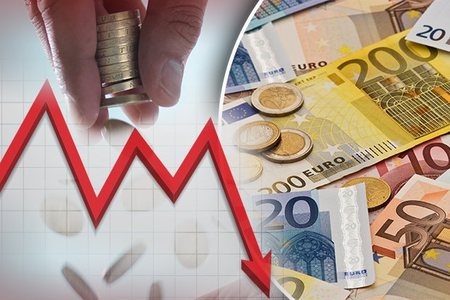
After touching the bottom, foreign currencies this week have started to revive giving a signal of hope to the market. For the expert on economic issues Adrian Civici, this can be defined as a "small fluctuation", which is a consequence of the monetary actions that take place in the Albanian market.
During an interview on ABC News' "Dollar Square" show, Civici emphasized that it is still too early to say that currencies have started to enter an upward trajectory.
" I think that they are small fluctuations, which occur due to the actions that occur due to monetary actions in the Albanian market, which is a small market and the daily movements that can occur have a minimal impact, but I do not believe that they are indicators of a change in the trend, because if we had a conclusion, we should wait at least a few weeks, where the exchange rate, or the strengthening of the euro and the dollar, were consistent from one week to the next", he said .
He said that the Albanian economy does not depend only on internal factors, but the financial climate of European countries has a direct and indirect influence.
" Albania is connected to the Eurozone and the area of European countries, but at the same time, taking into account the role of remittances in the Albanian economy and the largest percentage of Albanian economic emigration is in these countries, and any damage that the economy of these countries may have is reflected directly or indirectly in our country," he said .
Analyzing the economic trajectory, but also geopolitical developments, Civici said that it is predicted that the inflation level in Albania will reach the limit of 3%, in the second half of 2024.
" More than approaching the BSH target of 3%, I think that the Bank of Albania appreciates the effects that this restrictive monetary policy has had so far in putting inflation on a downward trajectory. The 4.5% level is one of the lowest levels of inflation. The monetary policy has given its effects, it is expected to give in the following months, and as long as we are in a downward trend, whether fast or slow, I do not think that the Bank of Albania will be forced to make other interventions in the monetary policy by further increasing the base interest rate. It is thought that in the second half of 2024, if no other shocks occur, inflation will stabilize, approaching the 3% limit ," he said.
Among other things, the expert also focused on the biggest problems that the Albanian economy is facing today. According to Civic, there are two challenges that are conditioning our economy and they are the devaluation of foreign currencies and the lack of labor force.
He emphasized that many businesses have a marked lack of employees, a challenge which, according to Civic, is expected to be reflected in the balance sheets of the Albanian economy.
"The main problem that is affecting the Albanian economy is the weakening of the euro, the dollar and the pound, and the strengthening of the lek, which has brought a series of difficulties for businesses, experts, but also in the tourism and services sector. Second, there is the problem of human resource shortages, which continues to be a problem for many businesses ," he added.



Lini një Përgjigje