


 Shkruar nga Ilir Çumani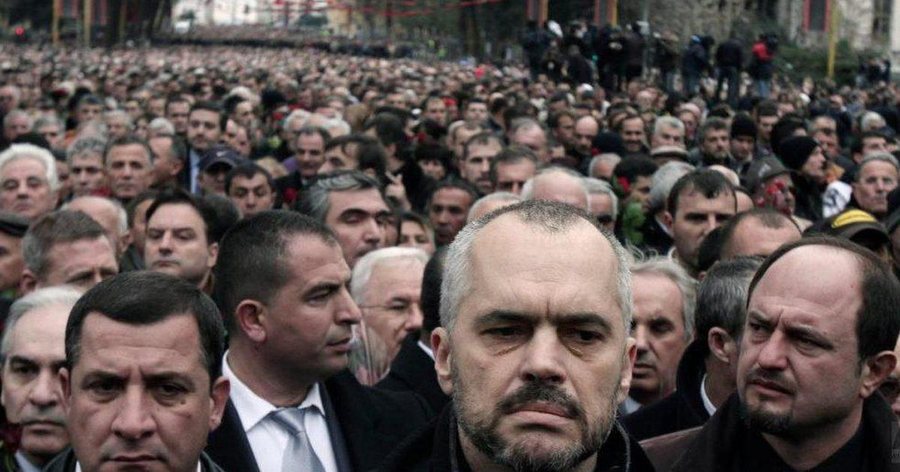
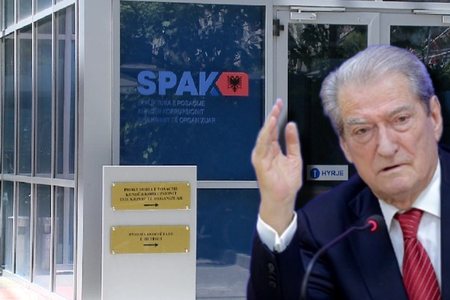
SPAK is caught between two fires: the pressure of public opinion that demands the truth and the political pressure that demands control of the narrative.
The SPAK investigation cannot be selective. Four citizens were killed on the boulevard and after 14 years the country needs a complete truth, not a political narrative.
SPAK has reopened the file of January 21, but public trust will only be restored if all the actors of that day are summoned, from the Guard chain of command to the political leaders of the time. Any evasion or limitation turns justice into a political instrument and leaves the tragedy as an open wound. Albania needs an honest, complete and transparent investigation, to establish real responsibility for the murder of the four citizens.
The events of January 21, 2011 remain one of those grave wounds that neither society, nor the state, nor politics have ever managed to close with dignity.
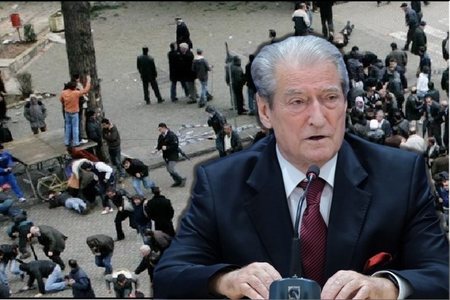
Those tense hours turned Tirana's boulevard into a scene of tragedy, where four innocent citizens lost their lives and dozens of others were injured, while the institutions that were supposed to protect life disappeared behind the fog of unclear orders and decisions at a high human cost.
Since that day, instead of clarification, a huge cloud of political smoke has been produced that has covered the essence of the event, leaving the truth to wander like a ghost between courtrooms and people's memories.
The reopening of the case by SPAK is perhaps the only institutional move that can lead the country towards an exhaustive response.
But an investigation with this historical burden cannot be reduced to listening to a single political party or calling an isolated figure of that time. If a serious process is really intended, it must be comprehensive, objective and unbiased, with the clear aim of illuminating every dark corner of this grave state crime.
Any selective tendency would turn the quest for justice into another political act, undermining public trust. The investigation must include every individual who played a role that day, from the Guard chain of command, to police structures and political leaders of both parties.
In three decades of pluralism, we have learned a bitter truth: justice truncated is a form of injustice. That is why many voices are demanding that the prosecution summon all those who need to speak, not only the people currently under indictment, but also those who were responsible then and who today appear as distant spectators.
In an event where four citizens have been killed by gunfire, any silence is a real obstacle to uncovering the truth. No one should be exempt from the investigation, nor from questions, nor from moral or legal responsibility.
This is the minimum rule of justice that Albania has sought for years and that it cannot avoid today.
It is incredible how, for 14 years, institution after institution has avoided clarifying the chain of command of the Republican Guard, precisely where the main mystery lies: who gave the order and who assumed responsibility for the use of weapons?
Why weren't the scaled-up means of crowd control used? Why didn't standard protocols work? Why was some evidence destroyed or tampered with? Why weren't the testimonies of the alleged perpetrators supplemented by statements from those who were supposed to ensure compliance with the rules?
These are not rhetorical questions, but disturbing gaps at the heart of a national tragedy. Justice owes society a full, credible, and exhaustive answer.
Politics, from all sides, has used January 21 as a weapon and a shield. Each side has built its own narrative and frozen it as the only possible one. The tragedy has been transformed into a propaganda object, while the real event has been dissolved into electoral rhetoric.
Today, when SPAK has opened a new investigation opportunity, the greatest risk is to turn this process into part of a new political game. Precisely for this reason, calling all the actors of the time is a necessity of the process, not a procedural luxury.
Every omission of names, every saving, every biased selection undermines public trust. Without trust, justice becomes an empty formula.
SPAK is caught between two fires: the pressure of public opinion that demands the truth and the political pressure that demands control of the narrative.
The special prosecution must show that it serves only the law, not political revenge and not the balance of power of the moment.
The events of January 21 are a national test that measures the maturity of institutions. Citizens do not seek spectacle, they do not seek sensational arrests, but they demand to know what happened: who made the decision, why weapons were fired, why lives were not protected, and why the state remained silent. The families of the victims demand justice and accountability, not revenge.
Albania needs a deep and complete investigation, where no one hides behind current functions and no one enjoys moral immunity. If this issue is ever closed, it should only be closed on the basis of the full truth.
In the end, this is not simply a legal issue, but a question of national identity: what kind of country do we want to be? A country that remains silent in the face of the murder of its own citizens, or a country that has the courage to face its own mistakes and faults?
Justice must call everyone, listen to everyone, investigate everyone, and clarify everyone. Otherwise, January 21st will remain an open wound and the state a hostage to itself.
The truth is not divided into two: either it is all said, or it is not said at all. This country cannot afford another silence. Now is the time for justice to speak clearly and the truth to come out before all.


O identitet kombëtar. Pa dyshim ai që vrau 4 vetë, qofshin militantë të rilindjes duhet dënuar për vrasje, qoftë Berish me precedent rrahjen masive në 96. Por po aq duhet dënuar Rama që nisi mish për top ata që u vranë me shpresë të madhe se dikush do vritej dhe që nuk i doli aspak keq. Ka në fizikë një ligj që quhet shkak pasojë. Pasoja nuk lind shkakun, por shkaku pasojën.