


 Shkruar nga Ervis Iljazaj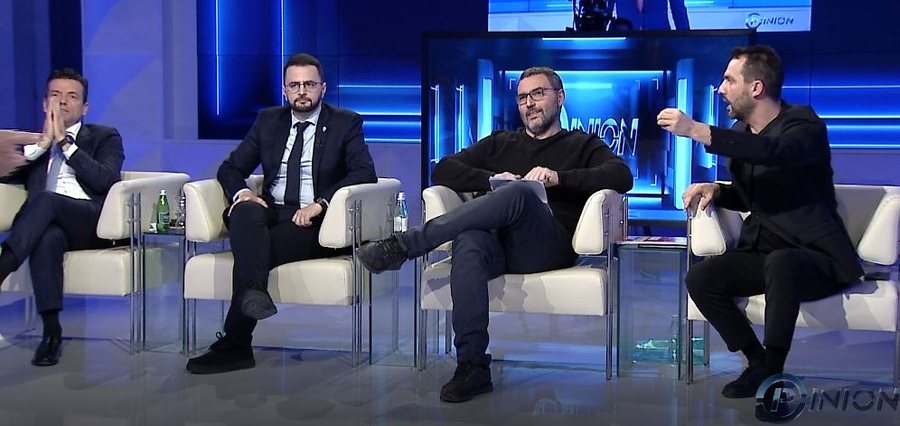
This absurd "war" they wage among themselves is just like the "war" between the poor.
Among other things, a new conflict is emerging in the Albanian political panorama. It is the conflict between the new parties. Given that these parties, from "Alshqiperia Bëhet", "Nisma-Thurje" or "Bashke" of Arlind Qorri, without excluding any other party such as "Mundesia" for example, aim more or less at a similar electorate cake, they will it was normal that sooner or later there would be conflicts between them.
Because all these parties have their main rhetoric, more than ideological, anti-systemic.
All without exception, their main theme is the change and renewal of the political class against the duo and the Rama-Berisha system.
That being the case, it seems as if each leader claims to represent this electorate. In this way, their fight has already begun, in the television studios at least. Their race is which one represents the new truth and which one is against the oligarchs or against the political system. In short, which one is the real "change".
However, this absurd "war" they make between each other is the same as the "war" between the poor. The war between the poor is a sociological metaphor that represents the conflicts in the poorest strata of society while leaving alone its richest strata. They wallow in their poverty instead of seeking to access the material goods of society.
Sure, this is also happening with the new parties in Albania. Somewhere due to the delirium of a leader, somewhere due to political incompetence, the new parties are having a battle about who will represent the new party. Instead of uniting forces against the current political system, they are dividing even the few constituencies they could best represent together. Instead of pretending to get the electorate from the two major parties, they are working to get a small part of the electorate by creating divisions among themselves.
The upcoming parliamentary elections of 2025 will also have an important function for Albanian democracy. Apart from the fact who will be the winner, they determine whether the 34-year-old Rama-Berisha political system will be penetrated and broken by new parties, or whether this system will continue to govern Albania for many more years. The introduction of new parties into the political scene, this time it doesn't matter, left or right, would serve the Albanian political system and our democracy. This would put an end to the Rama-Berisha binomial and would create a new political space for Albania's perspective.
But this goal can only be achieved if the new parties come together against this system. Otherwise, they would fragment their electorate and in pragmatic terms miss the point. There is no doubt that the Albanian political scene needs renewal. It needs new faces and forces. Those who say that the fragmentation of the opposition or the emergence of new parties are in favor of Rama, have not yet understood that the real challenge of the 2025 elections is not whether Rama or Berisha will win, but whether this 34-year-old binomial will achieve that the Albanian political system is broken and the renewal begins.
And this goal the new parties must understand that only together, even with a common list, they can achieve the goal. In contrast, Albania's 34-year-old political system will continue to be governed by the Rama-Berisha duo for many more years.



Lini një Përgjigje