


 Shkruar nga Ben Andoni
A tiring and very pathetic populism...
Left-wing authoritarianism in Albania is increasingly becoming an obstacle to the normal development of the country. The recent extremely aggressive and offensive scandals related to the ANA, as well as the activities of the Ministry of Infrastructure, especially culminating in the number 2 of the Rama-4 Executive, Ms. Balluku, have closed the year 2025 with the perception that the future is not foreseen as positive for the country. To clarify the concept of “Left-wing Authoritarianism”, we clarify that it refers to the great and all-round power of the Socialist Party of Albania (PSSH), led for four terms by Prime Minister Edi Rama.
Despite the undeniable developments of the country in these 35 years, it cannot be denied that the harsh political legacy of the past still weighs heavily on us. Rama's Left, through various SPSH speakers and personally, does not deny that they are parties that have deep roots since November 8, 1941 (Formation of the AKP)! Just as, on the other hand, paradoxically, the Right, which identifies with the DP, at many moments, acts in the same way in its internal policies.
A tiresome and very pathetic populism. In fact, the Albanian populism that feeds this authoritarianism, through politics, is an ethno-populism. Except that unlike its European populist sisters, usually anti-EU, Albanian populism (under Rama) presents the European Union as a real partner, and even with its motto, ensured the intoxicating victory of the SPSH in the 2025 elections.
But is it the great polarization in the country and the confusion that allows populist narratives to flourish? In Albania, this sense is directed from the top down and is used to maintain the power of Rama, who today has as his main attribute the culture of "Patronage", precisely what has been criticized (especially the "patronage" scandal in 2021) to maintain his horizontal and vertical influence and support.
However, today's Albania is a developing country with a parliamentary democracy, and scholars describe the current regime as a "hybrid" system. Referred to "Freedom House": In 2024, Albania was classified as a "flawed democracy," meaning with ongoing challenges to its democratic processes. The ruling party, the Socialist Party of Albania (SPSH), has tightened its control over state institutions to the point of absurdity, as it has made checks and balances impossible, and in some cases appears to have politicized the judiciary, where SPAK remains the segment that is trying to challenge corruption.
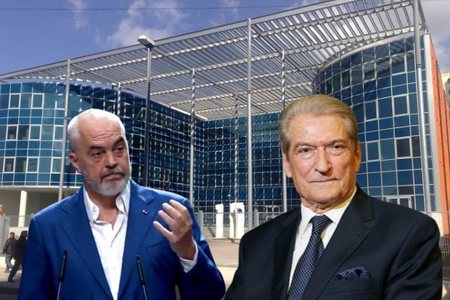
But the latter is already immeasurable. The revelations that are being made to the anatomy of the Left government through the "Balluku" case, etc. and the extreme cynicism of officials, show that authoritarianism in Albania has reached extremely worrying levels. The balances of power and checks are not respected by the "Rama" Executive. Public concern is growing from the fact of an extremely fragmented, divided Opposition and already in battle with each other, where Berisha with Salianji is the new PD soap opera that will once again bring consequences for the fall of this force, but no growth and trust in the opposition community. The media, recently, is being hit and trampled on but in many cases faces physical attacks.
And yet, even this is the smallest, when from the corruption cases we have seen that the "hidden" authoritarian tendencies of the party have increasingly frequent indications of the mention of organized crime. The case of the Durrës cadastre, the normal mention of the Elbasan gangs are some of these elements.
The consequences are painful: “The 2025 Special Eurobarometer on Corruption: shows that 86% of respondents think that corruption is widespread in their country (EU average: 69%) and 45% of them feel personally affected by corruption in their daily lives (EU average: 30%),” the report states. Meanwhile, a study published by the Friedrich Ebert Foundation in September 2025 sheds light on the worrying dimensions of money laundering in the real estate sector in Albania over the last decade.
The analysis authored by Prof. Assoc. Dr. Adriatik Kotorri documents that a significant part of the country's construction boom may have been financed from sources of dubious origin, with the unexplained sum of 9.13 billion Euros raising serious questions about the origin of the funds. Migration continues to be one of the main pillars shaping the Albanian economy and society and even a paradigm of national history, according to historian Oliver Schmidt.
According to the 2024 Household Migration Survey, conducted by INSTAT in collaboration with the World Bank, about 37% of households in Albania have at least one member currently living abroad or having migrated and returned. The survey estimates that about 1.6 million Albanians live abroad. Not surprisingly, international concerns, channeled through reports by the US State Department and the EU, have expressed concerns about corruption, the rule of law and artificial political crises created by the current leadership.





Lini një Përgjigje