


 Shkruar nga Ben Blushi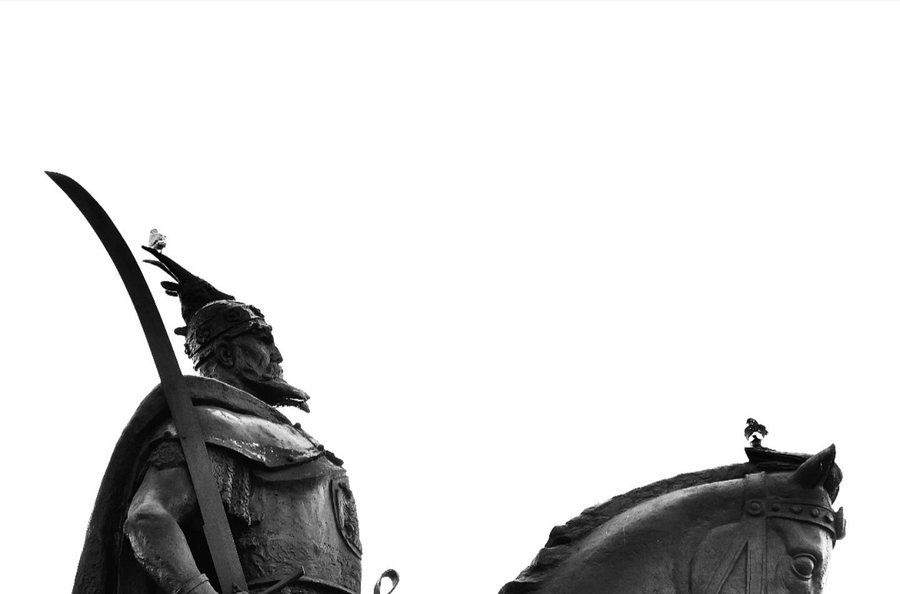
Their grave was destroyed, their bones were broken, and nothing was written or spoken about them anymore.
Today, Skanderbeg turns 620 years old and the more I read, the more convinced I am that Albania was created by his sword.
He achieved much as a warrior, as a diplomat, and as a leader, although fate did not allow him to turn Albania into a Kingdom as the time desired.
Burdened with wars, conflicts, battles and sieges, Skanderbeg had a short civil life. He married late and had only one son, who was still a minor when Skanderbeg died in 1468. His many brothers and nephews had either been killed or were powerless or had betrayed him in favor of the Turks, as was common in the Middle Ages.
If the Kastriots had managed to create a hereditary kingdom, lasting for several generations, the history of Albania would have been different. The Ottoman occupation would not have been so long and the resistance that died out after the death of Skanderbeg would have continued around a new leader of his royal blood.
The Turks destroyed the myth of Skanderbeg for 400 years. They destroyed his grave, pulverized his bones, and he was never written or spoken of again. His final disappearance was the greatest victory of the Turks, and if the Renaissance had not brought him out of the dust, today we would be a people without history.
Without Skanderbeg, our history books would be empty, our history would be a history of submission.
In school textbooks, the heroes would be the invaders and not the insurgents, the traitors and not the rebels, the Turks and not the Albanians, Hamza Kastrioti and not Gjergj Kastrioti.
That's why every time I go to Skanderbeg Square and photograph his magnificent statue, I think about how much we owe to this man, on whose monument not only we but also the birds are free, as is the case in this photo that I decided to post for his 620th birthday.







Lini një Përgjigje