


 Shkruar nga Ylli Pata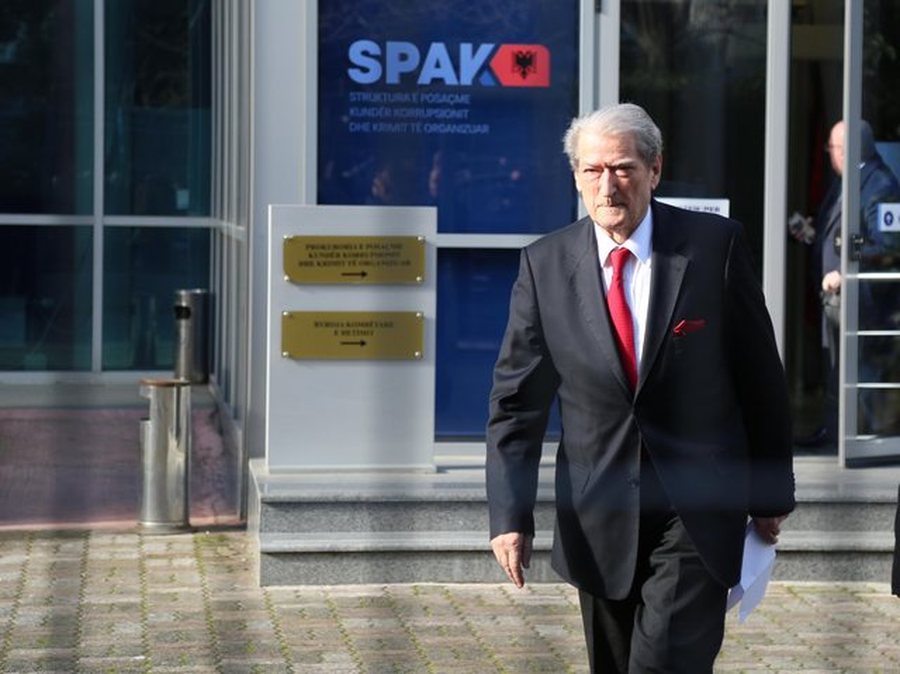
However, January 21, which has just started from SPAK, is a case that, although there may have been letters sent from the SP to the prosecutor's office, has no connection to the command.
Silvio Berlusconi, who dominated Italian politics for 20 years, the most talked-about entrepreneur in Europe, namely one of the most successful in Europe, of course also from his magical Milan, has been the man most persecuted by the justice system of his country. This fact was both a blessing and a curse for Berlusconi.
He entered active politics in the powerful storm of "Tangentopoli", the huge scandal of bribes that big Italian business had paid to the main parties in the country.
The leader of the Italian Socialist Party at the time, Bettino Craxi, was the most affected by that storm that brought down the entire political class of the last century. Silvio Berlusconi was Craxi's close friend, from whom, among other things, he had secured the launch of his private television network, in a country with ironclad rules in this regard. It was widely rumored at the time that Berlusconi was deeply in debt, and it was only a matter of time before he too was on the list of industrialists investigated by the Milan prosecutor's office. Many of his VIP colleagues were arrested, and many of them: killed themselves in unclear situations.
There were 41 suicides, part of the "creme de la crème" of Italian industry, where Raul Gardini and engineer Gabriele Gagliari, two of the stars of the Italian chemical industry, stood out. Everything is said to have been triggered by the investigations, but above all by the pressures that came on these businessmen not to open Pandora's box: the big names of politics, economy and state.
In this atmosphere, Silvio Berlusconi entered politics by creating his party Forza Italia in 1994. An operation that in reality was simply formalized, after having been prepared under the rug for years. It was a resounding success!
Within three months he had won the election and become Italy's prime minister. Berlusconi's first move was to bring his biggest enemy closer to him: Antonio Di Pietro, the most powerful man in the "Mani Pulito" prosecutors. He offered him the post of interior minister, but Di Pietro said "No thanks" and immediately left the office. At the time, the prosecutor was investigating allegations that Berlusconi's company Fininvest had bribed a group of Guardia Di Finanza soldiers. The Italian prime minister had information about the investigation and launched an attack, sending a team of inspectors from the Ministry of Justice to the Milan Prosecutor's Office.
Who for weeks were breaking the boards of the Milan prosecutors, to get something from the investigation. But as prosecutors, investigators or administration employees, they pretended not to know, doing nothing all day. At 4 o'clock, they left the building with the inspectors, but as soon as they saw them running home, they ran to the office. Where they worked until the morning hours without rest or sleep to find evidence of the investigation against the head of the Italian government. Without even 6 months at the head of the government, while he was at the first prestigious international summit in Naples, Berlusconi received an invitation to appear before the Prosecutor's Office for corruption of the Guardia Di Finanza. He resigned a few days later. He lost the parliamentary elections in 1996, came back strongly in 2001. He lost in 2006 and came back again in 2008. But he was finally overthrown in 2011, only to return as a political caricature until he passed away at the age of 86.
From 1994 until the end of his life, Berlusconi was investigated, tried and convicted for a large number of criminal offenses. He broke a record for a politician who managed to make the investigation and trials his own, turning it into a political narrative to become a victim of the "Red Squads".
He got there in one direction after receiving the support of the majority of Italians for most of the time, but in the end, he was investigated for a multitude of criminal offenses, of which he himself was convicted for only one, with community service. Even though he had the best lawyers in Italy, Berlusconi was investigated for mafia connections, corruption, relations with minors, tax fraud, and a whole range of criminal offenses.
Some of them were closed, others caused collateral damage by convicting family members like brother Paolo, or even close friends like Cesare Previti, who was convicted of links to Cosa Nostra.
Throughout his fight with the "communist prosecutors", Silvio Berlusconi used a term that stuck quite well in the Italian political environment, to the point that it is still very present today. "Giustizia alla orologeria" which, adapted to us, is justice by command, with an agenda.
This narrative stuck, because many of the investigations or criminal charges against him were copy-pasted with the accusations of political rivals or their media.
In our case, the term "Justice with Command or Agenda" is not very difficult to use, since almost all the cases that SPAK has initiated against high-ranking officials have come from the denunciations of the DP, LSI, SP or the Thurje initiative. In a word, from political actors. In some way, or in all ways, SPAK's anti-corruption agenda has been driven by politics, another thing is whether or not the investigations have been deepened. Like for example the Partizani file, which is completely redone and deepened compared to the equally extensive denunciation submitted by Taulant Balla.
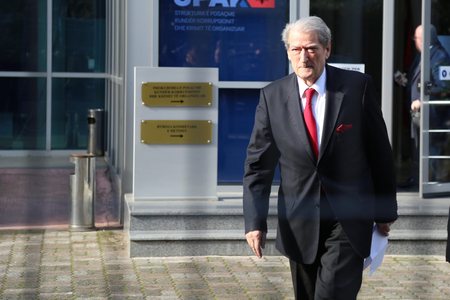
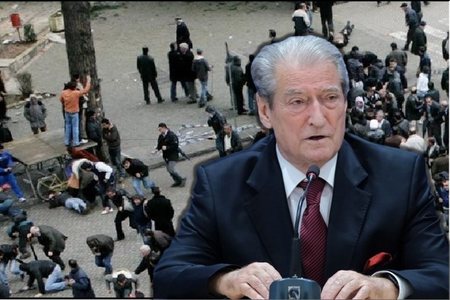
However, January 21, which has just started from SPAK, is a case that, although there may have been letters sent from the SP to the prosecutor's office, has no connection to the command.
Firstly, it is a well-known and national issue and tragedy, secondly, since a decision has been made by the Strasbourg Court. Therefore, the treatment of it is considered a test for what will be the second phase of the new justice in Albania...


Lini një Përgjigje