


 Shkruar nga Enver Robelli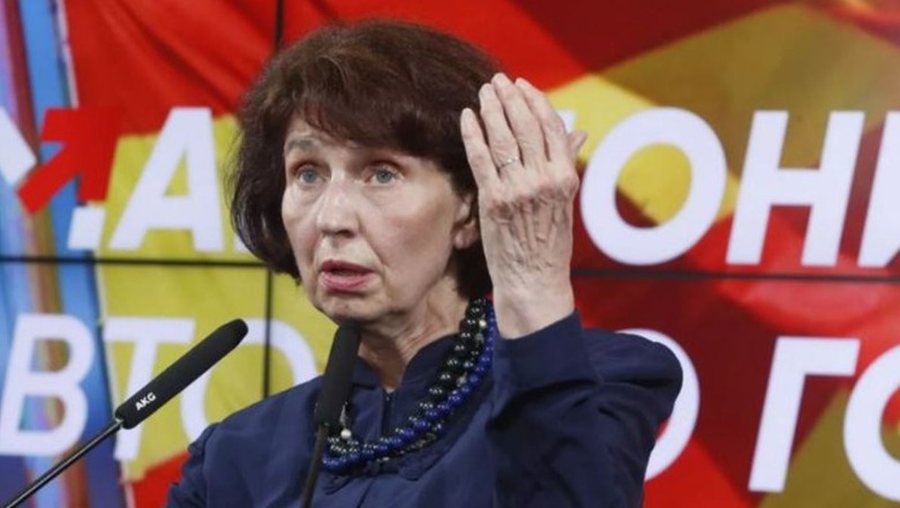
In over 20 years in power, even DUI as the main party of the Albanian camp has not remained unaffected by negative phenomena.
Seven years ago, the Macedonian social democrats won the elections and sent the conservative (nationalist) VMRO into opposition, which had been discredited by corruption and abuse of power (the affair of the wiretapping of thousands of citizens, the staging of the armed conflict in Kumanovo, which according to rumors prominent even in DUI - it was organized by the Macedonian secret service together with parapolitical circles in Kosovo, then Nikola Gruevski's towering propaganda that George Soros was behind the protests of the social democratic opposition in Macedonia.
With this accusation, Gruevski copied his Hungarian idol Viktor Orban, who for years has been attacking the American philanthropist of Jewish origin using some clichés from the propaganda meeting of the dark times. The Macedonian Social Democrats took power with the promise that they will put an end to corruption, the culture of tipping, nepotism, and the arbitrary distribution of state resources. Very soon the government led by social democrats slipped into the mire of corruption.
Zoran Zaevi and Dimitar Kovacevski did not show any ability to reform the country. One credit, however, goes to Zaev: he had the courage to change the name of the state under Greek pressure and won Macedonia's entry into NATO. But on the internal plan, almost everything continued with the old Avaz.
For example: the prominent anti-corruption prosecutor, Katica Janeva, also ended up in prison. From the former prosecutor's office against corruption and organized crime, almost nothing remains, not even a shadow. The former writings of the Western media about the three powerful women of this prosecution sound - from today's perspective - deeply naive. "Three angels", this is how "Deutsche Welle" portrayed these three women in a chronicle.
The German newspaper "Frankfurter Allgemeine Zeitung" (FAZ) wrote in October last year that the situation has not changed even under Prime Minister Dimitar Kovacevski. In September, the parliament approved legal changes that soften the penalties for abuse of public office. President Stevo Pendarovski, who was able to block these changes, rushed to sign them. Former Macedonian Foreign Minister Nikola Dimitrov, who, according to FAZ, is not suspected of being corrupt, said: “Nikola Gruevski was flying the Macedonian flag to hide corruption and the capture of state institutions. The current government is flying the European flag to do the same."
The causes of the defeat of the Macedonian social democrats are primarily internal. In over 20 years in power, even DUI as the main party of the Albanian camp has not remained unaffected by negative phenomena. Over the years, Ali Ahmet, one of the most meritorious figures for the historical advancement of the rights of Albanians in Macedonia, seems to have lost some of his supporters. This was illustratively seen when earlier this year a DUI official from Skopje, accompanied by some muscular guys, entered the control tower of the Skopje airport and assaulted several workers.
The cause of this fight is said to be the conflict over some employment at the airport that was planned before the elections. Such arrogance is poison to the image of any party. This cannot be covered either with the national flag, or with the KLA, or with calls in the former struggle for more rights, or with patriotic slogans.
On the other hand: Ahmet's rivals within the Albanian political camp have yet to prove their commitment to good governance (if they come to power). None of their promises that they will fight corruption ruthlessly should be believed until this is clearly proven by them.
Because even the social democrats shook Macedonia with anti-corruption rhetoric. And that's where they are today: overturned at nearly 10 percent of the vote. Does it get better with VMRO and the new government? It would be a utopian expectation. But maybe it doesn't get worse, although that can't be ruled out either.
The European Union also played a certain role in VMRO's victory. Even after it changed its name from Macedonia to North Macedonia, the process of European integration almost did not move from the country. Sometimes France conditioned, sometimes Bulgaria with blackmailing demands related to the Macedonian language and other identity issues, for example the government in Sofia insists that the note that the Bulgarians were invaders in the Second World War be removed from the commemorative plaques.
Many people in Macedonia got the impression that even when it meets all EU requirements, Brussels or any EU member country will still find an alibi for the blockade. This feeling of being rejected also mobilized the nationalist wing in Macedonia. The head of VMRO Hristijan Mickoski has called Viktor Orban "friend", the new president Gordana Siljanovska-Davkova declared after the victory that her roads first lead to the Balkans, but Brussels is not excluded either. If the priority of the new government will not be European integration, but Macedonian national-Romanian populism, this will put the Albanian political group that will become part of the cabinet in front of difficulties, because the problems related to the identity of Macedonians are not problems of Albanians in Macedonia.
VMRO's victory shows that fewer and fewer people in Macedonia believe in the so-called "European integration". This trend has spread everywhere in the region as a result of the hypocrisy of the EU, as many Western analysts estimate.
In addition to identity struggles and corruption, a problem faced by both Macedonians and Albanians is mass emigration. Only in the last 4 years, 68 thousand Macedonian citizens have gone to Germany. There are already 700,000 Macedonian citizens living abroad, which is a third of the total population.


Lini një Përgjigje