


 Shkruar nga Lutfi Dervishi
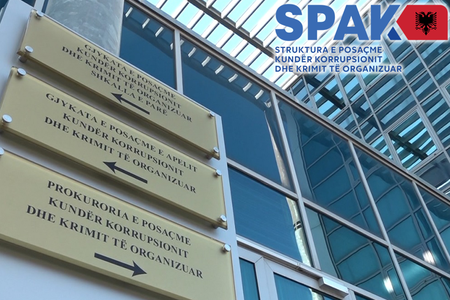
The SPAK case is the best illustration: for the first time, the document speaks openly about political pressures, public statements by officials, and the vital need for prosecutors to work without interference.
IBAR will pass. The government will sell it as a historic success, while the opposition will sell it as a delayed process that confirms the failures of the government. Meanwhile, the 31-page technical report is likely to be read by an equal number of people: a bunch of experts and a few career diplomats.
But beyond the propaganda of the day, the question is: what specifically changes for the country?
Before we beat our chests and declare "victory", we need to clarify what we haven't yet received. This is not EU membership or automatic entry into the single market. IBAR will not bring German salaries, Danish hospitals or Dutch administration tomorrow.
So far, the process has been largely theoretical: screening/scanning, reports, tables, strategies and remote assessments. Albania has just passed the theoretical exam for the European license. Now it must enter real traffic. And there, it is no longer enough to know the plates; you must prove that you know how to drive.
This is clearly understood when comparing the documents. The differences between IBAR 1 that did not pass (February 2026) and IBAR 2 (May 2026) are separated by only three months of time, but they are three months of flight. Those who parroted the idea that "nothing is blocked and everything is running smoothly", it is time to blush a little, if their skin has not completely burst.
Both documents deal with the same chapters: justice, corruption, media, administration, and elections. But in essence, the change in tone is radical.
If IBAR 1 was binoculars, IBAR 2 is a magnifying glass. The tone is clearly more political, more skeptical and extremely concrete. The SPAK case is the best illustration: for the first time the document speaks openly about political pressures, public statements by officials and the vital need for prosecutors to work without interference.
The same naked logic dominates the elections. Where IBAR 1 was content with general calls to fulfill OSCE/ODIHR recommendations, IBAR 2 goes straight to the point: the misuse of state resources and the patronage machinery.
The issue of property also comes into more aggressive focus, pointing the finger at coastal areas, minority properties, expropriations, false documents and the lack of real compensation. The police also come more firmly under the radar, where corruption, suspicious rotations and structural weakness of control mechanisms are evident.
The message is clear: Brussels is no longer impressed by the strategies, action plans, conferences, or laws that are adopted.
Therefore, this process should not be sold as a triumph, because it is not. It is simply the beginning of the most difficult phase of the negotiations. On the other hand, the opposition would also be wrong to treat this as just another propaganda; for the first time, an unforgiving international monitoring and pressure mechanism is being imposed on the Albanian state. Lupa has come very close.
This is a real chance for a more serious game, an opportunity to create a calmer political climate, where the focus shifts to the citizen and the country's interest. It is an opportunity for more functional institutions, a more competitive economy, more credible elections, a less partisan administration and better media. But this is only valid if the report is used as a work manual, and not as material for the next Facebook status.
IBAR passes, but between the lines it is understood that the time for fine words has passed. The time for deeds has come.
On the morning of May 27, citizens will not wake up to a country without traffic, with 24-hour water or with perfect hospitals. This process does not lower the price of oil with the decision of the "transparency" board, it does not magically eliminate corruption and it does not remotely regulate the problems of the cadastre, tenders or PPPs.
What this step creates is something less spectacular, but vital: a constant, surgical pressure, for institutions to function according to laws and rules and not according to whims and desires.
The EU is giving the green light to move from theory to practice. We have entered, so to speak, the highway, but the speed of movement and the risk of collision now depend entirely on us. The EU has no intention of dragging us along and forcing us into membership.
For the first time in many years, our problems have not only been brought to light, but we have officially lost the luxury of ignoring them.


Lini një Përgjigje