


 Shkruar nga Lutfi Dervishi
The dream of a judge, prosecutor, or lawyer should be a big case where he can show everyone how much "his skin is worth."
There is still fear of the idea of televising trials of high public interest.
However, the era of "sources close to the investigation", "my sources" and selective excerpts must end. Justice that hides inevitably produces suspicion, while justice that is not afraid of the camera produces authority.
When VIP figures sit in the dock, the public interest is more than curiosity, it is an obligation to account. These processes, as private matters where each person hangs by his own legs, are also tests for the system itself. Here, not only the individual is judged, for what he has done or not done...
The argument that broadcasting "will turn the trial into a circus" is somewhat outdated. A circus becomes when information flows in bits and pieces, when the narrative is built on half-truths, fabrications, slander, and when the public is left at the mercy of the farrier's interpretations.
Complete transparency kills the circus because it replaces rumor with fact. History is filled with sensational examples of important trials where professionals have excelled.
The dream of a judge, prosecutor, or lawyer should be a big case where he can show everyone how much "his skin is worth."
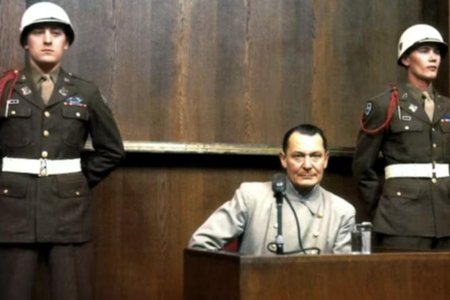
From the Nuremberg trials to the Watergate scandal, from the OJ Simpson trial to the Hague Tribunal, time has proven that the camera does not harm the process, but rather enhances it.
Yes, there was tension and drama, but above all, we saw a professional standard.
The audience saw with their own eyes who speaks from rehearsals and who beats water in the mortar; who is prepared and who improvises, who is professional and who is a charlatan. Who is good and who is mediocre.
In an open courtroom, where every word is broadcast in real time, "everyone can see the light":
There, the prosecutor cannot boast of thousands of pages of files that are not based on facts. One page is enough to convince the public. Even one paragraph.
A lawyer cannot hide behind television acting without legal substance, nor political rhetoric.
A judge cannot mask incompetence or bias or fear behind unreasonable decisions.
The witness finds it impossible to play with the truth without being exposed in front of millions of eyes.
At the end of the day, the winner is not the one who shouts the loudest or has the most access to the media, but the one who has the truth with him and the professional ability to defend it.
After a decade of investments and debates on Justice Reform, the question is no longer whether we have built new institutions and buildings, but whether we have professionals who are not afraid of the camera/light?!
A live broadcast trial is the test where we all come out victorious.
If justice works, public trust inevitably grows. Support for justice can reach Soviet figures. But even if justice fails, the public and the system itself identify exactly where the problem lies. In any case, society is a winner.
Public trial is not a threat to justice, it is a threat to mediocrity and corruption within the system. A system that is afraid of the camera has no problem with technology, it has a problem with itself.



Lini një Përgjigje