


 Shkruar nga Mero Baze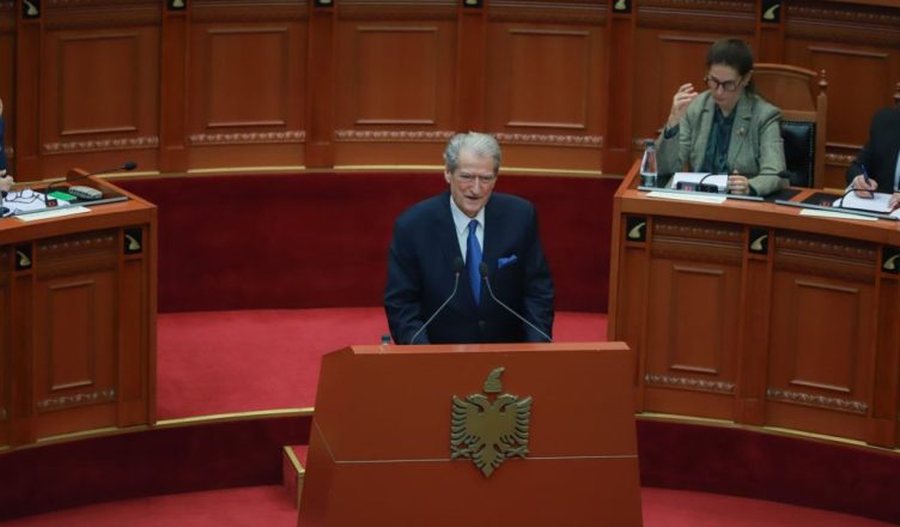
This habit of his, to cry for his enemies after they die, is actually the clearest indication of his perverted character and the nightmare he has for opponents who do not bow to him.
I expected him to praise Professor Sami Repishti. I even warned him the day he passed away. This has nothing to do with any remorse towards Repishti or the brazen war against him for decades, but with the consolidated tradition of Sali Berisha, who praises all his enemies when they die, only to insult them a second time.
This is what he did with all the DP leaders with whom he was in a long war. The first example was Azem Hajdari, who may be a record in the history of world politics. For eight years in politics, he was in daily struggle with the party he founded, because of Sali Berisha, and he did not try one day of its power. He removed his immunity, took him to court, expelled him from the National Council, expelled him from the Democratic Party, and then accused him of being an accomplice of the State Security, until he ambushed him. Then she started crying for him and still continues.
The same story with Gramoz Pashko, whom he expelled from the DP in 1992 and did not let him approach until 2005, physically beating him and attacking his daughter with his gangs. Then, in 2006 and after, when he passed away, he called him a great leader of the DP.
The same was done with Pjetër Arbnor. He abandoned her after his personal loss in 2005, isolated her and left her to die in solitude a year later. Then he remembered to name a hall in PD.
Sokol Olldashi too. He broke up with him in the last months of power, threatened him during the internal campaign in DP in front of Lulzim Basha, isolated his people in DP and for years after his death did not mention the enmity with him, until Lulzim Basha came out "definitely" . Then he started "crying" for Sokol Olldash.
He had the same habit with his political partners. Leka misused Zogun in 1997, then quarreled with him, why he returned with the help of Ilir Meta to Albania, and fought him. As soon as he died, he praised and even raised the bust of his father, King Zog, in Burrel and Tirana.
Even more emblematic was his treatment of Sabri Godo, whom he had regularly hated since 1991. To be honest, even Godo had no feelings of weakness for him, except that he considered him a character descended from the mountains. As soon as he died, he declared him his friend and even raised his bust.
The peak of this hypocrisy was with Ibrahim Rugova, with whom practically since the beginning of 1996, he was in a cold war. The reason was simple: Berisha had entered the war with the USA, while Rugova was at the peak of Kosovo's relations with the USA. To escape from the punishment of the USA, Berisha wanted to use the Kosovo issue as an opportunity for the USA not to isolate him. Ibrahim Rugova did not accept that the Kosovo agenda was used by Sali Berisha's allies. He was enraged and sought to overthrow him, inviting Albin Kurti to help him and then the Student Movement in Pristina against him.
Ibrahim Rugova cut off contact with him and refused to receive him in 2000 in Kosovo, authorizing KFOR to return him from the border to Morina. Rugova did not welcome him in Kosovo until he died. On the day he died, Sali Berisha "meets" the dead Ibrahim Rugova and does what he has done with all those he fought against: he cries for them.
This habit of his, to cry for his enemies after they die, is actually the clearest indication of his perverted character and the nightmare he has for opponents who do not bow to him. All those whom he could not defeat, or who did not despise him, but ignored him, he tries to forget by equating them with himself after death, to extinguish their resistance to him and make them they look just like him. It is the only way that soothes and relieves his rage against them, who have fled this life without regard for him.
By glorifying them when they die, when they are powerless to rise from the coffin and spit in his face, and by using their often weak and powerless descendants to carry on what their relatives have done, he avenges himself with the impotence of them as dead, lining them up behind him as his "friends" - something they have never wanted in their entire lives.
Therefore, one of the benefits of dying after Berisha is that you can escape this treacherous punishment of his. But to be sure, since life does not know, leave a bequest that, even if you die before him, he will not be allowed to speak for you. Professor Sami Repishti had almost left a written message against him:
"I leave this world with the concern that Albania oscillates between the old that does not give soul and the new that has no power to be born. I will pray for a promising rebirth - with God's help!".
But the "old man who does not give a soul" did not stop again and also defiled his trust.



Lini një Përgjigje