


 Shkruar nga Ben Andoni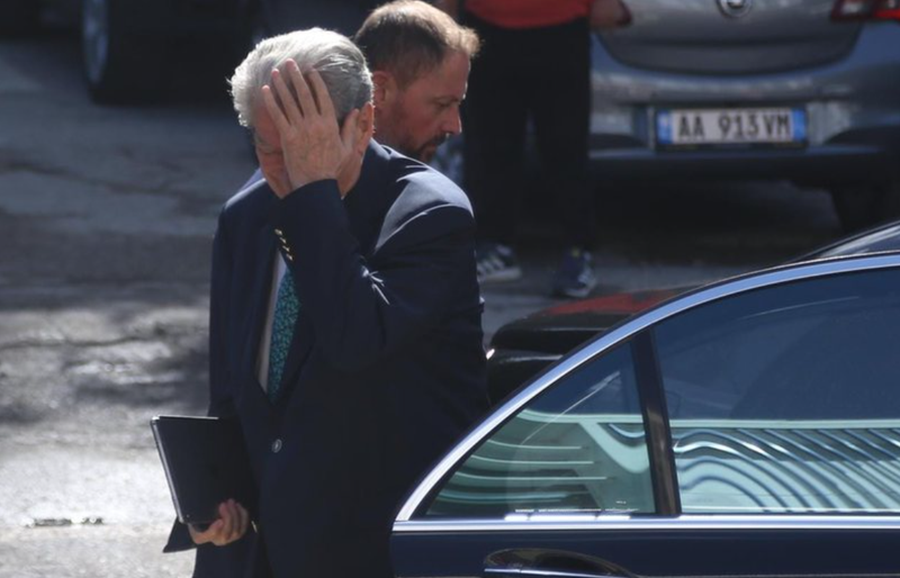
Every protest that starts is mainly connected to the interests of large parties, very little to small ones, and much less to civil initiatives.
The first confrontation of every Albanian with the system we have built is and remains to be rational. Even though, the leader of the majority Rama claims that he will leave power whenever he wants; while, the leader of the opposition Berisha denies the article of the statute that dismisses him after the defeat, justifying himself with the irregularities of the elections, but also the eternal verdict of the democrats in his favor! Even though we are with the poor together with Kosovo in the region, or that the elections in our country are turning into a struggle with the tedious counting and recounting, none of the politicians has the idea that they can also withdraw and leave the line, just as they can be more modest.
Over the past few months, the Democratic Party tried to declare “Civil Disobedience” (CD) several times as its motto. Not only did the few protests where I asked for the CD last only a few hours (exactly as long as the government allowed), but also because it had no central idea, the movement became somewhat ridiculous, even for the DP people in parliament who were presenting it as an argument. Some of them who did not even understand it as a concept tried to defend it pathetically in front of the media, but adding to the ridiculousness of it all with the way they implemented it in reality. Where not only finding the idea, but also the way to mobilize people was impossible. And, with that composition and with those ideas that it claims, the Democratic Party really has a hard time creating a convincing opposition to civil disobedience.
Meanwhile, apart from the massive popular protests of the early 1990s, none of the ones that have taken place since then (even with massive participation against the SP and the DP) have created a legacy, or have remained as a reference point as a model. The only one, which was held a few years ago by students, faded away and has been one of the greatest disappointments of citizens for the way this pure social fabric was manipulated and how it faded away, but also for those who divided it, starting with the strikebreakers & CO. None of our parties has left any democratic legacy and they are full of jealousy for the students, who have already manipulated them terribly. Not simply by flattering and opening the gates of politics for a few, but by giving them the narrative and above all by dictating the methodology. Added to this is the way of thinking and acting. The last elections showed this legacy.
And without a good legacy of protest cultures (in Eastern Europe, awareness has long begun) that all our political parties have not abandoned or have weakened, it shows that there cannot be an internal change of this problematic social order, dressed up in democratic canons.
It is unfortunate that many representatives of youth today are more involved in the trenches of the main parties than in the realities of change. The problem is compounded by the fact that: in Albania there is no tradition of civil disobedience. Just as there is no tradition of organized political action, first in small local communities and then in larger communities, beyond the authority of any party or state. Blind obedience to power has replaced reaction and finding ideas for change.
Every protest that starts is mainly related to the interests of the big parties, very few small ones and much less to civil initiatives. The only thing that peaks is the one related to chemical weapons and the mess of 1997, the first where the non-partisan civic engagement was impressive and the second for our sense of destruction, actually related to the loss of savings in the Pyramid.
Civil disobedience cannot be done without good ideas, visionary leaders and a developed and independent structure together with the will of the people themselves, which at this time leaves much to be desired in Albania. The use of the administration by the majority and the work of the DP militants is tiring, because it is not moving the tiring status quo. The existence of a strong and incorruptible union would be a great help, but this does not happen, because this movement does not exist, and it was even one of the prides of the prime minister when he was tearing up foreign investments in front of foreign colleagues. And above all, the remaining morality of fewer and fewer people who do not make pacts. But, the undeniable fact of unemployment in hybrid democratic systems like ours, makes it a source of government blackmail, since an entire contingent of work is ready when the government needs it! And, if you do not agree to do what is asked of you, there is someone to replace you, while your colleagues simply turn their backs on you. In democratic societies, being a strikebreaker or being used by the administration is an insult and a shame, and no one talks about you or ostracizes you in society.
Whereas in our country, cases of solidarity are solid, while colleagues almost never join them, with exceptions, which should be considered commendable. The cases of Serbia and Hungary are teaching us a lot about democracy, but more about what determination means in the face of autocrats Vučić & Orban and not a few strikebreakers. However, even the democracy they seek in those countries seems unclear and they are accused of interference, they killed the fear and uncertainty that is stifling the protest in Albania.
While in Albania they were few moments, the MC movements in Eastern Europe had more weight and what united them as an idea was the confrontation with great challenges. The communist regimes survived and were ultimately not overthrown as one might think. While some movements like “Solidarnost” in Poland, in these regimes, achieved great success and seemed to foreshadow change for this country, other movements encountered more resistance and repression from the communist authorities. For theorists of democracy, the success of the MC depended mostly before the Fall of the Berlin Wall on factors such as the level of popular support, the regime’s willingness to negotiate and the broader international context, especially the stance of the former Soviet Union.
Many decades after the Fall of the Wall, there are many segments of society that are interested in this status quo, just as today's hybrid democratic regime in Albania sees the MC as a threat to its power and has smothered it from the cradle, even with the cooperation of the opposition itself. It is not for nothing that the media often reports sources of common interest and unscrupulous cooperation in business. The concept of law that can regulate many of the uncertainties is not implemented and worse, it is not felt as useful. Meanwhile, Blind Obedience in the country is opposed to the concept of Law, which should help change. This should alarm the Albanian individual and Democracy today.
"I think we should be men first and subjects second. It is not desirable to cultivate respect for the law, so much as for right. The only obligation I have a right to assume is to do at all times what I think is right," wrote Henry David Thoreau in the 19th century in his concept of "Civil Disobedience", as respect for Right, against the Blind Obedience that is asphyxiating democracy.




Lini një Përgjigje