


 Shkruar nga Prof.dr. Skënder Asani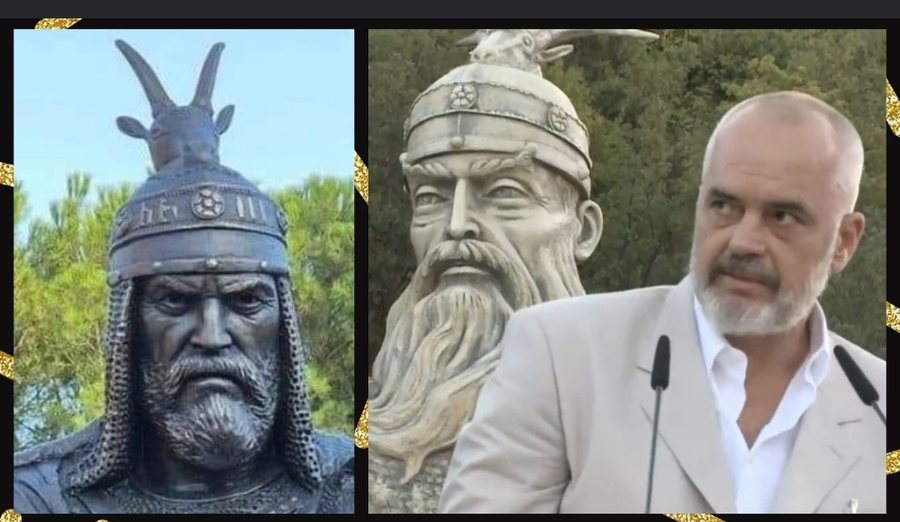
Today, Albanians need a figure who must not only lead, but also inspire; who must not only speak, but also act; who must not only remember the glory of the past, but also courageously build a new future. And while history does not wait, the call of the times is clear: Albanians need a Skanderbeg who is both a leader, an inspiration, and a builder of unity.
The history of a nation often faces great moments, where time does not ask whether it is ready or not, but presents it with the challenge of choice. It is precisely in those moments that the great question arises: will this nation have a leader to make the right decision? For Albanians, today is one of those times that requires courage, vision and leadership, because history does not accept delays, and every hesitation turns into a precious loss.
The Albanian people, scattered across many countries and often faced with regional, tribal and religious differences, are today faced with a challenge similar to those they experienced in past centuries: how to build a future where unity is stronger than division, and where the national commonality prevails over the fragments that have torn it apart over the centuries. In these sensitive moments, a symbolic figure is needed, a “Skënderbe of the National Renaissance”, who with wisdom and determination will give direction to aspirations and restore the belief that Albanians can be together in a grand vision.
This modern-day Skanderbeg will not be simply a warrior, but an architect of unity. He must be the one who melts regional divisions, who understands that Albanianness is not limited to mountains or plains, but is a living mosaic that becomes complete only when it embraces all its colors. He must be the one who transcends religious difference, turning beliefs into spiritual wealth rather than political obstacles. And above all, this new Skanderbeg must have the vision to lead Albanians without clashing with any neighboring nation, because his strength does not lie in hostility, but in building a spirit of peace and coexistence.
In this vision, Skanderbeg is not only the leader of the Albanians, but also the messenger of the Balkans. He speaks to the region, inviting it to a new chapter of cooperation, mutual respect and lasting peace. The Balkans, known for centuries as a hotbed of conflicts, needs to be transformed into a space of coexistence and shared development. Only a leader who knows how to overcome narrow nationalist boundaries and project a regional vision can do this.
The peoples around us, still today, act and think with the ethno-nationalist concept of the 19th and 20th centuries, keeping alive prejudices and attitudes that often turn into direct actions against Albanians. This old mentality, fueled by political mythologies and hegemonic projects of the past, continues to produce tensions and keep the societies of the region tied to the past, instead of orienting them towards the future. Faced with this, Albanians must not fall prey to the archaic nostalgias of other nationalisms, but rise above them, proving that a wise and visionary nation can open new paths.
On the other hand, Albanians have a historic chance today, perhaps the greatest after decades of effort, especially after the great changes of the last century of the 20th and the first two decades of the 21st century. This is the moment when, with a wise policy and a leadership with the features of a 21st century Skanderbeg, Albanians can open the Balkans and free them from the mythical captivity of grandiose projects that have brought continuous conflicts. Only in this way can the region emerge from its painful past and become an inseparable part of a united Europe, not as a periphery, but as a worthy contributor to peace, stability and development.
At the same time, it cannot be overlooked that the world today is troubled by many war fronts and conflicts that have distracted the attention of the international factor. This factor, which at key moments of modern history has been alongside the Albanian people, is today involved in the creation of a new global map. Precisely because of these developments, Albanians need to mobilize as a nation, to restore and strengthen the international alliances that guaranteed our survival and aspirations. In this new geopolitical reality, a leadership is required that, with the spirit of Skanderbeg of the 15th century, knows how to create friends and allies, turning history and perspective on our side. Only in this way will Albanians ensure well-being and a clear positioning in the new geostrategic architecture that is being created before our eyes.
But this new Skanderbeg would not be limited to the borders of the Balkans. He would also speak to Europe, reminding it that Albanians, along with the other peoples of the region, are an inseparable part of Western civilization. The return to the West is not only a political orientation, but a return to its cultural, historical and spiritual origins. Europe cannot be thought of without the Balkans, just as the Balkans cannot build their future without Europe. And at this crossroads, Albanians, with wise leadership, can become a connecting bridge that brings peoples closer and enriches the European project itself.
In this difficult journey, inspiration can also come from great figures of Albanian humanism, such as Mother Teresa. She, with her simplicity and universal love, proved that the greatest power lies neither in the sword nor in wealth, but in service to humanity. If Skanderbeg taught us how to protect our identity and dignity, Mother Teresa taught us how to perpetuate it through love and solidarity. A leader who would know how to unite these two inspirations of strength and humanism would be exactly what Albanians need today: a leader who erects walls to protect, but builds bridges to unite.
Historical decision-making is not a momentary matter, but an act that determines decades and sometimes entire centuries. It requires rare leadership, which rises above petty interests and sees the future with clear eyes. Today, Albanians need a figure who should not only lead, but also inspire; who must not only speak, but also act; who must not only remember the glory of the past, but also courageously build a new future. And while history does not wait, the call of the times is clear: Albanians need a Skanderbeg who is both a leader, an inspiration, and a builder of unity. Only in this way will the nation know how to turn historical decisions into historical victories.




Lini një Përgjigje