


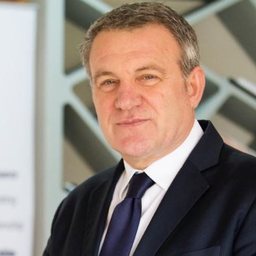
 Shkruar nga Arben Malaj
The increase in Serbia's military budget is a clear signal and concern. Serbia's defense budget in 2023 reached $2.14 billion, an increase of 23.92% from 2022.
"Those who submit to evil in the name of peace have lost both peace and honor." Winston Churchill
He still experiences pain and uncertainty from the massacres of the past. The roots of ethnic and religious conflicts in the Balkans include the building of nations in the 19th–20th centuries on territories with mixed populations, with Ottoman and Yugoslav heritage, the instrumentalization of religion, especially by the Serbian Orthodox Church, and conservative Islamic networks, the latter also referred to in cases this year, exploited by the Serbian secret service with the aim of linking Albanians to radicalism and extremism in other conflict countries.
The Srebrenica massacre and the Serbian genocide in Kosovo are deep wounds in the collective memory. Two historic agreements contributed to the cessation and reduction of ethnic and religious conflicts in the Balkans after the 1990s. The first is the Dayton Conference in November 1995. The main decisions included the cessation of the war in Bosnia after 3.5 years of bloodshed, the creation of a single state of Bosnia and Herzegovina, consisting of two entities, the Bosniak-Croat Federation and the Republika Srpska, and the deployment of a NATO peacekeeping mission (IFOR/SFOR).
However, for Bosnia, Dayton brought not only peace, but also a very complex and often inefficient state system. Fragile institutions and a weak economy, unemployment, emigration, state capture and polarizing media make it easier for elites to misuse ethnic-religious affiliations. Unresolved issues, such as the status of Kosovo, the effective and crisis-producing dysfunction of Bosnia and Herzegovina, and identity tensions in Montenegro and North Macedonia, create the ground for repeated crises in the Western Balkans, which also create heavy costs for the EU and NATO. The increase in geopolitical and geostrategic clashes is related to the return of global power rivalry.
While the US, EU and NATO aim for the stabilization and European integration of the Western Balkans, Russia instrumentalizes the Kosovo issue to relativize its annexations in Crimea and Donbas. China aims to revive the “Silk Road” and expand potential markets and influences everywhere in the world, with a focus on the EU as a powerful economic competitor. China aims to increase its geostrategic influence by increasing investments in infrastructure and military investments in the Balkans and specifically with Serbia. Turkey pursues an active diplomacy with economic and military ties with a long-term focus on the reconfiguration of the economic borders of the Ottoman Empire. The clashes in northern Kosovo during 2023–2024, the murder of Kosovo police officers, the repeated provocations of the paramilitary group, which was located in the Banjska Monastery and headed by the deputy leader of the Kosovo Serb party, the Serbian List, Milan Radoicic, are sufficient signals for the growing risks of ethnically and religiously based provocations.
These risks have forced KFOR and NATO to strengthen its presence, signaling an increase in regional risk. The second conference, that of Rambouillet, was held at the Château de Rambouillet near Paris in February–March 1999, with organizers from the US, the EU and NATO and the participation of representatives from Kosovo and Serbia. The aim was to reach a political agreement between the Albanians of Kosovo and Serbia to stop the ethnic cleansing of the Milošević regime and to guarantee substantial autonomy for Kosovo. The Albanians of Kosovo signed the document, which provided for: (i) self-government; (ii) free elections and (iii) a military presence of NATO. Serbia refused, finding it unacceptable to accept NATO forces on its territory. Just as Russia today refuses the presence of NATO troops in Ukraine. After the failure of Rambouillet, NATO undertook the air campaign against Yugoslavia (March–June 1999), which led to the withdrawal of Serbian forces from Kosovo and the establishment of the UN international administration (UNMIK).
On 17 February 2008, Kosovo declared independence, but its status as a UN member state is blocked by the veto of Russia and China, two permanent members of the UN Security Council. Kosovo is recognized by 115 out of 195 countries out of 195 UN member states. It is recognized by 22 out of 27 EU countries, while Spain, Greece, Romania, Slovakia and Cyprus have not recognized it. It is recognized by 27 out of 33 NATO member states. Full recognition of Kosovo would facilitate NATO membership and strengthen peace and stability in the region. The experience of occupying Ukrainian territories and achieving peace, allowing the occupation of territories as the only option for stopping the war and achieving peace, is a bloody appeal to eliminate the delays in Kosovo's Euro-Atlantic integration.
The increase in Serbia’s military budget is a clear signal and concern. Serbia’s defense budget in 2023 reached $2.14 billion, an increase of 23.92% from 2022. Together with the $2.7 billion deal to purchase 12 Rafale fighter jets from France, it makes Serbia’s military budget closer to a “war budget” than a “self-defense budget.” Currently, a Serbian “invasion” of some areas in northern Kosovo is hindered by; (a) the presence of KFOR; (b) the political cost of blocking Serbia’s Euro-Atlantic integration; and (c) the lack of an international legal basis, as on July 22, 2010, the “International Court of Justice” concluded that “the unilateral declaration of independence does not violate international law.” Serbia's real and increasing danger in the Western Balkans comes from hybrid methods, acts of sabotage, and spontaneous provocations in northern Kosovo, which could escalate.
The issue of changing borders with a land swap is a sensitive one. The EU strongly opposes the option of a land swap between Serbia and Kosovo, warning that opening a “Pandora’s Box” would trigger chain reactions in Bosnia, North Macedonia and Montenegro. The US has left some room for ambiguity, but its focus is on stability and the implementation of existing agreements. Increased uncertainties and uncertainties in the Western Balkans, historically the poorest region of Europe and where the embers of ethnic and religious conflicts have never been extinguished, would create heavy economic and financial costs for Europe itself. This scenario would weaken the geopolitical and geostrategic weight as well as the international credibility of the EU.
Referring to global developments, specifically the likely meeting between the presidents of Ukraine and Russia under the mediation of the US President to end the war in Ukraine with the option of changing the borders, Kosovo is in a complicated geopolitical and geostrategic position due to a request to apply a similar change to its territory, which in the case of Kosovo could bring negative effects. The increase in Serbia's military spending and the diversification of arms supplies require a careful and coordinated response with international partners. Sustainable peace is the only solution, but it cannot be achieved if dangerous precedents of forcible border changes are created. Any attempt at territorial revision within the Western Balkans, especially to the detriment of Kosovo, will ignite a chain of regional and global insecurity, making the engagement of NATO and the EU also their geopolitical and geostrategic power.
* Researcher of European integration and geopolitics.
** Researcher and expert in national security. Lecturer, University of Gjirokastra



Lini një Përgjigje