


 Shkruar nga Maria Katsounaki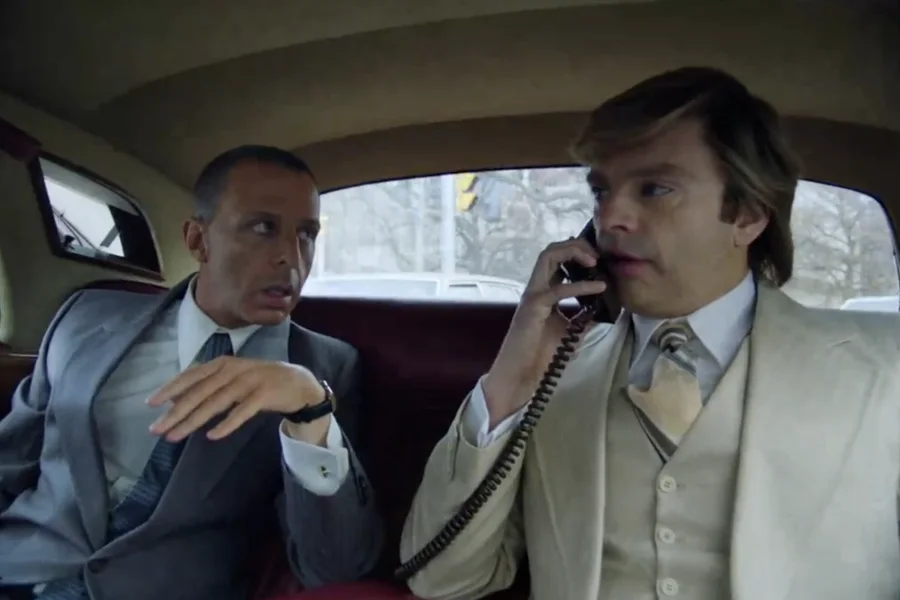
Where does a leader get his/her energy from today? What are his/her role models? What does he/she consider his/her success? Are there red lines or does their constant crossing make them increasingly "untouchable," as happens with superheroes?
“Life is a comedy. It must be played seriously.” The expression of the important European thinker of the 20th century, Alexander Kojève, which appears as a preface to Giuliano da Empoli's novel “The Wizard of the Kremlin”, may be a valid motto for today as well. Perhaps not only today.
What is worth noting is that in the period we are going through, the terms of spectacle and acting prevail over any political practice.
-Former US President Barack Obama won the award for best narrator at the 2025 Creative Arts Emmy Awards for Netflix's natural history documentary series "Our Oceans." In fact, this is the third Emmy award to grace his resume. It is a fact that Obama had pop star qualities that made him particularly popular. A charismatic speaker and interlocutor, with charming looks and movements, a voice that showed culture, high emotional intelligence. Rare skills, especially in front of crowds. The society to which modern leaders address themselves is increasingly less fleshly; that is, increasingly unknown, increasingly unpredictable.
-A year ago, the (intentionally underrated) film “The Apprentice” by Ali Abbasi was released, which introduced us to Donald Trump, (played by Sebastian Stan) in his professional beginnings in the 1980s, focusing on his relationship with his ruthless lawyer and mentor, Roy Cohn. Cohn’s motto, which Trump fully embraces, is “Don’t worry about what other people think of you. It’s fiction, not reality. You create your own reality.” The film draws on elements from Trump’s biography “The Art of the Deal,” written by Tony Schwartz. Abbasi recently confessed to George Tsiros in an interview with “K” magazine that Trump “is a genius at public relations. He understands the media landscape and the public’s perception in an instinctive, almost physical way. He doesn’t just play a role. It’s something deeper. He gets into people’s minds and into the skin of the media.”
-A few days ago, the Venice Film Festival screened the film "The Kremlin Wizard" by Olivier Assayas, an adaptation of the bestseller by 'Da Empolit', which refers to a propaganda wizard in Russia, Vadim Baranov, the name of the fictional hero, who helped and accompanied Putin's consolidation in power. The author was inspired by Baranov by a real Russian, a former associate of Putin: the former Kremlin chief of staff, Vladislav Surkov. A political thriller, full of intrigue and background, which leads to the elimination of any potential opponent.
All three examples, with different content and aims, have a common reference: the world of spectacle. The film industry has always been inspired by key figures in politics, but in this case it is not just a reflection or fictional reconstruction of their lives that is being presented, but the phenomenon itself: the transformation of politics and its representatives.
Where does a leader get his/her energy from today? What are his/her role models? What does he/she consider his/her success? Are there red lines or does their constant crossing make them increasingly "untouchable," as happens with superheroes?
Technology, especially the social media sphere, has its own rules. Hundreds of thousands of followers, real or digital, fake accounts (bots), commenting and interacting, manipulating. The society to which modern leaders address themselves is increasingly less fleshly; that is, increasingly unexplored, increasingly unpredictable, this has forced politicians to evolve.


Lini një Përgjigje