


 Shkruar nga Ylli Pata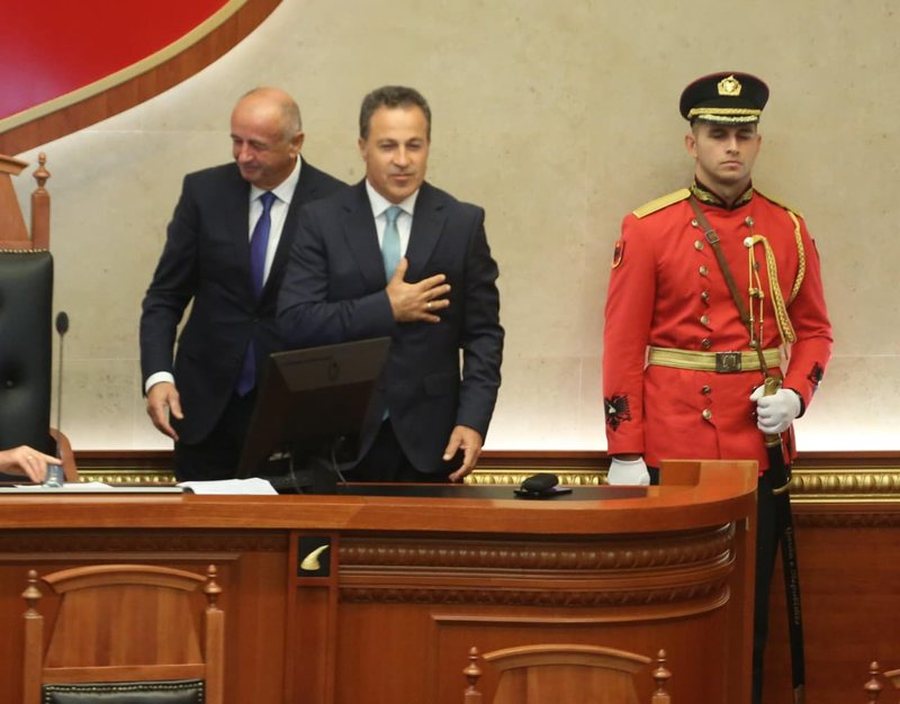
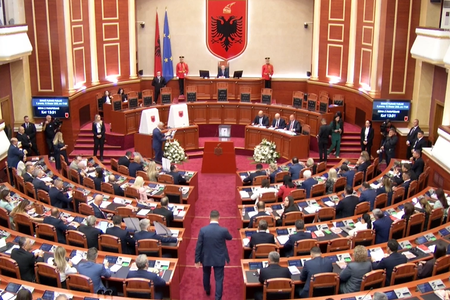
Today, in the first session of the constitution of the Parliament, the Albanian opposition had its first important opportunity to demonstrate a political test, such as the vote for the new head of Parliament.
The mask theater with the posters in the Assembly hall was not at all a creative PR idea to show an opposition reaction in the Assembly hall. Although such a show or action is completely normal as a media and communication tool in the eyes of the public.
The most important work of a political party participating in the Assembly is none other than the vote. It is the most fundamental and strongest political action than any other act or action.
Today, in the first session of the constitution of the Parliament, the Albanian opposition had its first important opportunity to demonstrate a political test, such as the vote for the new head of Parliament.
To gather the forces of the opposition parties into a common, albeit heterogeneous, front in a long, 4-year battle.
Setting the benchmarks of a dialectical political engagement and also mutual trust. But the largest opposition party shied away from the first real battle in the Assembly, using the trick of posters, not participating in the vote.
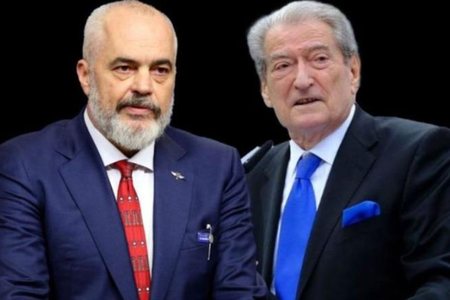
This boycott was nothing more than a political act, the first of the DP, conceived by Sali Berisha, who had nothing to lose by participating in the vote, on the contrary, it would set his group and that of his allies on a path that today had only taken the first step.
But why did Sali Berisha boycott the vote for Niko Pelesh? All likelihood is that the opposition felt insecure about its political cohesion in the vote. In 2017, when the DP participated in the vote for the then Speaker of the Assembly, Gramoz Ruçi, two votes of the DP voted for the majority candidate, which led to considerable controversy for a long time.
But it seems that a "not good figure" in the vote is not the only and main problem for Sali Berisha. The atmosphere was noticed at the first meeting of the DP parliamentary group, where it seems that everything came from the "huge amount of work" that Edi Rama gave to the opposition, after his speech at the Socialist Party Assembly.
A job so voluminous, that it seems that the opposition has been caught by the sea without even boarding the ship. Where of course the biggest job is the upcoming electoral battle for the 5 municipalities of the country. Which in terms of number of voters have a significant specific weight, almost 1/3 of the country. Which means a complete electoral test to verify the real state of mood of the Albanian voters.
Any normal opposition eagerly awaits such an opportunity, to throw itself into the first battle after the one it has lost, giving the army and its machinery the opportunity to get to work, immediately taking its mind off the past. And thus entering the present to seize the future and leaving aside the polemics and resentments that defeat always breeds.
But it seems that this battle was like that old sketch from the Lushnja variety show during the communist era, when a passerby broke the stone of a road worker who was petting him. The worker was upset that the passerby finished the job that he had planned to finish for a long time.
This impasse for a new electoral "run" seems excessive for the DP, which is tired of a process where it has spent energy, money, and of course has accumulated so many political problems that it is not certain that it can resolve the electoral race.
The attack that was launched by Berisha's close people against Bujar Leskaj, who publicly challenged Gazmend Bardhi as group leader, seems to have nothing to do with Bardhi, but precisely with the elections. The possibility of a democratic candidate from the socialists for the municipality of Vlora would be a severe stomach ache for Sali Berisha.
Edi Rama, with the electoral battle, but also the broad proposals for important reforms such as territorial, electoral and parliamentary reform, has given so much work to the opposition that they can actually activate all those who are upset by the May 11 process.
An opportunity where he can gather experts and aspirants for president or part of the electoral staff.
Of course, all of this would be welcome for a normal political force, which has a relationship of trust and volunteerism between militants and supporters, to create a wider political circle of supporters.
Berisha, on the contrary, sees this case as a trap, as a trick to make it even worse than it was in the last two elections. Because the DP does not have the means to move so quickly, because it was hit hard by the so-called rostrum movement.
Therefore, the DP has no strategy, it will only elaborate tactics and daily agendas, attempting to act like a guerrilla group, to force the other side to an agreement, because it knows that in elections "they cannot win with Rama". They have been repeating this continuously for several years...


Lini një Përgjigje