


 Shkruar nga Ben Andoni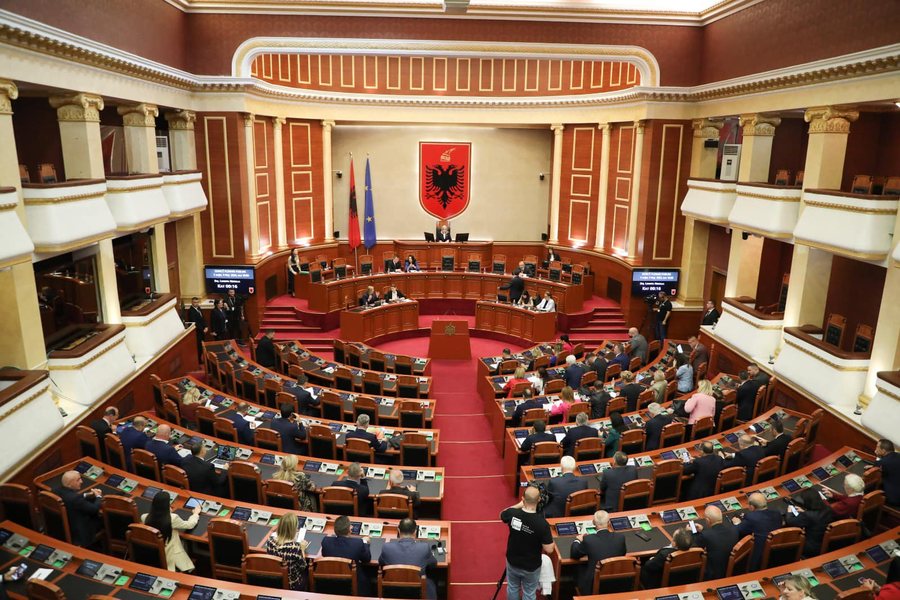
The lack of punishments is making the corrupt and their unbridled lives in decadent luxury, "models" for today's society. The confrontation remains only with the honesty of the individual and the discipline of the endless institutions and laws that deal with corruption. In ancient times it was said more beautifully, as for example by Tacitus: "Corruptissima republica, plurimae leges". (The more laws, the more corrupt the state).
There is no more widespread word in contemporary Albanian discourse and documents than corruption. Today, we find it in state documents, we see it every day in the media, the political discourse keeps it as a headline, but it also identifies it with real people. In a metaphorical way, it means for any kind of negative action, appropriation but also positive, such as the Balkan way of showing the "ability" of some. The universal definition is as follows: "Using public position for private gain". Most government officials are labeled as such, leaving out corruption in the private sector! In the Criminal Code of the Republic of Albania there are about 20 articles, which contain the word corruption in the title.
Our country, referring to the latest report of "Transparency International" (TI), has marked a slight improvement in the Corruption Perception Index for 2023. Albania is now rated with 37 points from 36 points, measured a year ago, being ranked 98th among 180 eye countries considered in this evaluation. For Albania, the reference of data related to the investigation and prosecution of high-level corruption is considered positive, where the greatest progress depends on strengthening criminal justice legislation and ensuring effective supervision of the executive branch, according to IT's assessment.
In fact, the Albanian state is one of the most famous for its legal framework and bureaucracies. As if an entire anti-corruption structure in the country was not enough, in recent months, Prime Minister Rama added the creation of the Ministry of State for Public Administration and Anti-corruption headed by Adea Pirdeni, former Deputy Minister of Justice and former Deputy Chief Negotiator with the EU. Enthusiastic about this new initiative, Prime Minister Rama would present the idea in the social network 'X' as follows: "It is advisable that the government's anti-corruption policies be better harmonized between the executive institutions, with the demands of the challenging process of negotiations with EU for all institutions of the country, as well as with the civil society and entrepreneurship itself".
Willingly, unwillingly, the prime minister showed that corruption was deep in the country and not for nothing, he dedicated a minister against him! There are some individuals and entities that show the concerns of corruption, but the remarks of the US and German Chambers of Commerce have openly shown the problem of corruption in the country before the international factor. It doesn't just end with them.
From 2017, it was the Ministry of Justice, which had the role of the National Anti-Corruption Coordinator (NCC). With its tagline, it regulated strategic and policy efforts based on a three-dimensional approach: prevention, punishment and awareness. Based on its function, the KKK carried out inspections and controls in sectors prone to corruption and also supervised the activity of the Coordinators of the Anticorruption Network, located in 44 central institutions and at the regional level for the local offices of 4 of them.
A whole network, if you include the KLSH tax, the ILDKP or even the structures of whistleblowers in the institutions (the latter failed completely, unfortunately), aimed to put the terrible corruption in the coercive walrus in place. However, the rhythms of the strike still leave something to be desired, especially since SPAK has shaken the third mandate of Mr. Rama. A number of former officials and his officials make continuous visits to this institution. Meanwhile, the reports of the SSC pass without punishment for the officials and do not bother the "opposite" at all. "During the period January-April 2024, 134 recommendations were given on findings with negative effects on the state budget, for a total value of 2,107,937 thousand ALL, of which: economic damage estimated at 20,790 thousand ALL, ineffective management of funds in the amount of 2,000,168 thousand ALL and 86,979 thousand lek in shortfalls in the tax/customs control activity" (KLSH, First Bulletin, 2024).
Sërish pas në argumentin tonë: ka një sërë ligjesh, që e dënojnë korrupsionin në vend. Manuali “Aspekte juridike penale të korrupsionit në Republikën e Shqipërisë” (2023) tregon se në titujt dhe nenet përkatëse të Kodit Penal shqiptar veprimi korruptiv ndahet në dy lloje; në aktiv dhe në pasiv. Teksti i nenit respektiv sqaron se prej kujt dhe si kryhet veprimi shoqërisht i rrezikshëm dhe i dënueshëm sipas Kodit. Në Kodin Penal të Republikës së Shqipërisë, miratuar me ligjin Nr. 7895, datë 27.1.1995, ndarja është bërë në krerë të ndryshëm, si, për shembull: Në Kreun III, janë të parashikuara “Vepra penale kundër pasurisë dhe në sferën ekonomike”, të cilat kryhen nga ose ndaj personit që ushtron funksion drejtues në shoqëri tregtare ose punon në çdo pozicion në sektorin privat. Në Kreun VIII, të titulluar “Krime kundër autoritetit të shtetit”, gjejmë të parashikuara në Seksionin I, “Vepra penale kundër veprimtarisë shtetërore të kryera nga shtetasit”. Ndërsa në Seksionin II, gjejmë “Vepra penale kundër veprimtarisë shtetërore të kryera nga punonjësit shtetërorë ose në shërbim publik”. Kodi Penal parashikon edhe “Vepra penale kundër drejtësisë”, në Kreun IX të tij… Një vend të posaçëm zënë edhe “Veprat penale që prekin zgjedhjet e lira dhe sistemin demokratik të zgjedhjeve”, të parashikuara në Kreun X. Në Kodin Penal janë nenet 328 dhe 328/b që parashikojnë korrupsionin në zgjedhje. Ndër ligjet e posaçme që trajtojnë luftën ndaj korrupsionit është edhe Ligji Nr. 95/2016, “Për organizimin dhe funksionimin e institucioneve për të luftuar korrupsionin dhe krimin e organizuar”. (ILIR PANDA, 2023) Një mal me ligje, por Dosjet zgjedhore të Dibrës dhe Durrësit janë harruar, ashtu si për zgjedhjet e fundit mbahet në burg vetëm… Fredi Bejleri!
Ekspertët kritikuan dhe nismën e pak viteve më parë të qeverisë për paketën antiKÇK, që asokohe u konsiderua se “sjell një gjykatë të jashtëzakonshme, që është e ndaluar nga Kushtetuta” (Krasniqi, 2020). Madje, politologu do shtyhej më tej asokohe. “Nëse duan vërtetë të luftojnë krimin dhe korrupsionin, kemi një listë zyrtarësh, mes të cilëve 3 zyrtarë që nuk u lejohet hyrja në Amerikë, që mazhoranca duhet t’i hetojë për të treguar se ka vullnet” (Krasniqi, A2).
The silent reaction of the foreign factor showed that the initiative was futile and showed that crime and corruption are fought with serious behavior of institutions, not with legal initiatives. And, the fact is that since then Albania has played very little from the Corruption Index. And in this context, again at the initiative of Prime Minister Edi Rama, the Parliament of Albania approved a resolution a few days ago for the creation of a new Special Anticorruption Commission, while a number of former ministers and socialist deputies are accused by the Special Prosecutor's Office Against Corruption and Organized Crime (SPAK), for corruption and abuse of office. The Prime Minister justified the initiative before the legislators on May 27 that "it is necessary for Albania's membership in the EU"! The opposition boycott showed that the initiative is faltering from the beginning, while experts are afraid of interference in the reformed justice system in the country and the intention to hinder the work of SPAK and GjKKO, bodies created as a result of a justice reform program that was done with the support of the US and the EU, since 2016.
A whole network of laws, endless initiatives, statements by politicians of both sides, but why are Albanians corrupt in the end? Gluttony knows no limits, while the empty and luxurious life of a stratum without real contributions is shaking the Albanian society, added to the lack of public transparency, lack of faith in religion and above all the misuse of the concepts of democracy, while " "Residents" from conformism, submission to authority, and trying to identify with a group in this social tollovi. The lack of punishments is making the corrupt and their unbridled lives in decadent luxury, "models" for today's society. The confrontation remains only with the honesty of the individual and the discipline of the endless institutions and laws that deal with corruption. In ancient times it was said more beautifully, as for example by Tacitus: "Corruptissima republica, plurimae leges". (The more laws, the more corrupt the state).



Lini një Përgjigje