


 Shkruar nga Peter Conradi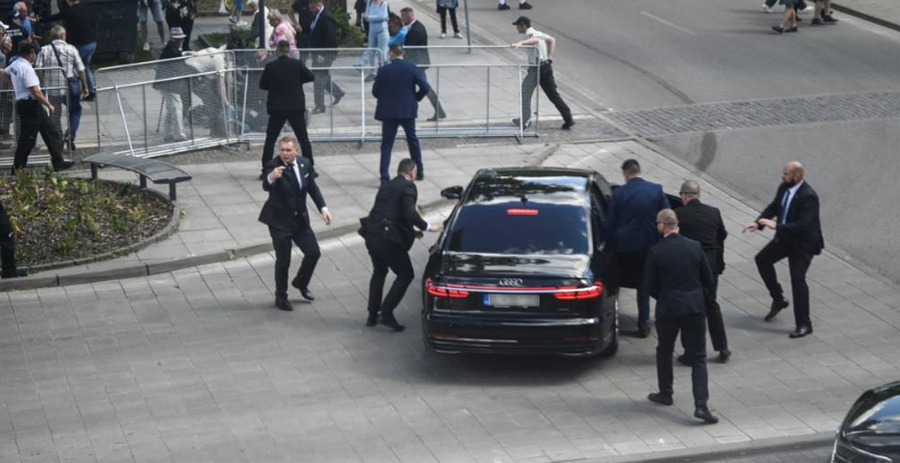
A month ago, Fico declared in front of the cameras that the political tensions in the country were so high "that a leading politician of the government can be killed". And it is said that a list of opposition figures accused of inciting violence against him is circulating on the Internet under the title "Blood on their hands"...
Bratislava - When an elderly man fired five shots at Robert Fico as he met with supporters in a small provincial town on Wednesday last week, the Slovakian prime minister's allies knew immediately that who to blame.
As Fico, 59, was airlifted to a nearby hospital, and footage of the attack went viral, the deputy speaker of parliament, Lubos Blaha, broke the news to lawmakers. Turning to the opposition, he said in a harsh tone: "This is your work!".
A few hours later, Blaha, known for his radical posts on social networks, accused the "liberal media and the political opposition" of "raising crutches" for the prime minister. "Because of your hatred, he is fighting for his life today," he said.
Meanwhile, Andrej Danko, the other deputy speaker of the parliament, labeled some opposition journalists as "disgusting pigs". But it soon became clear that the alleged perpetrator, Juraj Cintula, who was quickly arrested by police, was not part of a wider opposition conspiracy.
Cintula, 71, who appeared in court on Saturday charged with attempted murder, has been described by authorities as a "lone wolf". His past is interesting: a writer by profession, he has worked in various jobs as a miner in a coal mine, a mason, but also a security guard in a supermarket.
While in 2016, he tried to co-found a political party, the Movement Against Violence. The morning after the attack, Zuzana Caputova, the outgoing liberal president, and Peter Pellegrini, a Fico ally who will be sworn in as her successor next month, issued a joint statement appealing for calm.
However, the appeal has failed to dampen passions in the deeply divided nation of 5.4 million, which was in the midst of campaigning for the June 8 European Parliament elections when the sensational assassination took place. The Minister of the Interior, Matus Sutaj Estok, has described his homeland as "on the threshold of a civil war".
Meanwhile, Fico is reported to be out of danger, but still in a serious condition in the intensive care unit of a hospital in the city of Banska Bystrica, after undergoing 2 lengthy operations. Hit by 4 out of 5 bullets, he escaped death by a "hair," Pellegrini said.
“Vendi është nën shok, pasi një dhunë politike e këtij lloji nuk është parë kurrë në Sllovaki. Tensioni brenda shoqërisë sllovake është i dukshëm”- thotë Pavol Demes, analist politik, që në fillim të viteve 1990 ka qenë Ministër i Jashtëm. Sllovakia, më tha ai, ishte tashmë më e përçarë se kurrë, qëkur iu bashkua NATO-s dhe Bashkimit Evropian 20 vjet më parë. Familjet janë përçarë për shkak të politikës, mbi çështjet sociale delikate si martesat e homoseksualëve, të drejtat e komunitetit LGBT, si dhe për mbështetjen ndaj Ukrainën në luftën e saj kundër Rusisë. Sulmi ndaj kryeministrit, duket se do t’i përkeqësojë gjërat. Ekziston frika për më shumë akte dhune, ndonëse këtë herë drejtuar opozitës, e cila muajt e fundit e ka akuzuar Fico-n, se që nga ri-ngjitja në pushtet vjeshtën e vitit të kaluar, e ka futur vendin në të njëjtën rrugë “jo liberale”, duke kopjuar mikun dhe aleatin e tij, Viktor Orban, udhëheqësin e Hungarisë fqinje.
Një muaj më parë, Fico deklaroi para kamerave se tensionet politike në vend ishin kaq të larta “sa që mund të vritet një politikan kryesor i qeverisë”. Dhe thuhet se në internet qarkullon një listë me figurat e opozitës, të akuzuar për nxitje të dhunës ndaj tij me titull “Gjak në duart e tyre”.
Në mesin e tyre është Kristina Tormova, aktore dhe aktiviste e të drejtave të njeriut, e cila luajti një rol të spikatur në protestat e fundit antiqeveritare. Pas kërcënimeve të fundit, asaj i është ofruar mbrojtje nga policia. “Këto ditë ka pasur një gjuhë të fortë urrejtjeje në mediat sociale, duke thënë se unë i inkurajova njerëzit të vrisnin Fico-n. Sigurisht që kjo nuk është e vërtetë. Unë e nisja çdo protestë me fjalët:Silluni mirë dhe me qytetari, pasi për këtë po luftojmë!”.
Protestat, të cilat tërhoqën mijëra njerëz, ishin kundër një projektligji që po debatohej në parlament ditën e sulmit për të mbyllur RTVS, radiotelevizionin kombëtar, i cili gëzon autonomi të konsiderueshme, dhe për ta zëvendësuar atë me një organ të ri nën një kontroll më të rreptë të shtetit.
Kjo lëvizje u pa si një shenjë e mëtejshme e “orbanizimit” të Sllovakisë, pas mbylljes në mars të zyrës së Prokurorit Special, hetimet e së cilit çuan në dënime të shumta në disa raste të korrupsioni të profilit të lartë, shumë prej tyre të lidhura me partinë e Ficos, SMER (Drejtimi - Social Demokracia).
Të dyja këto masa kanë shkaktuar kritika të forta nga Brukseli. Atmosfera politike në vend është bërë gjithnjë e më toksike që nga viti 2018, kur Fico që në atë kohe ishte kryeministër prej 10 vjetësh, u detyrua të jepte dorëheqjen pas protestave masive për vrasjen e gazetarit investigativ, Jan Kuciak, dhe të fejuarës së tij Martina Kusnirova.
Kuciak was investigating links between senior politicians and the N'Drangheta, a branch of the Italian mafia, which was suspected of collaborating with SMER leaders. In April 2022, Fico was arrested and charged with links to organized crime, but the charges against him were dropped. When in opposition, he and his allies clashed with their opponents on social media.
"They used a very aggressive language," recalls Monika Todova, a well-known journalist in the country. "The Prime Minister has called journalists 'pigs' while President Caputova is a mouse. Such a tactic appears to have helped Fico return to power after the September 2023 elections, becoming prime minister for a fourth term at the head of a coalition with Hlas (Voice), a nationalist social democratic party led by Pellegrini. and the smaller ultra-nationalist party, the Slovak National Party.
Fico's success is due in part to his call to end military support for Ukraine. For historical and cultural reasons, Slovaks have long been the most pro-Russian nation in Central Europe. This has made them more vulnerable to the Kremlin's propaganda campaigns, which are suspected of influencing the election.
Cintula seems to have been very concerned about the direction in which Fico was taking the country. In a video released by the police station where he was taken after the attack, he is heard accusing the government of planning to "liquidate the media" and criticizing its reforms.
Investigation by Slovak media, however, has revealed a more complex figure, a rebel who had clashed with the authorities since the communist era, and who had previously been linked to Slovenski Branski (Slovak Recruits), a pro-Russian paramilitary group of the wing of right
In a 2015 book, he attacked Gypsies "who eat meat", praised a neo-Nazi party, defended Lubomir Harman who killed 8 people in 2010 in Bratislava, and complained that there was no Slovak version of Anders Breivik, the which killed 77 in Norway in 2011.
What will happen next is not clear. And not how long it will take Fico to recover. After undergoing a heart bypass in 2016, he defied his doctors and was back at work within days. This time, the comeback will take much longer.
Meanwhile, the government camp appeared divided between those who want to try to calm the situation, and those who intend to use the attack on Fico as an excuse to crack down on opponents, says Peter Weiss, the former Slovak ambassador to Prague. "The time has come for self-reflection by all political parties. An attack on democracy, in the form of an attempt to kill the prime minister, should not be used as a pretext to suppress or limit democracy and the rule of law" - he emphasizes. / Pamphlet adapted from "Sunday Times".



Lini një Përgjigje