


 Shkruar nga Ben Andoni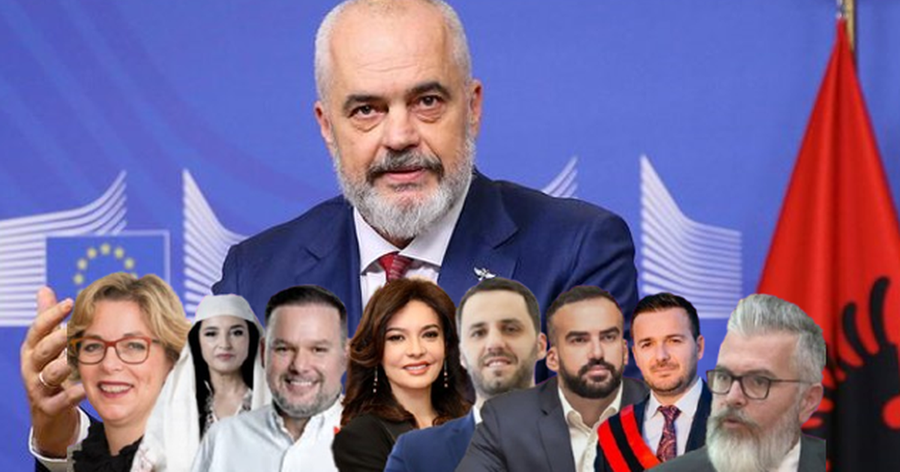
There is a whole list of former ministers, directors, and leaders who have expressed their vanity with boundless vulgarity, with consequences for the ownership of the country's assets and the ruination of the fate of who knows how many people.
What is tiring the Albanian citizen the most in recent years and decades is the vanity with which his whole life is surrounded! This vanity is such that it has emptied him of everything: Hope, the normality of everyday life and dreams. In literature: Emptiness as a human condition describes a feeling of generalized boredom, social alienation, nihilism and apathy. The combination of all these elements today accompanies every aspect of our lives.
The common Albanian faces the situation as a result of the television product; from the arrogance of politics and its disregard for the citizen (starting after receiving the vote); he encounters it in public statements of officers and in the end the common Albanian comes to the lack of values and the injustice that full citizenship now has. For a society like ours with constant ups and downs, bureaucratic chaos, chaos and countless surprises, there is also a sense that is related to the frequent rotations (not in politics but in employment) and the lack of respect for career and tradition.
You may have once been a necessary person and others more incapable of reference, now they are the ones who exist in the highest paid and valued jobs in society, while you are and remain from now on with all your professional baggage a demographic number. There were values or objectives that you were dedicated to, but now they are multiplied by Nothing. What's worse, no one is impressed by this!? The new ways you will find for survival do not appear or some lukewarm hope will be found at the end of tunnels with almost no light. Many Albanian professionals have solved it and will realize it by fleeing the country, one of the most possible alternatives.
Others who cannot will find other solutions. Some will be blinded by the achievements and politics that fill and cripple our lives. The Prime Minister is simply forced to emphasize this, of course, leaving the burden to his subordinates. Can we fill our lives by confronting this emptiness? There is a kind of perception in modern societies that the emptiness of the individual is also related to political ideologies, when you clearly understand that your commitment or hope in one of them turns out to be a fiasco (our history follows the disappointment of many personalities after three socio-economic regimes).
In Albania, the true emptiness is understood after the accumulation of an experience and the desire to address it, but to which the doors are closed by people without identity that the "Rama" governments have produced endlessly, implying that all the contribution of this man has been a futility. And, the futility that remains embedded in the Albanian subconscious is numerous. It is understandable when you judge him by the people and circumstances that have hindered him.
Sociologists and therapists link the condition to the hidden histories of human experiences with attention deficit hyperactivity disorder, personality problems and even seasonal problems, writes Moya Sarner, a specialist at “The Guardian” in an article. Unfortunately, it is not seen that it is everyday, what even an unconscious, mostly ignorant person does to destroy the life of the ordinary Albanian. And, this condition in Albanian society has turned into the terror of emptiness, where a part of us does not focus and is not given the opportunity to engage or work in work with long-term interest. We no longer talk about dismissals, job losses, or about the way they are diminishing the life of the Albanian individual in every aspect.
In front of this we have vanity, a concept which in the most general classical sense is described as arrogance and which in our society really means our emptiness. This evil has now become a banality. For the sake of truth, vanity is destroying Albanian society. There is a whole list of former ministers, directors, leaders who have conveyed their vanity with boundless vulgarity with consequences on the ownership of the country's assets and in the ruin of the fate of who knows how many people.
A study that can be done in the future, regarding this topic, we predict to be with tragic findings. The numerous cases that the media follows with former and again deputies, with former and again ministers is worrying, with unscrupulous directors it is almost deadly for the alienation and theft, but also for the fate of the Albanian individual and the hierarchy of values in our country. This vanity is already destroying the country and hope, it is peacefully feeding the emptiness. A proven sociologist like Weber attributed this feeling to the politics of a past century, when he lived. “Every day and every hour, the politician must overcome within himself a very insignificant and very human enemy: a very vulgar vanity (vanity)”, writes Max Weber in “Politics as a Profession”.
The thinker Weber then elaborates on the idea that: "The vanity of his time was a fairly widespread condition, perhaps no one could be completely free from it". And in his example, the first comparison of this concept was made with academic and scientific circles, even considering it among them as a kind of professional disease. In fact, the source of vanity in us is related to politics and the way we fight to become a politician.
In this sense, the futility and vanity that has shamefully accompanied politics and the faces that have led the country for decades, make you understand that in their struggle for power they have not seen and are not impressed by the sowing of such conditions that are so destructive from a psychological point of view for the life of the ordinary Albanian. And if we get into the reality of the numbers, then the situation would be frightening. Remembering the level of poverty and the Albanians who have fled is terrifying. That is why Rama is seen as a nightmare today, while Berisha is no longer taken seriously by the masses, except when thinking about where the Albanian opposition has gone. While the first is associated with the loss of hope of the Albanian; the second is seen as the man who put the seal on people's dreams of change.
For Weber it was clear but in the canonical sense for politicians: “The instinct for power” is part of his normal qualities, he emphasized. And here the morality of political power ended, because he thought of his own pleasure, instead of putting himself at the service of the ‘issue’. “For ultimately there are two types of mortal sins in the field of politics: partiality and – often, but not always, similar to this responsibility: irresponsibility.
"Yes, vanity: the need to stand out as much as possible drives the politician to do one of the two, or both together." And today's politician acts, and thanks to the way politics is structured in our country and social networks and various algorithms, he is an actor who thinks more about the audience, which with its votes feeds his survival and this torturous vanity for the public.
In this respect and by making a lukewarm comparison with almost a century ago when Weber lived, we have understood the emptiness and vanity (futility) of politics, but also the sad fate that befalls the Albanian individual. Humanism that carries the greatest values (already missing) is being confronted with banal political activity with a terror of vanity (futility) that is making our emptiness a permanent state.





Lini një Përgjigje