


 Shkruar nga Irena Beqiraj
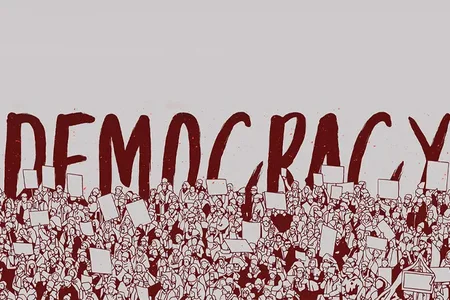
Under the terrible and empty carelessness of contemporary political violence, populism, polarization, and propaganda have invaded both our social ties and our shared spaces...
In eighteenth-century London, for a penny you could secure a seat in a coffeehouse, a cup of coffee, and a chat at a table where you knew no one. Those tables often became important spaces of debate.
Scholars, merchants, pamphleteers, and citizens debated politics, commerce, science, and philosophy late into the night. Such spaces, also known as "penny universities," were open to a wide range of social classes, so much so that Charles II tried to ban them. These coffeehouses became the centers of the social and intellectual life of the Enlightenment. Indeed, the ideas that reshaped the modern world were born in the conversations of these coffeehouses, not in the solitude of scholars. The Enlightenment was not the voice of a single thinker, but the chorus of ideas of many.
New ideas are developed, shared, encouraged, or discouraged using collectively generated and curated structures and norms. Emile Durkheim therefore considered ideas to be part of the "collective consciousness" and not simply thoughts within individual minds. They are part of the "common mental life" that is shaped through institutions, traditions, and relationships.
Today, social networks are like the "penny cafes" of old London, but unfortunately the language we use to explain or ask, the motivation or encouragement to reason, react or debate, shows that the values and motives that circulate around us no longer produce ideas, on the contrary, their sterility is frightening.
Under the terrible and empty carelessness of contemporary political violence, populism, polarization, and propaganda have invaded both our social bonds and our shared spaces. This slavish occupation does not allow ideas to be socialized, tested, argued, contested, shaped, and elaborated, but instead has left us between cynicism and lies; without answers about what is left to love, to cherish, or to fight for; without clarity about what fences and bridges we should build to protect freedom and what walls we should tear down.
Populism, which is nothing more than the modern expression of the "divide and rule" approach, feeds polarization. Polarization does not allow people to delve deeper into ideas; on the contrary, the opposite is true. Groups with opposing beliefs often become more polarized, not less, when exposed to different ideas. As polarization deepens, people become increasingly willing to tolerate abuses of power and sacrifice principles because only by doing so do they advance the interests of their own party at the expense of others.
While modern propaganda no longer just attempts to influence our opinions, it works to create apathy, to create anger, to alienate people from the political system, and even to make them skeptical of everything.
The “loudest voices” do not always represent those who think the most. Our platforms and debates are designed to facilitate advertising, engagement, and adaptation rather than debate of ideas, or the search for truth. The daily stream of words and images no longer comes as an invitation to think but more as a demand to react, or to signal engagement. Misinformation spreads rapidly, anger stifle reflection, and it is no wonder that many of us feel exhausted by the very need for ideas.
As our sense of helplessness and exhaustion is at its most acute, the determination to think as a human being, creatively and courageously, is necessary. It is not what we think but how we think that matters.
Ideas are not assets to be hoarded. They are a common heritage, a public good on which our common life depends, which we hope to improve for future generations. Each of us participates in social life and the creation of ideas to varying degrees when we share an article, repeat an assertion or challenge a point of view, when we decide to support or not, to become part of populism, polarization, propaganda or not, we decide to spread light or prolong darkness.
That said, we are not spectators but protagonists in the birth, life, or death of ideas.





Lini një Përgjigje