


 Shkruar nga Pamfleti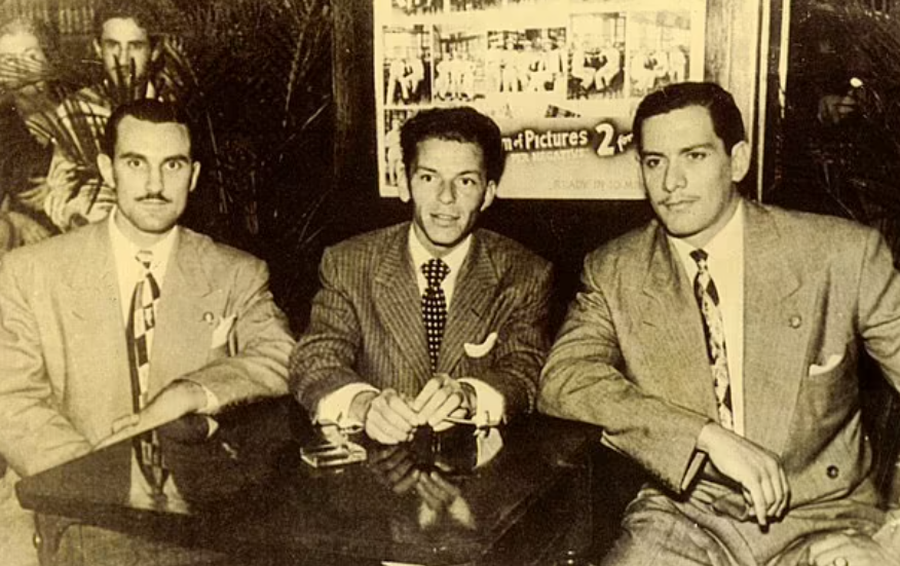
Born 110 years ago in New Jersey to two Italian parents, Frank Sinatra was an emblem of American culture, a symbol of the golden age of jazz and swing, and the personification of the elite of the time. With his mellow voice and charismatic stage presence, he captivated audiences around the world, becoming one of the most influential musical icons of the 20th century.
However, behind the glittering facade of musical performances and film acting, Sinatra had many dark sides, the most important of which were his connections with organized crime, among them the famous Italian-American mobsters Al Capone and Lucky Luciano.
For this reason, the FBI monitored him for a long time, documenting many of his inappropriate contacts and activities. Some scholars even say that the mafia connections helped Sinatra's career a lot, and it cannot be denied that he had a beautiful voice.
In his much-discussed book "Mafia Takedown," former FBI agent Mike Ciampi claims that these connections brought the music icon to the brink of death, forcing him to kneel and beg for his life, in a scene typical of gangster movies.
Before reaching that dramatic moment, Champi describes a complex web of connections that made Sinatra suspicious of the authorities and highly valuable to the mafia. And they weren't just rumors, it was fact that his godfather was the notorious gangster Willie Moretti. His name and address were also found in Lucky Luciano's files; and he was considered close friends with figures such as Louis Pacello, a soldier in the Genovese mafia family.
According to the former FBI agent, Sinatra was a prominent figure in organized crime circles, frequently photographed with members of various families, from members of the Fisketti mafia families in Chicago to Carlo Gambino.
One of the most intriguing claims is that these connections were not merely social. According to the book, the mafia actively interfered in his career. So when Columbia Studios rejected Sinatra for the role of Angelo Maxo in the film From Here to Eternity - a role that would radically change his career - the singer complained to the mafia.
Champ claims that the threatening message was sent via Frank Costello and Johnny Roselli to studio head Harry Coon. Roselli's direct threat - that Coon would be "damned dead" if he didn't change his mind - secured the role for Sinatra, who later won an Academy Award.
Violation of rules and punishment
However, it was precisely these connections that got the artist into trouble. According to Champi's account, based on the testimony of informant George Barone, Sinatra began to "break relations" with the Genovese family. He became very close to rival families, such as the Gambinos.
His behavior in Las Vegas also became uncontrollable and abusive. There were many nights when, drunk, Sintarta would get into fights with bar patrons. To the mobsters, this was more than just inappropriate behavior; it was a sign of disrespect and instability.
Under these circumstances, Genovese crime family boss Anthony Salerno called a meeting in an abandoned basement in the East Harlem neighborhood of New York. George Barone, a Genovese crime family soldier, was present and had been ordered to kill Sinatra.
When the singer appeared, he was confronted by Salerno and the reality of his preordained doom. According to Baroness, at that moment Sinatra lost his characteristic “Little God” calm. He “cried like a baby” and begged with all his might to spare his life, swearing allegiance to Salerno.
A "mercy" with conditions
Thinking that a murdered celebrity would attract unwanted attention from the authorities, Salerno had "mercy." However, mafia mercy always comes with conditions. Sinatra was "severely reprimanded," and given a clear warning: to immediately cease all contact with the Genovese family.
If it continued, the sentence would be final. Thus, in that basement, Sinatra's life was "spared for the moment." It should be noted that this story is narrated by a single source, so independent confirmation or documentary evidence is lacking.
Many historians consider such an extreme story to be part of the dark mythology surrounding Sinatra. However, Champ's story dramatically summarizes all the rumors that have simmered for decades: from the influence of the mafia on the artist's career, to the permanent price and the frightening conditions he may have brought.
Pills and prices
The 1950s and 1960s marked the peak of Frank Sinatra's career, extending his influence beyond the music scene into film and television. An Academy Award nomination for "From Here to Eternity" cemented his status as a serious singer and actor. But as the pressures mounted and the pace of fame intensified, Sinatra, like many of his contemporaries, began to rely on prescription drugs to manage the demands of his grueling schedule.
Sleeping pills and tranquilizers helped him rest in an industry where the nights were long and the mornings came early, while amphetamines helped maintain the nonstop energy needed for performances and appearances.
The dark side of this chemical coping mechanism also became apparent, as stories were published about Sinatra's mood swings, periods of isolation, and erratic behavior.
Sinatra himself spoke of his mental problems, which were still widely misunderstood at the time: “Being an 18-carat manic-depressive and living a life of intense emotional contradictions, I have an incredibly acute capacity for sadness as well as for elation.”
Sinatra's use of prescription drugs reflected a broader trend in American society, where stigma was minimal and their use was often overlooked or even encouraged. The culture within the entertainment industry, in particular, was tolerant, viewing these drugs as a necessity to maintain a facade of unbroken vitality and stamina.
The effects of Sinatra's substance use began to take their toll, affecting his professional life and intimate relationships. Sinatra's marriage to Ava Gardner in the 1950s was turbulent, marked by passionate love and intense arguments.
Public arguments and private despair were signs of a man struggling with his demons, and his daughter Nancy spoke openly about her father's alcoholism. On the professional front, there were canceled concerts and studio sessions, where Sinatra's state was so affected by alcohol and drugs that they had to be rescheduled or canceled altogether.
One such incident occurred during the recording of the album “Strangers in the Night,” where Sinatra’s intoxication was evident, leading to a heated argument with producer Jimmy Bowen. His work on film sets was similarly affected./ Prepared by Pamfleti







E c'na duhen ne Shqiptareve historite e gangstyerizmit Amerikan!?