


 Shkruar nga Pamfleti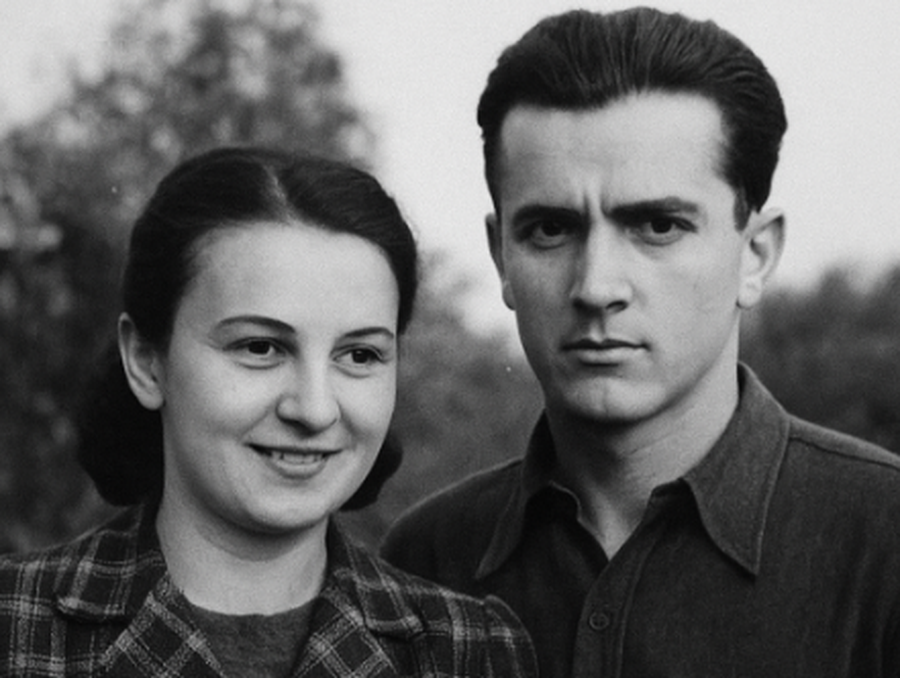
Love, War and Oblivion: The Rebirth of the Myth of Ivo Lola and Sloboda Trajkovic
At a time when the Balkans was torn between fascism and resistance, between the hope of freedom and the harsh reality of occupation, a love letter became the cause of several deaths. Not because of its ideological content, but because of the feeling it carried. It was a simple, sincere letter, a writing that was addressed to the heart and not to power. But for the Gestapo, feeling was a weapon. And for the victims, feeling turned into a grave.
Ivo Lola Ribar, one of the most important figures of the anti-fascist resistance in Yugoslavia, wrote to his fiancée, Sloboda Trajkovic. The letter was found during a Nazi raid, and what followed was a tragic chain of events: Sloboda's arrest, her deportation to a concentration camp, and then her death on May 9, 1942, in the ovens of the Banjica crematorium. Ivo Lola never learned of this terrible end. He himself was killed in 1943, by a German air raid.
But this is not just a tragically interrupted love story. It is a painful reflection of what happened to the young generations of the Balkans during the years of World War II.
The youth that dreamed, loved, organized, fought and disappeared. Stories like that of Ivo and Sloboda are not romantic tales to be recited with sentiment, but living proof of how ruthless time was to human feelings.
In post-war Yugoslavia, their story was mythologized. Ivo Lola became a symbol of revolutionary youth, while Sloboda, a symbol of sacrifice and loyalty. Monuments, streets, schools and songs were named after them. Their love became part of political education. But after the breakup of Yugoslavia, many of these memorials disappeared, were ignored, vandalized. The story that was once a myth, is now a ruin.
In this collective forgetfulness, there is a great risk: to lose not only the past, but also the sensitivity to understand what really happened. The younger generations in the region know nothing about Ivo Lola and Sloboda. They are known more through political caricatures than through the humanity of their history. Isn't this another crime, not against them, but against historical conscience itself?
Love in times of war is not just a backdrop for a novel or a film. It is an act of rebellion, a proof that even in extreme conditions, man remains man. Ivo Lola's letter is more than a testament to love; it is a document of resistance, a cry that transcends time: "You are the only one who fills my life."
Today, when new nationalisms seek to rewrite history, when collective memory is fragmented according to flags, narratives like this are more necessary than ever. Not to glorify ideologies, but to remember people. Not to revive myth, but to preserve the truth. Because forgetting is an ally of power, while memory is a weapon of the people.
The story of Ivo Lola Ribar and Sloboda Trajkovic is a Balkan story. It is the story of a man who loves while everything around him burns. It is a story that should not be forgotten, because it is more than love and more than war. It is a story that speaks to us./ Pamphlet
???? This article is part of an editorial series on historical memory in the Balkans. If you are a researcher, journalist or simply a citizen who remembers, share this story. Memory is more powerful than forgetting.


Vazhdojne trillimet
Nuk e kuptoj cfare na intereson historia e trajkoviçit..Nejse ju e dini..
Jugoslavija e atëhershme , qeveria Cvetkoviq - Maqek ishte I vetmi vend në rajon që hyri në paktin trepalësh Romë - Berlin - Tokio.