


 Shkruar nga Pamfleti
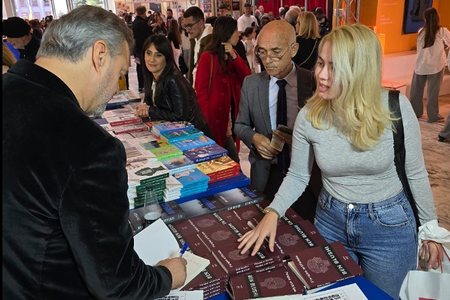
For the first time, the manuscripts of the writer, Ismail Kadare, are displayed in an exhibition.
There are over 44,000 documents, including unpublished novels, poems and sketches, that describe a life of creation from the age of 11 until the end of life.
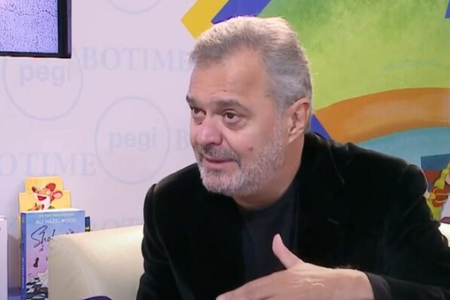
Besjana Kadare, the daughter of the genius of letters, called her father a guide for the nation.
"It is a special feeling that I look here today, because they contain a very valuable and almost sacred heritage of cultural heritage and national identity", said Besiana Kadare.
This exhibition comes as a collaboration with the General Directorate of Archives, whose director, Ardit Bido, said that Ismail Kadare was a writer whose entire work elevates Albanianness, an element that he finds continuously in his work.
After digitization, these manuscripts will go through the processing and restoration process to give generations the opportunity to penetrate the labyrinth of Kadare's thought.
This exhibition is a rare opportunity to explore the unknown world of Kadare: the works and notes that illuminate his creative process. Each page of the manuscript is a journey into his thought and art, where each idea and reflection unfolds in new and surprising ways.
Among the exhibited documents, the public will be able to see up close fragments from Kadare's first unpublished novel, "Three friends", written at the age of 11, as well as follow the traces of his vocation for literature influenced by the work Shakespeare, through the manuscript of the literary test "Hamlet, the difficult prince".
Part of the exhibition are also:
- The manuscript of the first novel "The General of the Dead Army", which had an international resonance;
-Manuscripts of the most twisted and controversial novels, "The Winter of Great Solitude", "The Clerk of the Palace of Dreams" and "The Monster";
- Manuscripts of the drama "The Boring Season on Olympus" and the literary essay "The Inevitable Dante", where the narrative is conveyed between myth and contemporary;
- The manuscripts of the novels "Broken April" and "Who brought Doruntina", which portray traditional Albania;
- The manuscripts of the novels "Pyramid" and "Qorrfermani", which present the allegory of a totalitarian system;
- The manuscript of the book "Ra ky mort eu pamë", written in the form of a diary about Kosovo;
- The manuscripts of the novel "Cold Flowers of March" and the literary essay "Disagreement", which explore Albania in front of itself.
From this rare fund of documents, the manuscripts of the works "Spiritus", "Invitation to the Studio", "Wrong Dinner", "Time of Money", "History of the Union of Writers", "Hindered" (Requiem for Linda B.), "Life, work and death of Lul Mazrek", "Shadows" and "Breakfast at Kafe Rostand". In this corpus of materials, there is no shortage of awards and titles "Commander of the Legion of Honor", "Grand Officer of the Legion of Honor", "Prince of Asturias", "Career Award" given by the Academy of Sciences of Albania, as also the decree on granting the citizenship of the Republic of Kosovo.
The "Manuscripts of Kadare" will remain open to all interested parties at the COD until November 18. The documents from the busy creativity of the writer were submitted to the DPA in September of this year, as part of an agreement signed with the Kadare family.



Lini një Përgjigje