


 Shkruar nga Pamfleti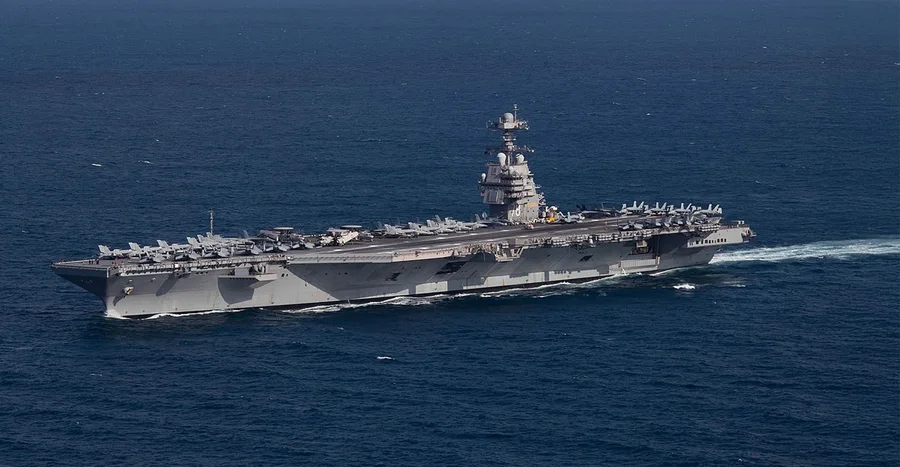
Operation "Freedom", US and Iran exchange fire in Hormuz...
Clashes in the Strait of Hormuz are taking on a new military dimension, as the United States has intervened directly to guarantee freedom of navigation in this strategic corridor.
US Central Command announced that its forces destroyed six small Iranian boats and intercepted cruise missiles and drones launched by Iran.
Admiral Brad Cooper stated that about 15,000 US military personnel are involved in the "Project Freedom" operation, launched by the Trump administration with the aim of restoring freedom of navigation in the Strait of Hormuz.
He stated that the main goal is to maintain security in one of the most important sea routes in the world, while warning Iranian forces to stay away from American military assets to avoid a direct escalation.
At the same time, he confirmed that the US blockade on Iran remains in force, restricting maritime entry and exit to Iranian territory. According to him, this measure is proving more effective than initially anticipated.
According to Cooper, the missile and drone attacks were carried out by Iran's Islamic Revolutionary Guard Corps (IRGC), which, according to him, is trying to hinder the American mission to unblock this strategic sea route.
The US general also warned Iranian forces, “strongly advising” them to stay away from US military assets. He added that the US naval blockade of Iran remains in place, but did not comment on whether Monday morning’s events constituted a violation of the ceasefire.
The developments come at a time of high tension in the region, following attacks on ships and energy infrastructure in the Persian Gulf, as well as Iran's warnings of strikes against any military presence in the area.
The recent escalation in Hormuz significantly increases the risk of a wider conflict, calling into question the security of global energy supplies and stability in the Middle East.

The recent attacks in the Persian Gulf indicate a direct escalation by Iran, which appears to be reacting to military and naval developments in the Strait of Hormuz by once again targeting shipping and energy infrastructure in the region.
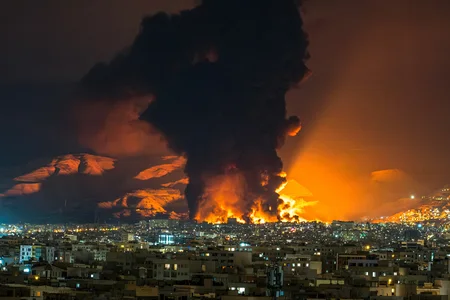
The drone strike on the oil complex in Fujairah, one of the main energy export hubs in the United Arab Emirates, comes as the United States has intervened to escort merchant ships blocked in the Strait of Hormuz. The operation, known as “Project Freedom,” aims to ensure safe passage through a vital corridor for global trade.
In this context, Iranian actions are interpreted as a response to the American presence and intervention, which Tehran considers a violation of the ceasefire. Attacks on ships and energy facilities reflect a recurring strategy by Iran to exert pressure on the exporting capacities of Gulf countries.
The Fujairah complex, where the fire broke out after the attack, is one of the most important hubs for oil storage and distribution in the Middle East. Its strike highlights the growing risk to the security of critical infrastructure and the stability of energy markets.
The latest escalation shows that the crisis in the Persian Gulf is entering a more sensitive phase, where indirect clashes are turning into direct strikes against strategic objectives, increasing uncertainty about global energy supplies.
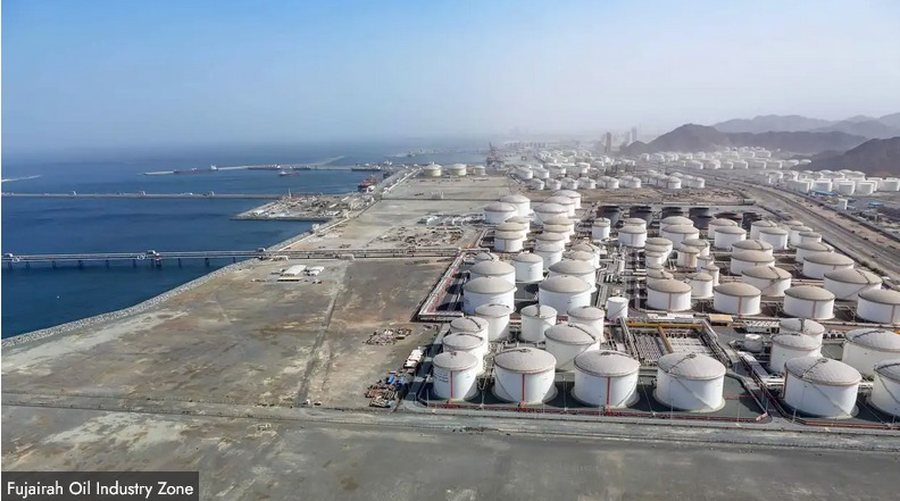
The drone attack on the oil complex in Fujairah has also caused injuries, deepening the consequences of the recent escalation in the Persian Gulf.
The Fujairah Media Office announced that three Indian nationals have been taken to hospital for medical treatment after being hit in the Fujairah Oil Industry Zone (FOIZ). According to the official statement, they have sustained moderate injuries.
The FOIZ complex is considered one of the main energy centers in the Middle East, including one of the largest oil storage capacities in the region.
The incident comes after reports of a large fire caused by the attack, as authorities continue to try to bring the situation under control. The incident is part of a series of recent developments in and around the Strait of Hormuz, where attacks on ships and energy facilities have been reported.
The new developments add to concerns about the security of critical infrastructure and stability in a key corridor for global energy trade.
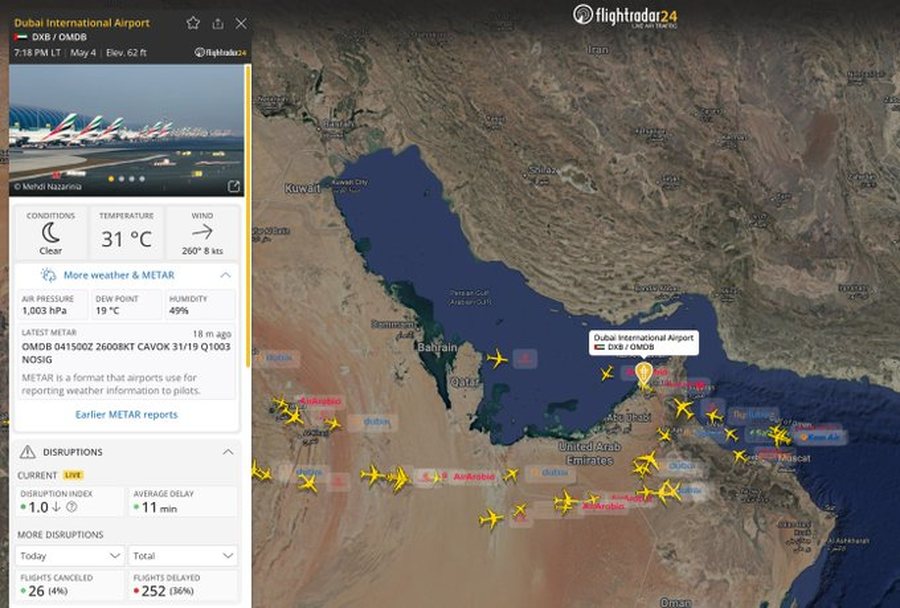
Fluturimet me destinacion Dubain dhe Sharjahun në Emiratet e Bashkuara Arabe janë pezulluar përkohësisht ose po devijohen, pas sulmeve të fundit iraniane me dronë dhe raketa.
Sipas platformës së monitorimit të trafikut ajror Flightradar24, kompanitë ajrore kanë ndërmarrë masa të menjëhershme për të garantuar sigurinë e pasagjerëve dhe ekuipazheve.
Të dhënat tregojnë se disa avionë janë ridrejtuar drejt aeroporteve alternative, ndërsa të tjerë kanë vonuar nisjet deri në një vlerësim më të qartë të situatës së sigurisë në rajon. Hapësira ajrore në pjesë të Lindjes së Mesme po monitorohet nga afër, ndërsa autoritetet dhe linjat ajrore po përshtatin itineraret në kohë reale.
Zhvillimet vijnë në një moment tensioni të shtuar në rajon dhe pasqyrojnë ndikimin e drejtpërdrejtë të situatave të sigurisë në transportin ajror ndërkombëtar. Korridoret ajrore që lidhin Europën, Azinë dhe Gjirin Persik konsiderohen ndër më të ngarkuarat në botë, çka e bën çdo devijim të ketë pasoja zinxhir në oraret dhe operacionet e fluturimeve.
Deri tani nuk ka një afat të qartë për rikthimin e plotë të operacioneve normale, ndërsa situata mbetet në zhvillim dhe në varësi të stabilitetit në terren.

Anija koreano-jugore që u përfshi nga flakët në Ngushticën e Hormuzit dyshohet se ka qenë objekt i një sulmi.
Ministria e Oqeaneve dhe Peshkimit e Koresë së Jugut njoftoi se një “goditje e dyshuar” është regjistruar ndaj anijes së mallrave “HMM Namu”, e cila ndodhej e ankoruar pranë Emirateve të Bashkuara Arabe. Në bord ishin 24 persona, përfshirë gjashtë shtetas koreano-jugorë dhe 18 të huaj, pa raportime për viktima.
Sipas të dhënave paraprake, një shpërthim ndodhi në anën e majtë të dhomës së motorit, çka më pas shkaktoi zjarr në bord. Autoritetet po hetojnë për të përcaktuar shkakun dhe për të verifikuar nëse bëhet fjalë për një sulm të qëllimshëm.
Zhvillimi vjen paralelisht me incidente të tjera në të njëjtën zonë. Autoritetet në Emiratet e Bashkuara Arabe raportuan më herët për goditjen e një anijeje cisternë të lidhur me kompaninë shtetërore Adnoc, ndërsa janë regjistruar edhe sulme me dronë dhe lëshime raketash.
Ngjarjet e fundit theksojnë përshkallëzimin e tensioneve në Ngushticën e Hormuzit, një korridor kyç për transportin global të naftës, ku çdo incident rrit menjëherë rrezikun për stabilitetin rajonal dhe sigurinë e furnizimeve energjetike.
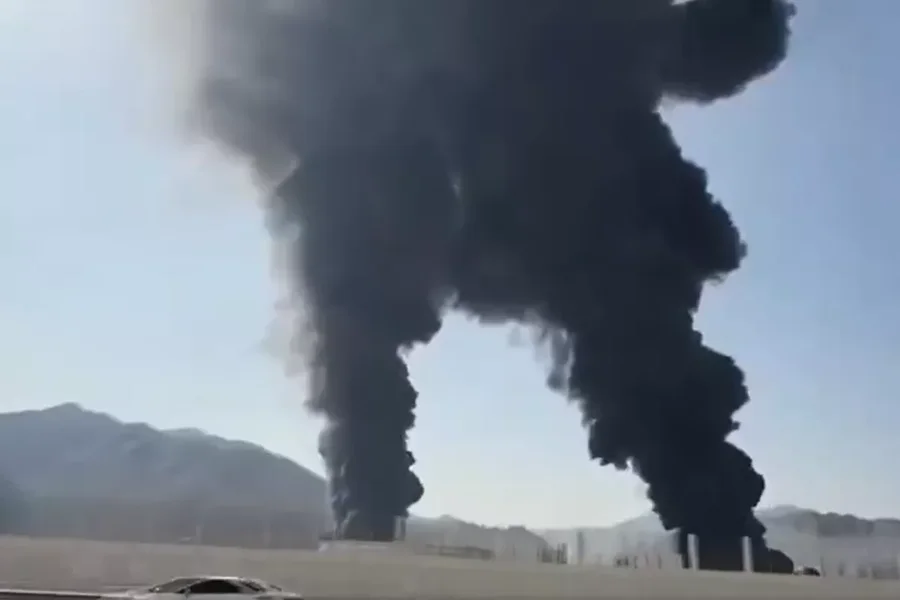
A new drone attack has hit one of the most important energy hubs in the Persian Gulf, causing a major fire at the oil port of Fujairah, in the United Arab Emirates.
The flames engulfed the industrial oil storage area, while civil defense teams intervened to bring the situation under control, the local government's Media Office announced through an official announcement.
Fujairah is considered the largest port and one of the main oil storage centers in the Emirates, with strategic importance for global energy supplies. The facility had been targeted in similar drone attacks even before the ceasefire.
The incident comes amid heightened tensions in the region. The UAE's Defense Ministry announced that it had intercepted three missiles launched by Iran, preventing further consequences.
So far, Iranian authorities have not officially reacted to the allegations about the attack.
The incident highlights the fragility of the security situation in the Persian Gulf and the risk of disruptions to a vital corridor for global energy trade.
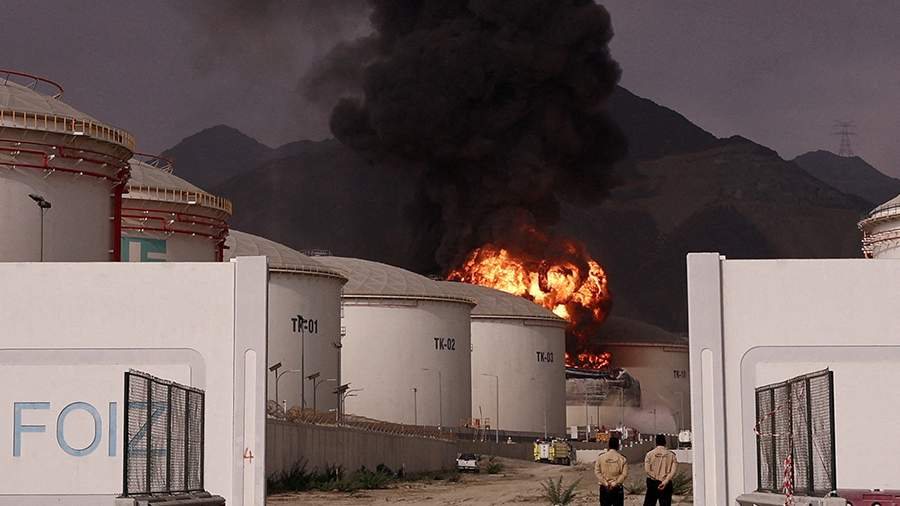
United Arab Emirates sounds the alarm: Air defenses are facing missiles and drones coming from Iran...
Iran appears to have ended the ceasefire and resumed military attacks in the Persian Gulf, bringing back uncertainty about the worsening situation.
A huge fire has broken out at an oil industrial complex in Fujairah, United Arab Emirates, after a drone attack that local authorities linked to Iran. The facility is considered a key part of the region's energy infrastructure.
The United Arab Emirates' Ministry of Defense says its air defenses are "currently facing missile and drone attacks originating from Iran."
" The Ministry of Defense confirms that the sounds heard in various parts of the country are the result of the intervention of the United Arab Emirates' air defense systems that intercept ballistic missiles, cruise missiles and drones ," it said in a statement to X.
The UAE Ministry of Defense announced that four missiles were launched from Iranian territory. Three of them were neutralized by air defense systems, while another landed in the sea without causing damage.
The National Emergency Management Authority activated alerts for the population, signaling an emerging threat. This is among the first cases of this level since the ceasefire came into effect, indicating an imminent escalation of the situation.
A little later, a second official announcement announced that the situation had been brought under control and citizens could resume normal activities, however tensions remained high.
The developments come as the United States has stepped up its naval presence in the area to ensure the safe passage of merchant ships through the Strait of Hormuz, a vital corridor for global trade. In response, Iran has warned that any military presence in the area could be considered a target.
The return of attacks and harsh rhetoric raise the risk of a wider conflict, calling into question the durability of the ceasefire and the security of one of the world's most important energy supply routes.

Explosions in Hormuz and warnings from Iran increase tensions in the strategic global corridor...
An explosion followed by flames on a South Korean ship in the Strait of Hormuz has brought tensions back into the spotlight in one of the world's most important energy corridors, where any incident has a direct impact on regional security and global markets.
The ship, operated by a South Korean shipping company, was at anchor near the United Arab Emirates when the explosion occurred. Authorities in Seoul confirmed there were no casualties, while investigations are ongoing to determine whether it was an accident or a possible attack.
The incident comes amid heightened tensions in the Strait of Hormuz, where Iran has stepped up pressure on maritime traffic. Revolutionary Guard spokesman Hossein Mohebi told Press TV that any ship that fails to comply with the rules imposed by Iran will face “serious consequences,” including being forcibly detained. He stressed that safe passage through the strait depends on coordination with Iranian forces.
Tehran's warnings come at a time when the United States has increased its military presence in the area. As part of Operation Project Freedom, the US Central Command announced that two US-flagged merchant ships have successfully passed through the strait, accompanied by military assets to ensure the safety of navigation.
Meanwhile, Iranian forces have reported firing warning shots at US warships, accusing them of disrespecting their signals.
According to the Iranian military's public relations office, the US destroyers "turned off their radars" in the Sea of Oman and attempted to approach the Strait of Hormuz.
“ Immediately after they turned on their radars, they were detected and faced with a radio warning from the Islamic Republic of Iran Navy regarding the dangers of violating the ceasefire ,” she said. The US itself denied it.
This rhetorical and operational clash increases the risk of unforeseen incidents in an already fragile area.
There have also been reactions from countries in the region. Qatar condemned an earlier attack on a ship belonging to the Emirati energy company, Adnoc, calling it a violation of international law and freedom of navigation. Doha stressed that the Strait of Hormuz cannot be used as a tool for political pressure and demanded guarantees of free passage for maritime traffic.
Hormuz remains a vital artery for the global economy, as a significant portion of the world's oil exports pass through it. For this reason, every incident, such as the one with the South Korean ship, and every warning from major players in the region, immediately raises concerns about the stability and security of energy supplies on a global scale.

An emergency missile alert has been issued in the United Arab Emirates, warning of potential threats and urging residents to seek shelter immediately and await further instructions.
The alert was distributed via mobile phone notification systems and confirmed by witnesses quoted by international news agencies. The initial message emphasized the need for maximum caution and compliance with the authorities' instructions.
A short time later, authorities in Dubai sent a second alert, explaining that the situation was “now safe” and that residents could resume normal activities. No additional details were immediately provided on the nature of the threat or whether the alert was related to a specific incident.
According to media reports, this is the first warning of this kind in the United Arab Emirates since the ceasefire between the United States and Iran came into effect, an agreement that had temporarily reduced tensions in the region.
However, the situation in the Persian Gulf remains fragile. The United States has launched a naval operation to escort commercial ships through the Strait of Hormuz, one of the most important waterways for global energy and goods supplies.
In response, Iran has warned that any military vessel present in this strategic corridor could be considered a target. These developments point to an increased risk of escalation, although there is no confirmation of any direct incidents linked to the latest alert in the UAE.
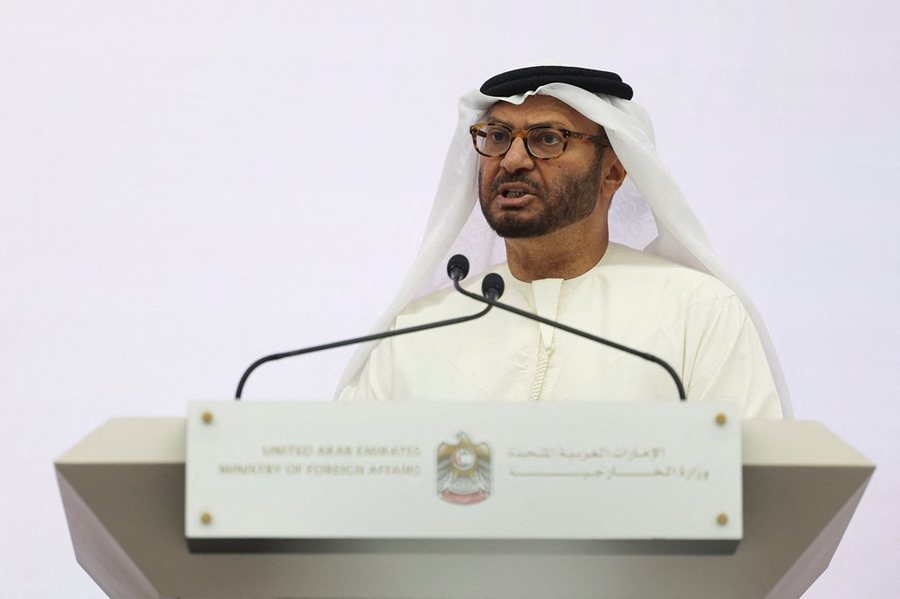
The United Arab Emirates' diplomatic advisor, Anwar Gargash, reacted publicly to the incident in the Strait of Hormuz, where a tanker affiliated with the Abu Dhabi National Oil Company, ADNOC, was targeted.
In a post on the X platform, Gargash described the event as part of a series of repeated acts that, according to him, are directly related to Iran.
He wrote: "Iranian aggression continues unabated, with acts of maritime piracy targeting a national tanker affiliated with Adnoc as it passed through the Strait of Hormuz."
His statement links the specific incident to a broader line of conflict in the region, where maritime corridors remain critical points for energy security and international trade. The Strait of Hormuz handles a significant portion of global oil traffic, making any incident an issue with direct geopolitical impact.
Gargash also clarified the official position of the Emirates on this development. "The UAE's position remains steadfast in rejecting aggression and supporting freedom of navigation in this vital international passage," he said.
The diplomatic advisor concluded his reaction by linking the event to a broader assessment of Iran's role in the region: "These attacks underscore that the Iranian threat to the security and stability of the region continues and cannot be ignored."
Gargash's statement places the incident in an escalating context, where each episode in Hormuz is used as evidence for a broader political and military confrontation in the Persian Gulf.
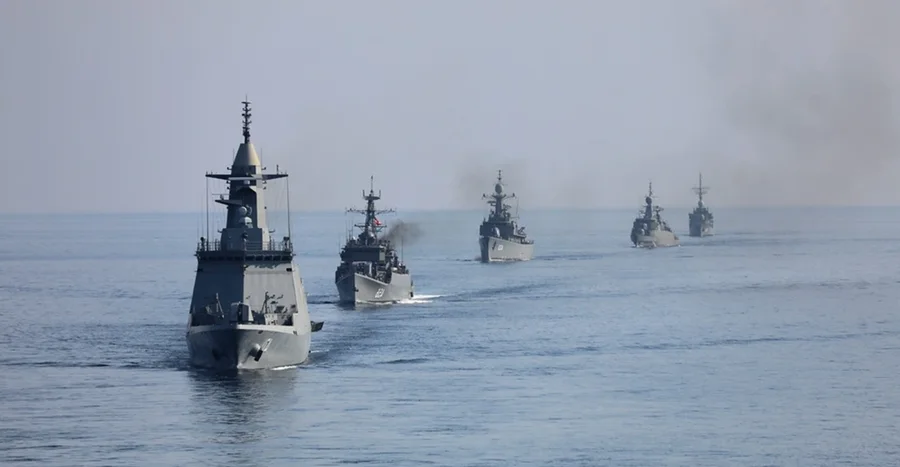
Iran said on Monday afternoon that it had fired two missiles at a US warship near the Strait of Hormuz, saying it had prevented it from entering the area.
According to the Iranian news agency Fars News, the incident occurred near Jask Island when the US destroyer ignored warnings from Iranian authorities. The ship was reportedly hit by two missiles, which then left the area.
At the same time, the Iranian navy claimed, via state television, that it had prevented US warships from entering the Strait of Hormuz.
At the same time, however, a senior American source cited by Axios' Barack Ravid denied that there was an American ship that had been hit by Iranian missiles in the area.
The United States Central Command (CENTCOM) also denied this news.
Earlier, US President Donald Trump said the US would begin "safely" removing ships from the critical waterway, calling the move a "humanitarian gesture" as many of the ships are reportedly facing food shortages.
US Central Command said it would support the operation with 15,000 troops, more than 100 land and sea aircraft, as well as warships and drones.
The Revolutionary Guards have meanwhile published a new map of the areas in the Strait of Hormuz that they claim are under the control of their navy, according to the local Fars news agency. This area extends westward from a line between the westernmost tip of Qeshm Island and the United Arab Emirates emirate of Umm al-Quwain. In the east, it reaches a line connecting Mount Mubarak with the emirate of Fujairah. It is not clear to what extent this zone of control differs from previous ones.
Revolutionary Guard warnings about sailing
At the same time, Revolutionary Guard spokesman Sardar Mohebbi said that any ship that does not adhere to the management procedure imposed by Tehran in the Strait of Hormuz "will be stopped by force."
"There has been no change in the procedure for managing the Strait of Hormuz. Any maritime movement of civilian and commercial vessels that follows the Guard's maritime transit protocols and is carried out in coordination through the designated route will be safe ," he said.
On the contrary, as he warned, any further movement that deviates from the guidelines "will face serious risks", while ships that violate the rules "will be forcibly stopped" .
He called on shipping companies and insurance companies to take his announcements seriously.
New threats to foreign countries
Meanwhile, Iran's top military commander, Ali Abdullah Salehi, warned foreign navies not to enter the Strait of Hormuz to escort commercial ships.
Chief of General Staff Khatam al-Anbiya accused the United States of destabilization, arguing that the actions of the United States and Israel have endangered the global economy and trade following the attacks on Iran on February 28.
"America's supporters should be careful and not take actions that will lead to irreparable consequences," he said, warning that any attempt to change the situation would worsen the crisis and jeopardize the safety of shipping in the region.
Previously, US President Donald Trump announced the launch of an operation called "Project Freedom", at the request of countries whose ships are blocked in the Strait, with the aim of safely removing them from the area.






Lini një Përgjigje