


 Shkruar nga Pamfleti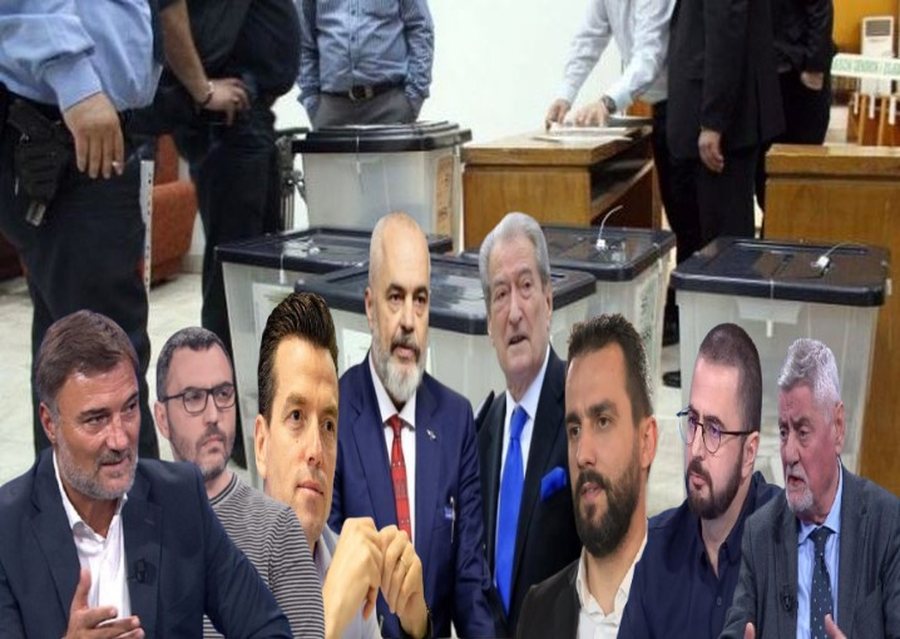
Fragmentation that suits the old politics...
The May 11 elections are taking place in a unique climate: for the first time in many years, the Albanian political scene has been enriched with several new formations, aiming to challenge the dominance of the Socialist Party and the Democratic Party. However, instead of presenting themselves as a united alternative, they will compete separately.
This division has sparked debate: is this a missed opportunity to really hit the existing political system?
What do the polls show?
According to recent polls published by Barometri and News24, if these new parties were to unite in a common front, they would garner between 14% and 18% of the national vote. By simple calculation, this would translate into 20 to 26 seats in the Assembly – a sufficient number to influence the political balance and create a real parliamentary bloc.
Who are the new parties?
This group includes:
Agron Shehaj's Opportunity Party, Arlind Qori's
Together Movement
, Albania Becomes & The Initiative of Adriatik Lapaj and Endri Shabani, Lulzim Basha's
Euro-Atlantic Coalition, Dashamir Shehaj's and Enkelejd Alibeaj's
Right-wing Coalition for Development
All of these political forces have one thing in common: the goal of presenting themselves as an alternative to the old political elite. But this common goal has not been accompanied by political cooperation.
Lack of unity – strategic failure?
The choice to run separately has left these parties exposed to the regional electoral threshold, which in many districts is really high. This puts them at risk of not achieving even minimal representation in the Assembly, even though they collect thousands of votes at the national level.
Rather than confronting traditional parties, it seems that many of these forces compete with each other for the same electorate, often mutually excluding each other from cooperation.
Ambition, ideology or lack of shared vision?
While Shehaj maintains a conservative right-wing position and is outspoken against both major parties, Qori represents a radical leftism. Lapaj and Shabani are more representative of the civic center, while Basha and Shehi-Alibeaj come across as fragmented clones of the traditional right.
This ideological diversity, combined with personal ambitions and a clear lack of cooperation, has led to a landscape where change is more noisy than effective.
An opportunity that doesn't come often...
In politics, momentum is everything. And the momentum was this: a public opinion tired of the rotation between the same names, a demand for new faces and real alternatives, and a not insignificant electoral potential beyond the SP–DP dualism.
The May 11 elections were a unique opportunity for new parties to unite around a common platform, come up with a clear offer, and aim for a strong presence in the Assembly. Not just as a symbol, but as a real political factor.
Now, with the current division, there is a risk that they will be divided, receive few mandates, or even not be represented at all in some districts – and thus cement the status quo that they themselves have denounced.
After all, political history is full of cases where non-coalition has led to defeat. Whether this will also be the case for the new parties in Albania remains to be seen on May 11 – but the signs are not promising. /Pamphlet




Lini një Përgjigje