


 Shkruar nga Gjergj Zefi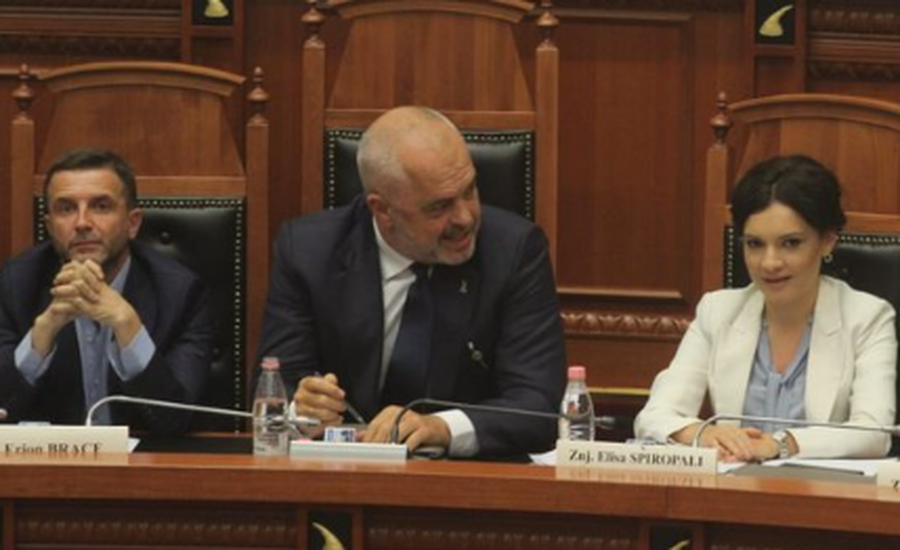
Signals of dissatisfaction are circulating within the Socialist Party, but not yet a real challenge to Edi Rama's model. At a time when autocrats are challenged with narrative and platform, in Tirana the frustrations of the court are being sold as rebellion...
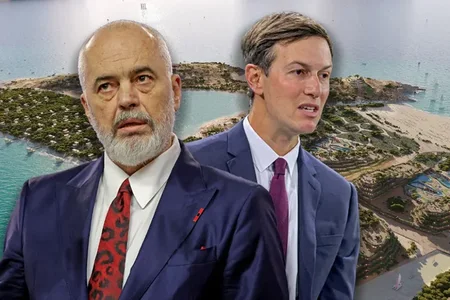
Edi Rama seems to have entered a phase of power where he is no longer considered a strong prime minister, but as a leader who is approaching the profile of those figures that political science places in the gray area between formal democracy and functional autocracy.
In today's political world, such names are often compared to Viktor Orbán in Hungary or Recep Tayyip Erdoğan in Turkey, two NATO leaders who have preserved electoral mechanics but have seriously distorted the spirit of democratic competition.
In the case of Turkey, Erdoğan’s most real rival, Istanbul Mayor Ekrem İmamoğlu, is in prison; in Hungary, Orbán is engaged in a showdown with Péter Magyar, the man who is for the first time seriously shaking the throne of his “illiberal” model.
This is where the similarity with Albania begins. Because the Albanian problem is not just Edi Rama as an individual, but the model he has built: a system where the party has shrunk into a personal instrument, political career has become an act of obedience, institutions have faded, while real power is concentrated in an increasingly narrow circle of loyalists.
In this sense, the debate is no longer simply about a tired government after 13 years, but about a power mechanism that has eroded democratic spaces and weakened the very idea of an alternative.
Against this backdrop, Erion Braçe's movements or Elisa Spiropali's dissatisfaction are being presented to the public as "anti-Rama" signs. But if they do not turn into a direct contestation of the model, they remain simply controlled vibrations within the same scheme.
It's not enough to appear dissatisfied. It's not enough to send signals. It's not enough to complain about the way you were treated by your boss. Because a true political rival is not measured by the dose of frustration, but by the courage to articulate a moral, political, and civic alternative.
The case of Elisa Spiropali is illustrative. If she truly has a political ambition of her own, then it cannot be limited to personal anger or disappointment over a career cut short. A figure who claims a leadership profile must do something bigger: represent the disappointment of socialists who feel betrayed, articulate the identity crisis of the Socialist Party and say openly that Edi Rama is no longer an expression of the left, but of a personal mechanism of power. Because, in the end, Rama is not afraid of the discontent locked away in the corridors; he feeds on them.
Even Erion Braçe, although he is trying to appear as a critical voice and as an ambition for Tirana, has not yet offered what a real challenger needs: a platform, a narrative, a program and a clear line of separation from the Rama model. Episodic criticism of local administrators or secondary figures is not enough. A serious challenge is not built with peripheral stings, but with a central accusation: that the model established by Edi Rama has exhausted itself morally, politically and institutionally.
This is also why today's noise within the Socialist Party seems more like a management of dissatisfaction than an embryo of an alternative. A real alternative does not arise from the nervousness of those who feel left out, but from the courage to overthrow the logic that has brought the party and the state to this point. And this logic is clear: the concentration of power, the asphyxiation of dissent, the mixing with clientelistic interests and the toleration of an underground that has often served as an instrument of political survival.
At this point, the most significant comparison is not with today's voices of semi-rebellion, but with a figure who years ago openly articulated the clash with the model: Ben Blushin. He did not simply seek a better place in the hierarchy; he targeted the very nature of Rama's power. He said unequivocally that the problem was not a decision, a minister or a moment, but an entire model that gathered around itself corruption, cynicism and the deformation of representation. Precisely for this, he was politically attacked and left alone. Because in Albania, more dangerous than the loss of power for such a regime is the emergence of a moral narrative against it.
Today, if there is still a chance to confront Edi Rama, it does not come from sighs, nor from small theaters of internal dissatisfaction. It comes only from building an alternative that openly challenges his system: an alternative that speaks of internal democracy, of the dignity of representation, of separation from crime, of meritocracy and of returning politics to the citizen. Everything else is decorum. And decorum, so far, has been Edi Rama's strongest weapon./ Pamphlet



Analizë e saktë e drejtë