


 Shkruar nga Pamfleti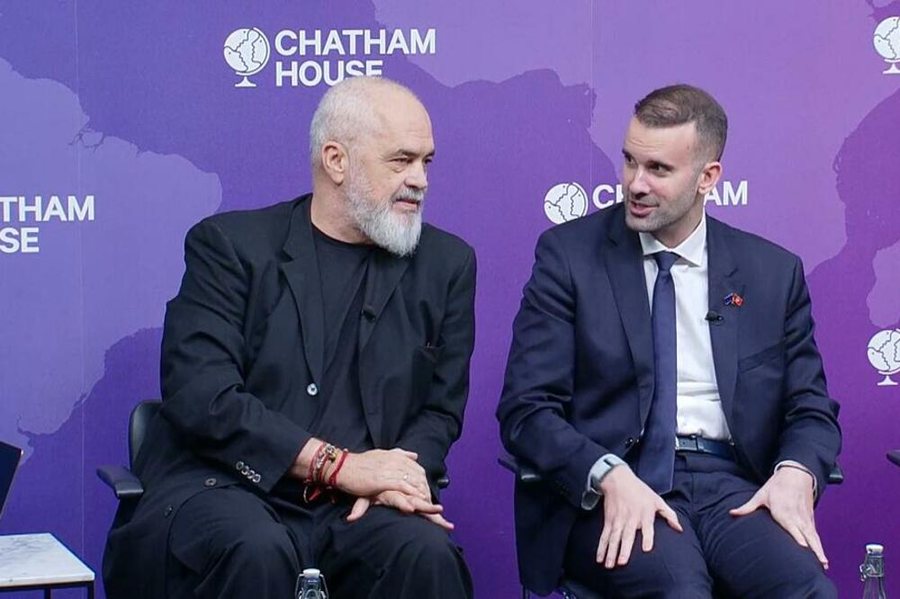
At the Berlin Process summit, the Albanian prime minister was overshadowed by regional leaders and faced clear signals of cooling from the West, while international investigations into the government's ties to traffickers are increasingly isolating him...
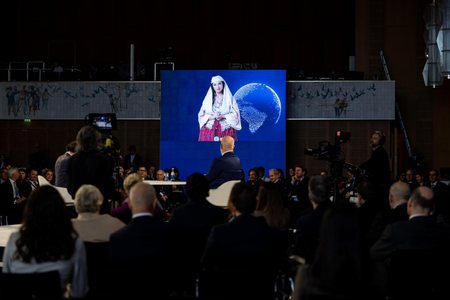
At the Berlin Process summit in London, Prime Minister Edi Rama was the most ignored leader of the six Western Balkan countries. Despite his attempts to make news and gain attention, by intervening out of place on the margins of the meetings, whether in protocol or in political behavior, the Albanian Prime Minister was treated with demonstrative coldness by the participants.
At the head of the central table, led by British Prime Minister Keir Starmer as host and German Chancellor Friedrich Merz as founder of this organization, sat the Prime Minister of Montenegro, Milojko Spajic. This was a clear political signal to show the European Union's priority towards Montenegro in the accession process and to underline the marginalization of Albania.
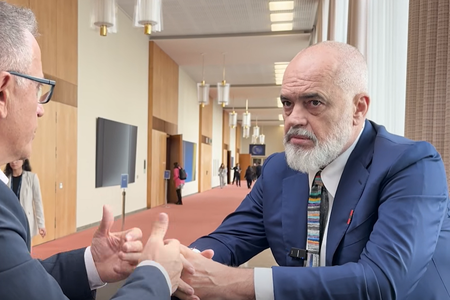
Edi Rama immediately understood this signal and began to become annoying on the margins of the summit, often interfering in discussions and panels. In one of them, he appeared irritated and lost his composure during a debate with the Montenegrin prime minister, becoming the object of irony on international networks. The published footage shows the moment when Spajic places his hand on Rama's arm, to stop him from continuing to interfere, a scene that made the rounds in the media and was experienced as a symbol of the arrogance and fatigue that he causes to his counterparts.
On the same day, one of the most important media outlets that analyzes European Union policies, also funded by the Soros foundation network, published an analysis citing that French President Emmanuel Macron would not accept Albania's entry into the EU at this stage, due to the lack of real reforms and allegations of high-level corruption.
However, for Edi Rama, the issue is not only about European integration, but also about his personal fate. The publication of the Albanian government's links to cocaine trafficking networks by the Italian media and the launch of investigations by the anti-mafia of Rome are not coincidental. Diplomatic sources in Brussels claim that the signals coming from several European capitals are part of a wider process of pressure to force Rama to step down.
In the West, trust in Rama has fallen sharply. His ability to make himself "interesting" with jokes and jokes no longer works. The "longest prime minister in the Balkans" has become a tired and unreliable figure for international partners, who no longer want to listen to him either as an excuse or as a show.
In the coming days, other developments are expected, as sources from Brussels and Rome talk about concrete measures in case Edi Rama refuses to open his arms. Compared to the blow that Sali Berisha received, what awaits Rama seems to be much more severe. His political end seems to be only a matter of time./ Pamphlet




Lini një Përgjigje