


 Shkruar nga Pamfleti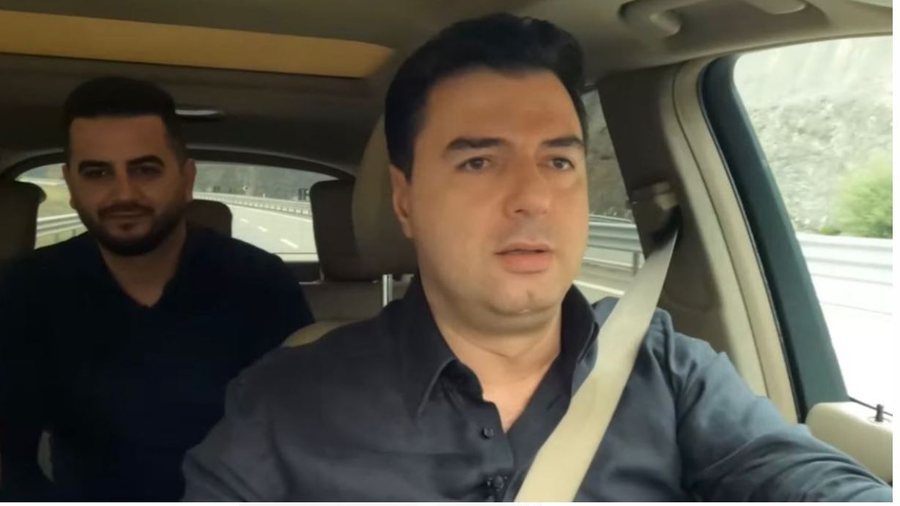
In the next podcast with Ermal Peçi and Marsid Gupi, the head of the DP, Lulzim Basha tells how he became Minister of Transport. He also explains how the project for the Nation's road was born, the obstacles to its construction, from the lack of funds to the attempts to stop this project by foreign actors, who did not want the national unity of Albanians through the infrastructure and strengthening of the port of Durrës.
" The life of active politics would begin with a deputy. When and one thing I did not want was not to end up in the Ministry of Justice, as I had just arrived for 5 years in the UNMIK Department of Justice. The last job I had done it was the transfer of powers from UNMIK to the Kosovo government, the creation of the Ministry of Justice of Kosovo nice day Berisha takes me on the phone, "where are you", he said, "come on, go to his office, to the old headquarters, he says: "Lul, you will go to the Ministry of Transport". "I have a relationship with the Ministry of Transport," he said 2005. The meeting ended in less than a minute and I left with big dilemmas. I didn't know what public procurement was, what the feasibility study was, what engineering projects were. So in terms of infrastructure, I had absolutely no information.
When I was working in Kosovo, I had to travel 3, 4 times a month from Albania to Kosovo and vice versa. At first I went from Macedonia because it was the best way. When I was forced to leave Kukës, especially when the war in Macedonia started, it was a real hell. The big idea that warmed me and made me understand it as a mission, that is, it turned me from a political task, normal members of the cabinet, to a personal mission and an extraordinary opportunity. So the path of the Nation was all in the first motivation. And the first conversation I had after that, when political priority was set. Don't forget in our program that we announced to the Albanians in 2005, the candidate for prime minister at that time, Berisha promised Milot-Rrësha, as part of the path of the Nation. So, the Kombi road as a priority, but within the first 4 years we will do Milot-Rëshen.
Since the eve of Kosovo's independence, physical barriers existed. Mountains, mountain ranges that continued to keep the isolation standing. The volume of economic exchange was minimal, it was torture for cars to pass from Tirana to Pristina and from Pristina to Tirana, and no longer for trucks. Tourism as well. So, it was all these dimensions that made the nation's road much more than a big, strategic, engineering project. It was a geostrategic project. And here, as I saw it, a security guard with the background of someone who had worked and lived in Kosovo, but who also knew that half of his family was from Kosovo. This is how those who supported this project saw it. That's how those who opposed him also saw him. Even the objections began to appear from the beginning, "no, you don't have the money to do it, you shouldn't increase the debt, you have the IMF obstacle, you have the World Bank obstacle, fix the current road, don't think about capital investments, think about road maintenance. Albania has other priorities". Why this Durrës-Kukës road was the biggest question that the Kombi road was called later. They asked healthy skeptics who wanted to know what this project was, but also those who had a clear objective to prevent a direct transport corridor and an economic corridor like this, between Tirana and Pristina. However, there were others who lobbied for the main transport corridor in Kosovo to remain corridor 10, in other words Belgrade-Nish-Thessalonica. That the word Durrës is not in vain there. We could have said Tirana-Prishtina, but it is Durrës-Kukës. The idea of this road was to strengthen the port of Durrës and through it to restore Albania as a powerful commercial actor in the Mediterranean basin , "said Basha.


Lini një Përgjigje