


 Shkruar nga Pamfleti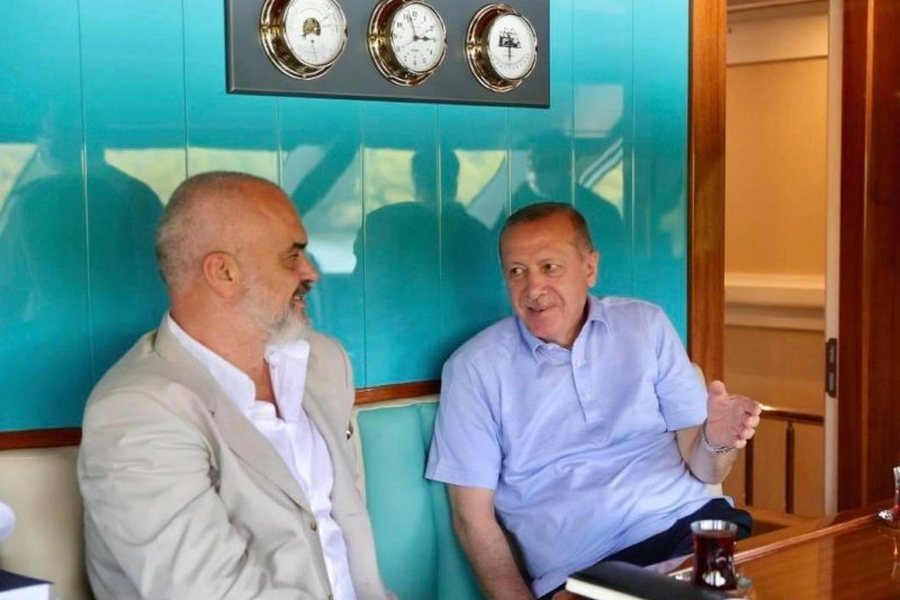
Türkiye Today presents the "Flamingo Revolution" as a revolt against the way of governance and not against foreign investment, dealing a strong blow to Bablok...
Edi Rama has received strong criticism from Ankara regarding the protests that have erupted in the country in recent days.
Relations between him and Turkish President Recep Tayyip Erdogan have been considered for years among the closest in the region. However, in recent months, signals have begun to emerge suggesting a cooling of relations between the two leaders, especially after Tirana's rapprochement with Israel, a development that has not been well received in Ankara.
In this climate, an analysis published by the Turkish media " Türkiye Today " has attracted attention, which does not spare criticism of the Albanian government and the way it manages the debate on tourism projects in the south of the country.
Unlike the official narrative that has placed emphasis on opposition to the development of the Zvernec area and the Narta lagoon, Turkish media argues that what has been called the "Flamingo Revolution" essentially represents a revolt against the way Albania is governed.
According to the analysis, the protests are not just about the environment, luxury resorts or foreign investors, but about a deeper dissatisfaction of a generation that feels excluded from decisions that affect the country's future.
" The story is not really about the Trump family, nor just about a luxury resort ," writes Türkiye Today, emphasizing that the debate has turned into a discussion about transparency, accountability, and how public decisions are made.
The analysis also focuses on Edi Rama's long-term dominance in Albanian politics, noting that many of the young people protesting today have not known another political reality in their lives.
According to Turkish media, this is why the movement has managed to unite different social and political groups, which share the same concern: the lack of transparency and the feeling that important decisions are made without the involvement of citizens.
The article emphasizes that the protesters are not against foreign investment or economic development. On the contrary, they demand that strategic projects be accompanied by more transparency and public debate.
Article
When videos of protesters confronting security guards near Albania's protected coast began circulating on social media, much of the international media chose a familiar interpretation: the Trump family had arrived in the Balkans.
Jared Kushner dhe Ivanka Trump po planifikonin një resort luksoz me vlerë miliarda dollarë në ishullin e Sazanit dhe në bregdetin jugor të Shqipërisë. Megjithatë, ambientalistët kundërshtuan projektin dhe mijëra qytetarë dolën në protesta. Debati u përhap me shpejtësi në rrjetet sociale.
Ishte një histori e lehtë për t’u treguar. Por ishte edhe një histori e paplotë.
Ajo që sot po quhet “Revolucioni i Flamingove” në Shqipëri nuk lidhet në thelb me familjen Trump. Madje nuk ka të bëjë vetëm me një resort luksoz.
Bëhet fjalë për një brez që ndjen gjithnjë e më shumë se po përjashtohet nga vendimmarrjet që përcaktojnë të ardhmen e tij. Ka të bëjë me transparencën, llogaridhënien dhe me pyetjen se kush duhet të vendosë se si duhet të zhvillohet një vend që prej dekadash përpiqet të afrohet me standardet evropiane.
Flamingoja u shndërrua në simbol të kësaj lëvizjeje sepse projektet e propozuara ndodhen pranë lagunës Vjosë-Nartë, një nga ekosistemet më të rëndësishme të mbrojtura në Shqipëri dhe habitat i shumë shpendëve shtegtarë, përfshirë flamingot.
Protestuesit e adoptuan këtë shpend si simbol të rezistencës dhe imazhi i tij u përhap shpejt nga Tirana te komunitetet shqiptare në Nju Jork, Uashington, Londër dhe Paris.
Pika e kthesës erdhi kur u publikuan pamje që tregonin një protestues duke u larguar me forcë pranë zonës së projektit. Këto pamje e shndërruan një mosmarrëveshje lokale mjedisore në një debat kombëtar për pushtetin dhe privilegjin.
Një lëvizje përtej politikës tradicionale
Për shumë të rinj shqiptarë, projekti nisi të simbolizojë diçka shumë më të madhe sesa zhvillimi turistik: ndjesinë se zëri i tyre dëgjohet vetëm pasi vendimet janë marrë. Ky frustrim është grumbulluar prej vitesh.
Kryeministri Edi Rama dominon politikën shqiptare prej më shumë se një dekade. Para se të bëhej kryeministër, ai shërbeu si kryetar i Bashkisë së Tiranës. Shumë prej të rinjve që protestojnë sot nuk kanë njohur një realitet tjetër politik.
Në të njëjtën kohë, kreu i opozitës Sali Berisha mbetet një nga figurat më të rëndësishme të periudhës postkomuniste në Shqipëri. Për një pjesë të madhe të Gjeneratës Z, peizazhi politik shqiptar duket i mbërthyer mes figurave që kanë dominuar jetën politike të vendit për dekada.
Kjo ndihmon të shpjegohet pse “Revolucioni i Flamingove” ka tërhequr njerëz që zakonisht do të kishin pak gjëra të përbashkëta.
Ambientalistë marshojnë krah nacionalistëve. Aktivistë të majtë ecin përkrah konservatorëve. Profesionistë të rinj, studentë dhe familje ndajnë të njëjtat rrugë dhe të njëjtat protesta.
Forca e lëvizjes qëndron pikërisht te fakti se ajo nuk është ndërtuar rreth një partie politike tradicionale.
Pjesëmarrësit nuk bashkohen nga një ideologji e përbashkët, por nga bindja se e ardhmja e Shqipërisë nuk duhet të negociohet pas dyerve të mbyllura.
Test transparence për investimet e huaja
This does not mean that the government's arguments are baseless. The growth of tourism has transformed Albania. Tourism today constitutes one of the main pillars of the national economy. The number of visitors continues to grow, foreign investments are increasing and Albania has become one of the fastest growing tourist destinations in Europe.
From the government's perspective, projects like the one supported by Jared Kushner represent an opportunity to attract international capital, create jobs, and accelerate economic development.
The problem is that many Albanians no longer believe that economic development and public accountability go hand in hand.
For them, the question is not whether Albania should welcome investment. The question is whether investment should come without transparency.
Precisely for this reason, attention to urban planning decisions and land classification has taken on political importance. The debate is no longer about a single project. It is about trust in institutions. And trust, once lost, is difficult to regain.
What makes the “Flamingo Revolution” particularly interesting is the fact that it reflects a broader trend that is emerging beyond Albania.
Across Europe and beyond, younger generations are showing less and less interest in traditional ideological clashes and are focusing more on issues of governance, transparency, and quality of life.
They are often willing to support development, but they also demand a seat at the decision-making table. In this sense, Albania's flamingos are telling a much bigger story.
This movement has already revealed something important.
The generation that grew up during Albania's transformation is demanding a greater role in determining what comes next.
The “Flamingo Revolution” is not anti-America. It is not anti-investment. And, despite media headlines, it is not just about the Trump family.
Albanians want investment and development. They want Albania to become one of Europe's greatest success stories.
But the question being asked today on the streets of Tirana is whether this transformation can happen without sacrificing transparency, public trust, and the right of citizens to influence the future of the countries where they live.
Protesters are not rejecting development. They are seeking to have a voice in it.
And this is why the number of participants continues to grow. Because they believe that at stake is not just a development project, but the future of Albanian democracy. / Pamphlet


Lini një Përgjigje