


 Shkruar nga Gjergj Zefi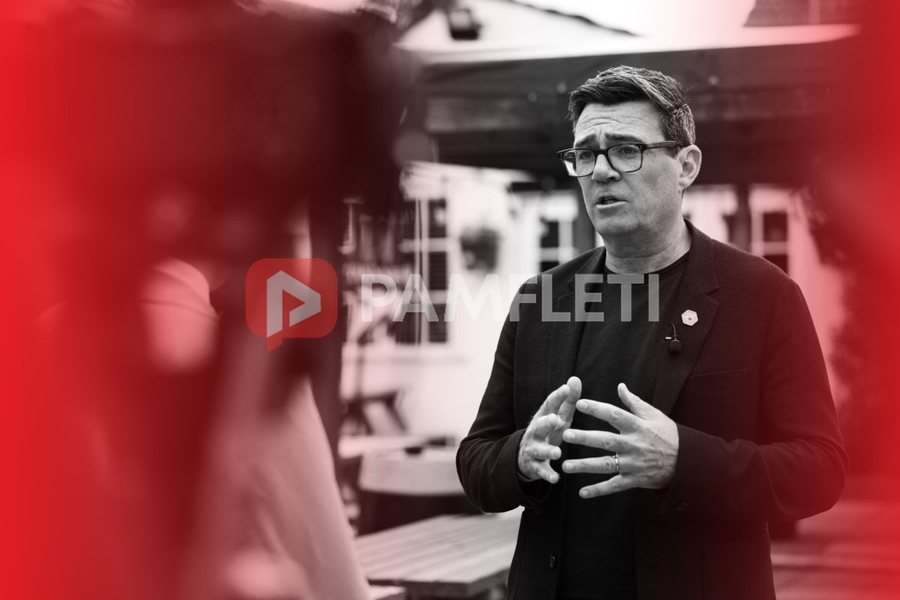
The new British leader does not seek to undo Brexit, but acknowledges that the United Kingdom's future cannot be built away from Europe...
When Britons voted for Brexit in 2016, millions believed the United Kingdom would enter a new era. The promise was enticing: more sovereignty, more control over its borders, more economic freedom and an even stronger global role. The slogan “Global Britain” became a symbol of a country that would break free from the bureaucracy of Brussels and return to the world stage on its own terms.
Today, a decade later, this vision is facing its toughest test: reality.
Britain remains one of the world's largest economies, a nuclear power, a key member of NATO and one of the most important global financial centres. No one questions its international weight. However, more and more voices in British politics acknowledge that leaving the European Union has not delivered the benefits promised to voters.
In this political climate, Andy Burnham stands out. He does not seek to undo Brexit and does not talk about an immediate return to the European Union. On the contrary, he respects the result of the referendum. But his message is significant: Britain must rebuild relations with Europe, because the challenges of the 21st century cannot be faced in isolation.
This is not a small shift in rhetoric. It is a signal that a more pragmatic approach to Europe is gaining ground in British politics as well.
The war in Ukraine, tensions with Russia, technological competition with China, energy insecurity, and the fragmentation of the global economy have proven that power is not measured solely by formal sovereignty. It is measured by the ability to build alliances, influence decision-making, and be part of the blocs that define the rules of the international economy and security.
In this sense, Europe is not a constraint on Britain. It is a space where Britain can multiply its influence.
It is difficult to imagine a sustainable European security architecture without London. It is equally difficult to imagine a Britain achieving maximum influence on the continent by remaining politically distant from its closest partners.
This is not to say that membership of the European Union is the only solution or that a return is imminent. The debate is much more complex. But one thing is becoming increasingly clear: Brexit did not change the geography, history or strategic interests of the United Kingdom.
For the Western Balkans, this is of particular importance. An engaged Britain in Europe means more coordination with the European Union on security issues, more support for Euro-Atlantic enlargement and a stronger stance towards actors seeking to destabilise the region. Albania, Kosovo and other Balkan countries have an interest in London remaining an active player in Europe's political and security architecture.
Andy Burnham is not announcing the end of Brexit. But he does seem to be signaling the end of a grand illusion: the idea that Britain can thrive alone in an increasingly interconnected world.
Britain's history is not a history of isolation. It is a history of influence through alliances. From World War II to the founding of NATO, from supporting Euro-Atlantic enlargement to confronting Russian aggression in Ukraine, London has been stronger when it has acted alongside its allies.
Perhaps this is the biggest lesson of the Brexit decade. Sovereignty is an important value, but in the 21st century it is not enough to guarantee influence. In a world dominated by economic, technological and military blocs, power is built through partnerships.
And for this very reason, a strong Britain is not a lonely Britain. It is a Britain that, while maintaining its independence, chooses to be at the political, economic and strategic heart of Europe./ Pamphlet






Qe kur doli nga Europa, Britania mori tatepjeten. Filloi boshatisja e tregut me mallra Europiane, qe te produktet e ushqimeve e cdo gje. Cmimet u rriten ne stratosfere e perfituan vetem maskarenjte qe e nxiten shkepuitjen, batakcinjte hajdute te upper class.