


 Shkruar nga Pamfleti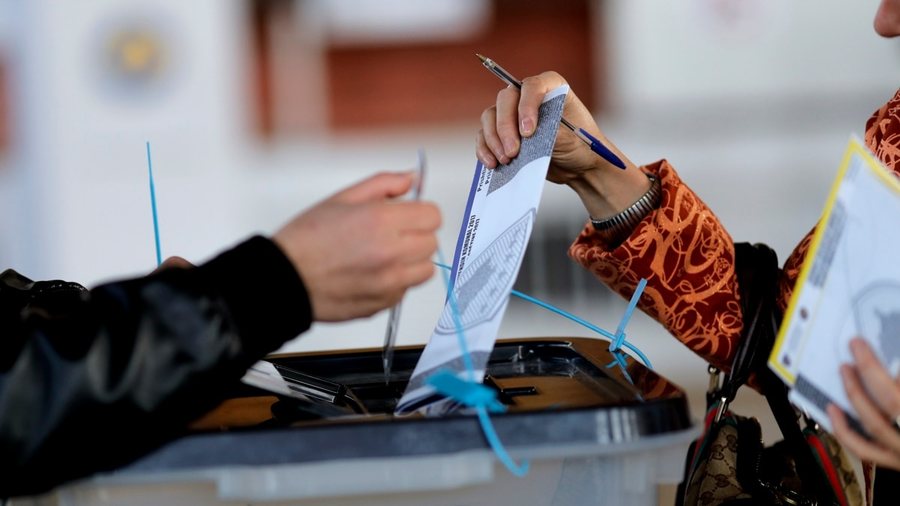
On Monday, the political entities in Kosovo were provided with numbers, with which they will compete in the regular parliamentary elections on February 9, after the Central Election Commission organized the drawing of lots for the ranking on the ballots. The numbers of political subjects on the ballots are from 111 to 138.
28 political entities with 1,280 candidates have been certified for these elections.
On the ballot, citizens will be able to choose a political subject and up to ten candidates for deputy. This is a change after the adoption of the new Law on elections. In the past, citizens have had the opportunity to choose up to five candidates.
Each certified party can have up to 110 candidates on the electoral list.
From these lists, the new composition of the Assembly with 120 seats will be chosen, and the MPs will then elect the new Government. The current government in Kosovo is led by Albin Kurti, head of the Vetëvendosje Movement.
These are the last preparations of the CEC for the elections, as the election campaign will start on Saturday, January 11, and for a month, parties and candidates will try to convince voters to choose them.
Unlike the previous elections, when the electoral silence began the day before the polls, with this year's legal changes, it will now begin one minute before the opening of the polling stations - at 07:00 - and will last until the closing theirs, at 19:00 on February 9. So, the election silence will last only during the 12 hours of voting.
These will be the first regular elections that Kosovo holds since the declaration of independence in 2008. Until now, a number of early elections have been held in the country.
After completing the registration of voters abroad, the CEC announced that the number of voters for the February 9 elections will be 2 million 75 thousand 868 voters inside and outside Kosovo.
Voters abroad, in addition to voting by mail, will for the first time be able to vote in 17 embassies and 15 consulates in 19 different countries around the world.
Voting by mail from abroad starts on January 9. CEC spokesperson, Valmir Elezi, tells Radio Free Europe that 104,924 people have registered to vote abroad. Of them, 20,399 have registered for physical voting in any of the diplomatic missions, the others for voting by mail.
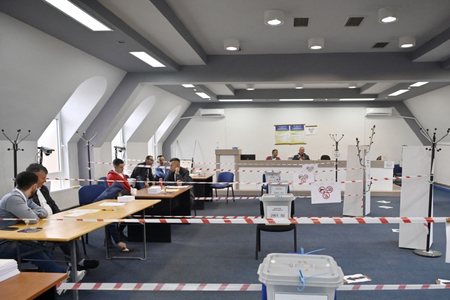
As in the past, this time too it is expected that the ranking of the parties in the elections will be known quickly and the citizens will be able to see the preliminary results in real time on the website of the CEC.
This is because, from all polling stations, the votes for the parties and candidates are sent electronically to the CEC and then they are uploaded to the system.
However, these results do not include conditional votes, votes from abroad and votes of voters with special needs, which are counted later in the Counting and Results Center (CNR).
Eugen Cakolli from the Democratic Institute of Kosovo tells Radio Free Europe that he believes that the election campaign will be more intense, as the parties will have more time to approach potential voters with their platforms.
In a conversation with Radio Free Europe, Cakolli said that the parties started the campaign almost four months ago, since the elections were announced. According to him, the opposition parties have already published their programs and conveyed their messages, unlike the party in power, which, according to him, has so far only spoken about the implementation of the current government's commitment.
"On the other hand, traditional forms of campaigning, door-to-door meetings and especially in chambers, which are significantly more expressed in rural areas, and especially by the more traditional parties, including here, the LDK, have not been missing either. , PDK and the coalition of AAK with Nisma and other parties", says Cakolli regarding the period before the official campaign.
Meanwhile, the period of the official campaign, Cakolli says he expects it to be a summary of all this political activity of the parties.
"In terms of quality and content, I expect that the dynamics of the campaign can intensify and the parties can go towards larger gatherings in public spaces, which we are seeing in the last days. But, in terms of speeches and political messages I believe that it will be the same to some extent, although I expect that there will be a hardening of the tone and discourse between the political parties. The closer we are to the election processes, this is one of the main characteristics of campaigning", he says.
Speaking about the concerns regarding this election campaign, Cakolli says that they remain the same as in the past, i.e. the risk of misuse of public resources at the central or municipal level, of civil servants, but also other resources such as official cars.
"On the other hand, a problem with election campaigns in Kosovo is not providing enough access for women candidates and persons with disabilities and other marginalized groups, where political parties should work harder. The fact that parties are organizing meetings in the chamber is a clear indicator that there is no sufficient and adequate context and space for women candidates", he says.
According to the law, 30 percent of the electoral list must have women candidates for deputies.
Cakolli says that it would be good if in this campaign there is also a televised confrontation between the prime ministerial candidates, but he says that based on the past, this is unlikely to happen, since the incumbent prime minister is usually the one who refuses to face off in debates.
However, he sees a positive development regarding the programs that the parties present to the citizens.
"The dynamics, at least from the last two elections, show that due to the increase in citizen demand, political parties are taking care to have promises as well elaborated as possible and presented in concrete steps, which constitutes a positive development", he says.
During the preparations for the February 9 elections, one topic produced a legal battle: the certification of the Serbian List.
This is because, on December 23, representatives of the Vetëvendosje Movement in the Central Election Commission voted against the certification of the Serbian List. Representatives of other parties abstained during the voting.
Lista Serbe is the main party of Serbs in Kosovo that enjoys the support of Belgrade. This party then complained to the Electoral Panel for Complaints and Submissions.
The PZAP gave the right to the Serbian List, finding no violation by this party that would constitute a basis for non-certification and ordered the CEC to certify this entity.
The Vetëvendosje movement then appealed to the Supreme Court for the PZAP decision. However, the appeal was dismissed.
But, it did not end there, as the Vetëvendosje Movement on January 2 addressed the PZAP again, asking to cancel the CEC's decision on certification, saying that the decision was taken on behalf of the CEC, but without the approval of the members. of this commission that organizes the elections.
Kurti's party has argued that the Serbian List does not recognize the citizenship of Kosovo.
The Vetëvendosje movement has again complained about the Serbian List, after this party was included in the lottery for the selection of the number with which it will compete in the elections.
Blerim Sallahu from the LVV said that with this the CEC violated the law, since the PZAP has not yet made a decision on the complaint regarding the certification of the Serbian List./ REL





Lini një Përgjigje