


 Shkruar nga Sadri Ramabaja
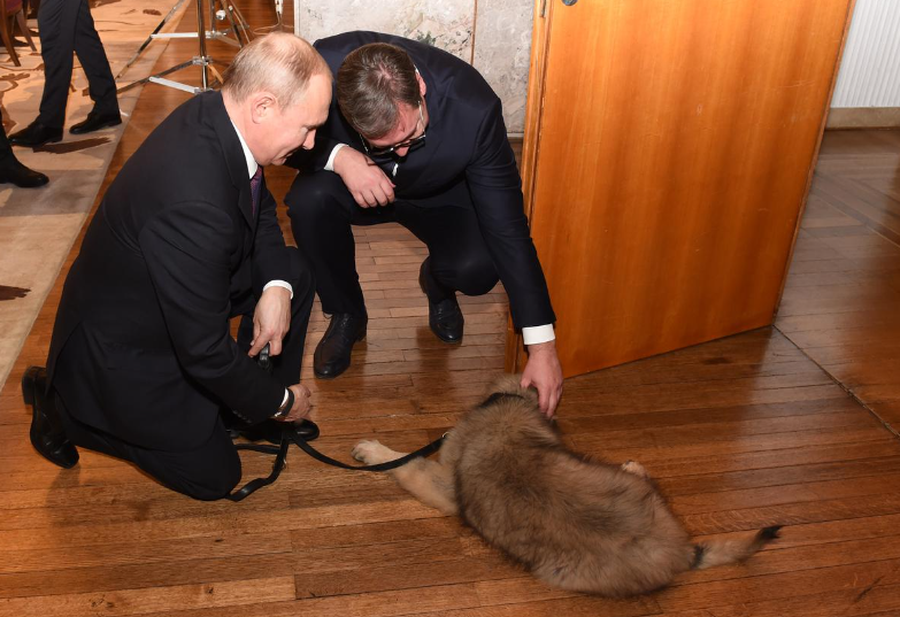
Liberal democracy in coma! The world order in its last throes – the new one still in progress!
Vladimir Putin's attempt to distance Russia from the West is being debated there by some who argue that it represents his personal choice and others who judge that it is not an inevitable result of Russian history and culture.
Historian Sergey Medvedev argues that it is not this axis, but is part of a tectonic shift in the world that is affecting more than Russia.
In a comment on his Telegram channel, Medvedev says that it seems to him that "the 500-year paradigm of the spread of Western civilization and the concomitant phenomena of modernization and recovery is coming to an end."
He continues: "There is no longer a global civilization. This relied on Western military power, which is collapsing before our eyes in the face of new challenges and identities, and as a result the world is fragmenting into areas of technological and social progress and areas of archaism", which, however, have some of the features of those areas.
Russia, according to Medvedev, remains connected to the world economy due to the export of natural resources and elite urban consumption; but it will not recognize the existence of "the problem of 'integration into world civilization'." This challenge no longer exists, according to the Russian historian, because neither Russia nor many other countries accept it as a goal.
Seen from this point of view, Medvedev argues: "Putin's historic relationship with the West, which is supported by the population and approved by most of the outside world, is not an accident, but a model and perhaps even an attempt to unite what is now a world apart."
In this respect, he concludes, "Putin's Russia is like a giant piece of ice that has just broken off from Antarctica and is heading into the unknown. God only knows how long it will have to travel before it melts."
In this journey to the unknown, Russia is taking Serbia with it.
So far, the West has acted in relation to South-Eastern Europe by applying more of the methodology of squaring the circle: keeping it close enough not to lose hope that it is an integral part of the old continent in the political plane as well as the cultural one , but not enough to integrate it.
It's time to make a summary about the developments in South-Eastern Europe in the year we are leaving, hoping that it will not come back again, especially not with all those challenges imposed by post-modern geopolitics.
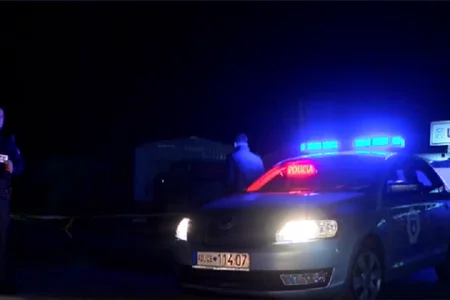
The developments in Kosovo, especially the clash on September 24 in Banjë [Albanik/ Leposaviq] - the north of the Republic, between the State and the Serbian terrorist unit that the General Staff of the Serbian Army together with Russia had designed as a battle that would mark the prologue of the second front of war in Europe, represent the tip of the iceberg of Serbian post-modern geopolitics in relation to the Republic of Kosovo and the Albanians in general, but which would also mark the great turning point in South-Eastern Europe. But, that act of aggression, de facto, marks the beginning of the escalation of the Serbian-Albanian rivalry, which will re-impose the West's corner and re-position NATO in South-Eastern Europe. The engagement of Western diplomacy through the visits of high-ranking diplomats and politicians to the political capitals of the region indicate the alarming nature of the situation.
The decision-making centers in the West, the most powerful politicians in Europe and the countries they lead, with this action, are trying to keep under control the increasingly dangerous situation in the region. They are aware that the levers and mechanisms used until recently to manage Serbia, created after the breakup of Yugoslavia, are completely worn out and unable to get out of the current position. This process is made even more gloomy by the course of the war in Ukraine and especially its end. This finally confirms what the West did not want to accept until yesterday: Serbia is now a hostage of Russia, therefore it has been positioned to serve as a satellite of hegemonic Russia in Southeast Europe.
The name of the electoral list of the pro-Russian political group Aleksandar Vucic - Serbia must not stop" speaks volumes not only about the Serbia of 2024./ Pamphlet


Lini një Përgjigje